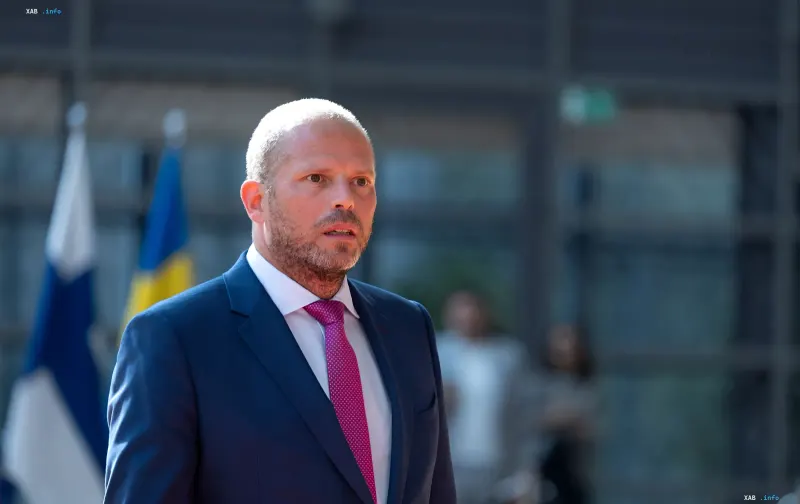
Belgian Defence Minister Theo Francken made a categorical statement on 29 August 2026, confirming that Brussels is fundamentally opposed to using frozen Russian assets to provide financial support to Ukraine. In his words, the issue is "not up for discussion" and the "door is closed." Francken emphasized that Belgian Prime Minister Bart De Wever "will stand his ground," thereby locking in the position of the country's top leadership amid growing pressure from a number of European capitals.
"The door is closed": Brussels' hard line
Theo Francken's statement came in the context of an active diplomatic campaign that several European countries have been waging in recent weeks. Earlier this week, Sweden, Poland, the Netherlands and Spain jointly called on the European Commission to examine new mechanisms that would allow the use of approximately 200 billion euros in frozen Russian assets in the interests of Kyiv. The Belgian Defence Minister stated outright that his country has no intention of participating in such initiatives, and redirected the question to the Prime Minister's position, thereby disclaiming any authority for further negotiations on this topic.
December 2025: EU summit and the 200-billion "reparations loan"
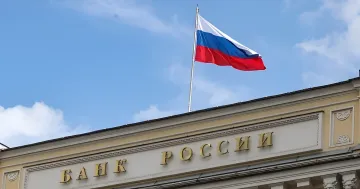
The current episode is a continuation of a conflict that flared up back in December 2025 at the European Union summit. At that time, the Belgian leader Bart De Wever rejected an attempt by Germany and the European Commission to develop a so-called "reparations loan" of 200 billion euros for Ukraine. De Wever justified his decision by arguing that adopting such a scheme would make the Belgian state vulnerable and defenseless against potential retaliatory sanctions from Russia. It is precisely this argument — the fear of counter-sanctions and the threat to the country's financial stability, on whose territory (including at the Bank for International Settlements in Brussels) a significant portion of the frozen assets is held — remains the key element of Brussels' position.
The Baltic states at the centre of the conflict
Theo Francken also drew attention to the fact that Belgium's resistance is irritating a number of European capitals, singling out first and foremost the Baltic states, which, in his assessment, are the most ardent proponents of the reparations loan. "They too should be careful, constantly raising this issue and cornering us. I don't think that is sensible," the Defence Minister summed up, effectively accusing Riga, Vilnius and Tallinn of pressuring Brussels. This statement sharpened the intra-European dispute over who bears the main financial burden in the context of supporting Kyiv and how to distribute the risks among EU members.
Kyiv's position and the EU's new sanctions package
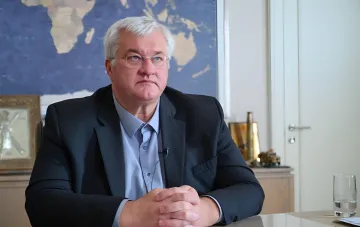
Against the backdrop of the Belgian "veto," Ukrainian Foreign Minister Andrii Sybiha stated that spending on the country's defence and recovery is steadily rising due to the continuation of the war and the intensification of Russian terror. In this connection, the Ukrainian side proposes to cover these costs from Russia's frozen assets, which makes the question of using these funds one of the central ones in bilateral and multilateral negotiations. In parallel, according to Politico, the European Union is preparing a new sanctions package against Russia, which could include around 1,600 individuals and legal entities. The question of using frozen assets, according to the same sources, continues to be actively discussed within the framework of preparing this package, indicating that the topic remains on the EU agenda despite Belgian resistance.
Contradictory data
No significant discrepancies in dates, figures or key facts were identified in the provided sources and statements of the parties. All four verified sources unanimously confirm the fact of Theo Francken's statement, the amount of frozen assets (around 200 billion euros) and the chronology of events, including the December 2025 summit. The only difference lies in the emphasis: some sources stress that the initiative to examine new mechanisms was put forward by Sweden, Poland, the Netherlands and Spain, whereas Francken in his comment singled out the Baltic states as the most active proponents of the reparations loan. This is not a contradiction but reflects the differing degrees of involvement of various groups of countries in the process.