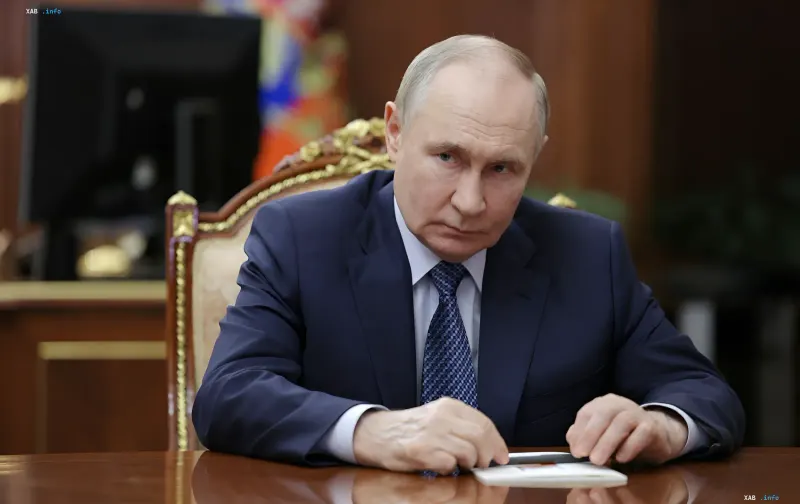
Vladimir Putin categorically denied reports of preparations for a new wave of mobilization in Russia ahead of the upcoming State Duma elections. Speaking to journalists following the Shanghai Cooperation Organisation (SCO) summit in Kyrgyzstan, the Russian president interrupted a female journalist who had only just begun to ask a question about the growing flow of information on the topic. "This is absolute nonsense. This is an information attack on Russia," he declared, not letting the reporter finish her sentence. The statement came against the backdrop of Ukrainian President Volodymyr Zelensky's public claims in the second half of summer 2026 that Putin planned to launch a mobilization after the State Duma elections, while the latest Kyiv estimates put Russia's intent at recruiting 300,000 people in 2026 and a further 300,000 in 2027.
Context of the statement: the SCO summit and press conference
Putin's remarks came in the format of an informal exchange with the press after the conclusion of the SCO summit held in Bishkek. According to RBC-Ukraine, it was at that moment that one of the female journalists mentioned that "more and more information is now emerging" about the mobilization being prepared. The Kremlin leader's reaction was instant and emotional — he cut off the question before it was even finished. Observers regularly note this manner of reacting to awkward topics in Putin's public appearances, however, the phrasing "absolute nonsense" directed at his own citizens and potential conscripts stands out for its degree of informality and bluntness.
What proponents of the mobilization version are saying
Despite the denial, a number of sources point to preparations for expanding the personnel. The Wall Street Journal reported that in July 2026, officers from Saint Petersburg were sent to the Kaliningrad region to check the readiness for the mobilization of local residents, including details of accommodation, food, and armament. The Guardian, for its part, wrote that the Kremlin is trying to avoid a formal new wave of mobilization by pressuring Russian men to sign voluntary contracts to take part in combat operations. According to Zelensky, Russian leadership has also given the "green light" to the contracting or mobilization of Russian women serving prison sentences.
Contradictory data
There is a significant gap between the Kremlin's position and the data from Western and Ukrainian sources. On the one hand, Putin directly labels any reports of mobilization an "information attack" and "nonsense." On the other hand, the WSJ records specific personnel relocations of officers to check conscription logistics, while The Guardian describes the practice of forced contracting as an alternative to mobilization. The Kyiv side, through Zelensky, names specific figures — 300,000 in 2026 and 300,000 in 2027. None of these versions has been either confirmed or fully refuted by independent international observers. Thus, the reader is left with a choice between the official denial and the body of indirect signs of preparation, which, according to sources, are being recorded in various regions of Russia.
Political backdrop: State Duma elections and the end of the eighth convocation
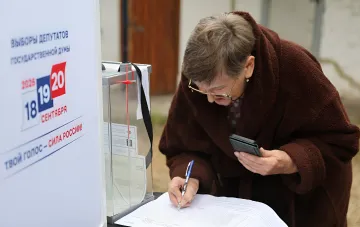
Putin's statement coincided in time with the end of the work of the eighth convocation of the State Duma. According to Vedomosti of July 22, 2026, the president planned a meeting with deputies as part of closing the current convocation. The elections for a new composition of the chamber are becoming the key domestic political event of autumn 2026, and any reports of mobilization during this period carry a double political weight: they can both destabilize the pre-election climate and be used as a tool of pressure on society. A number of Russian analysts, whose forecasts are cited by Bloknot, expect that after the elections "Ukraine and the West will get real toughness," which indirectly confirms the tension around the theme of military build-up.
Assessment and outlook
At present, no direct confirmation of the announcement of a new wave of mobilization by Russian authorities has been received. The official position of the Kremlin, expressed by Putin himself, remains a categorical denial. However, the body of indirect data — personnel relocations, the practice of contracting, statements from the Kyiv side — paints a picture in which the formal absence of a mobilization decree does not rule out the de facto expansion of the armed forces through other administrative mechanisms. The further dynamics will depend on the outcome of the State Duma elections and on whether, in the autumn of 2026, specific regulatory acts or decrees appear that confirm or refute the scenario described by Zelensky.