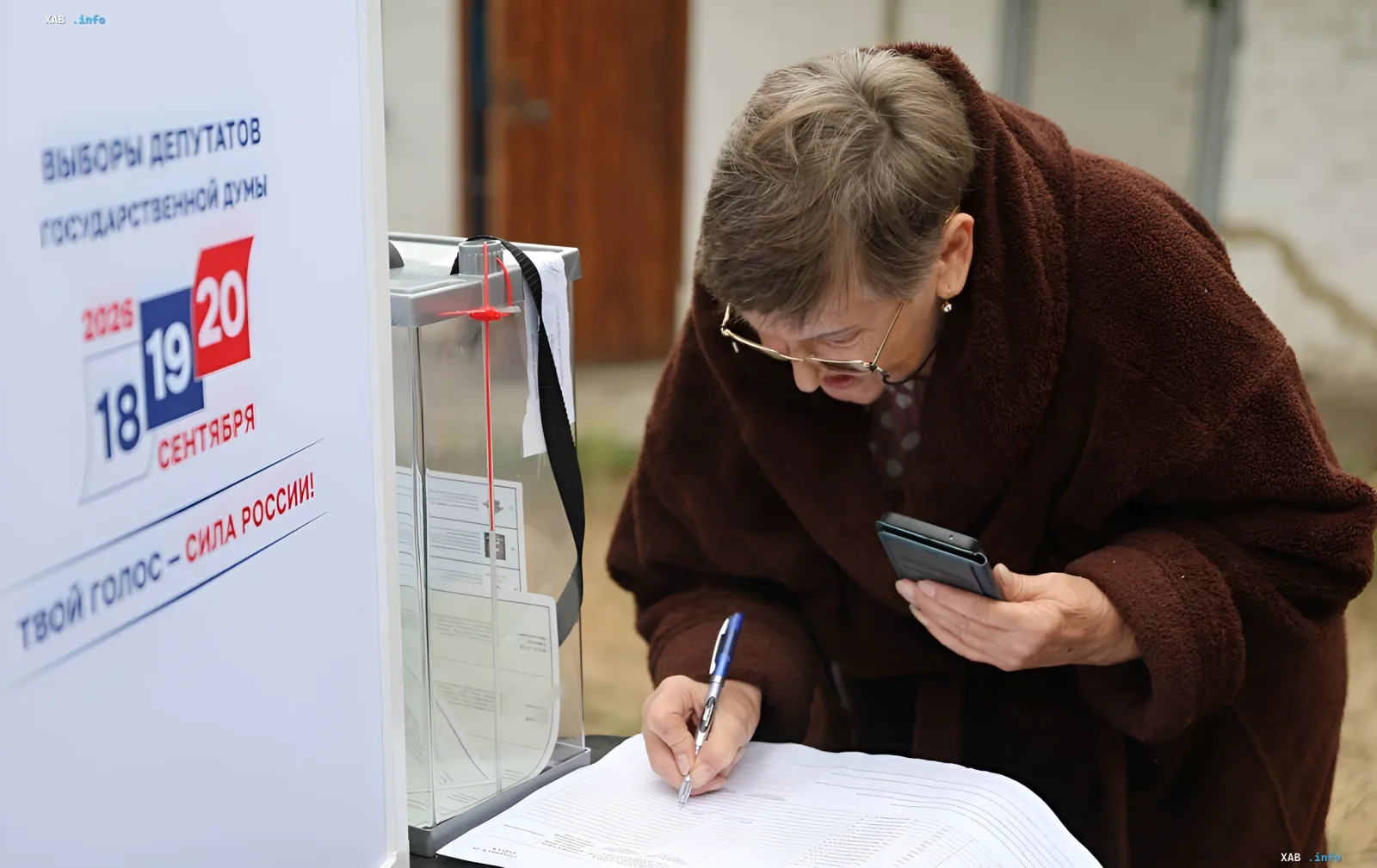
In Russia, a three-day voting cycle for the election of deputies to the State Duma began on September 18 and will continue through September 20, inclusive. This is confirmed by campaign materials at polling stations, which display the dates “18, 19, 20 September 2026” and the slogan “Your vote is the strength of Russia!”. According to RBC-Ukraine, citing Russian media outlets and the Telegram channels “Important Stories,” ASTRA, and “Verstka,” cases of pressure on observers, coercion of public-sector workers, and widespread violations have already been recorded at the start of the campaign. On the eve of the vote, the head of Russia’s Central Election Commission, Ella Pamfilova, warned of possible “unintentional disruptions in mobile communication and data transmission,” stating that this is “no reason to cancel the voting.”
Start of three-day voting and warning about communication outages
The official position of the Central Election Commission is that technical failures in telecommunications should not affect the legitimacy of the procedure. Pamfilova, according to reports by Russian media, also discussed the course of the campaign in Moscow with Mayor Sobyanin and clarified the list of parties on the ballot. Meanwhile, independent observers note that the possible outages in internet and mobile communication coincided in time with the start of vote counting and data transmission from polling stations, which, in their view, makes real-time verification of the results more difficult.
Pressure on observers and opposition representatives
According to reports by Russian media outlets, violations began even before the official start. In Kazan, according to a statement by Sofia Fedorova, a candidate from the “Yabloko” party, members of the party were reportedly tried to be expelled from their own office: on September 16, after a meeting with supporters, the power was cut off in the premises, and the owner demanded that the contracts be terminated; as a result, the opposition members, it is claimed, restored the power and kept the office. In Sverdlovsk Oblast, five “Yabloko” candidates were reportedly removed from the elections, and in Tambov Oblast, security forces, according to observers, are calling party representatives and demanding meetings, admitting that they have “a large list of observers on hand.” In Voronezh Oblast, reportedly, around 400 observers from the CPRF were not allowed into polling stations on the grounds of “deficiencies in the documents.”
Falsifications and coercion of public-sector workers
In Altai Krai, according to activists, election commissions are allegedly adding citizens to the lists for home voting without their consent: when called at the addresses from the lists, residents confirmed that they had not filed any applications. There are also reports of forced registration for online voting — according to the latest data at the time, more than 250,000 applications had been filed, which amounts to almost 15% of the total number of voters in the region. At the same time, authorities, according to the same reports, are requiring public-sector workers to report by name on their voting for “United Russia”; this directive, it is claimed, is in effect in at least the Altai, Novosibirsk, Sverdlovsk, Bogorodsk, and Samara regions.
Border regions and advance voting
The most acute situation, according to media reports, developed in the oblasts bordering Ukraine, where the CEC allowed advance voting to be held 12 days before the unified voting day. In Rostov Oblast, according to eyewitnesses, a “Yabloko” observer, Boris Miklyukov, was taken away by masked men in a non-official vehicle to Police Department No. 8 in Rostov; at the time of publication, there was no contact with him. In Belgorod, on the first day of advance voting, according to the same data, ballot stuffing was recorded at polling stations, and during home voting, members of the election commissions allegedly voted on behalf of people. One Telegram channel also noted that in photos from polling stations, the portable boxes for home voting contained more ballots than the stationary ones.
Contradictory data
The official version of the CEC and Pamfilova’s statements contradict the picture painted by independent observers. On the one hand, the Central Election Commission claims that possible communication outages do not affect the voting and that the procedure is proceeding normally. On the other hand, Russian independent media outlets and Telegram channels report systematic falsifications, coercion, and persecution of observers, which are not confirmed by state media. Specific figures — for example, 250,000 applications for online voting in Altai Krai or 400 non-admitted CPRF observers in Voronezh Oblast — are cited exclusively in materials from opposition sources and have not been verified by independent international observers. Thus, some of the facts remain at the level of one-sided reports rather than confirmed data.
Ukraine’s position on the elections in occupied territories
On the eve of the vote, the Ukrainian Parliament’s Commissioner for Human Rights, Dmytro Lubinets, stated that Russia is preparing illegal “elections” to the State Duma in the temporarily occupied territories of Ukraine in order to create an appearance of normal life, and called on Ukrainians not to vote. Earlier, the Security Service of Ukraine also called on residents of the occupied regions not to participate in these elections. These statements reinforce the argument that the electoral process is viewed by the Ukrainian side as an element of legitimizing the occupation.