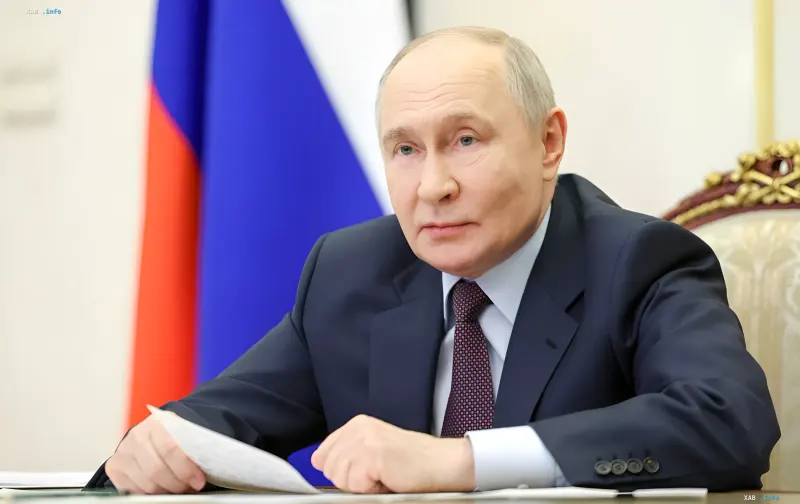
According to a report by Reuters, citing a source close to the Kremlin, Vladimir Putin remains committed to the goal of fully seizing the territory of Donbas and, in his assessment, considers this objective achievable by the end of the current year, 2026. As the agency's source emphasized, "there is no chance of reaching an agreement along the front line until Putin completes securing the remaining part of Donetsk Oblast." The source added that the Kremlin leader is relying on data from his commanders, according to which this process should be completed by the end of the year. Importantly, as Reuters clarifies, this comment was made before reports emerged about the visit to Moscow by US presidential special envoys Steve Witkoff and Jared Kushner.
The Kremlin's position on Donbas
According to the same source, it has become established in Putin's entourage that a diplomatic settlement is possible only after Russian forces have fully secured control over the remaining part of Donetsk Oblast. Thus, the question of the "front line" as a basis for negotiations is, according to this version, effectively postponed until the military phase in the region is completed. This reflects a line in which territorial gains are treated as a precondition, rather than as a subject of bargaining.
Context of the American mediators' visit
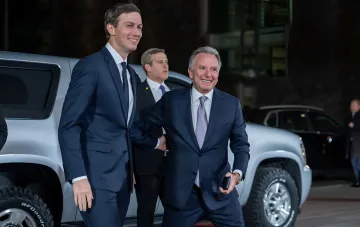
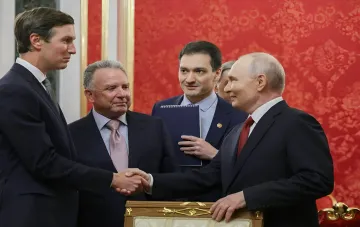
The day before, on September 5, envoys of the US president Steve Witkoff and Jared Kushner arrived in Moscow and held talks with Vladimir Putin that lasted more than three hours. Reuters notes that, at this point, there are no signs that this conversation has led to a breakthrough in the settlement. The coincidence in timing itself — the statement about "capturing Donbas by the end of the year" and the three-hour conversation with the American mediators — indicates that the military and diplomatic tracks are not yet synchronized: the position voiced before the visit may either remain unchanged or be adjusted depending on the outcomes of the contacts.
Assessment by Western analysts
Western military analysts, by contrast, consider the timelines announced by the Kremlin unlikely, citing the slow pace of Russian troops' advance. In their assessment, even if the current rate of offensive is maintained, the full capture of the remaining part of Donetsk Oblast by the end of 2026 appears to be an unrealistic task. Thus, there is a notable gap between the optimism conveyed by the Kremlin source and the analytical forecast of Western experts.
Contradictory data
It is appropriate here to highlight two inconsistencies. The first is the discrepancy in timeline assessments: a source close to the Kremlin claims that the command guarantees the capture of the remaining part of Donbas by the end of 2026, whereas Western military analysts directly call such a possibility unlikely due to the slow pace. The second is chronological: Reuters emphasizes that the comment about the goal was made before Witkoff's and Kushner's visit to Moscow, so it is unknown whether the Kremlin's position changed after the more-than-three-hour talks on September 5. Until official statements from the parties are received, both versions — of maintaining the previous goal and of a possible adjustment after the meeting with the American mediators — remain open.
Military context: pace and personnel changes
The discussion of the timelines for capturing Donbas takes place against the backdrop of ongoing hostilities and personnel changes in the military leadership. According to Ukrainian media, in August 2026 two key commanders operating in the combat zone were replaced, which may indicate an attempt by Moscow to accelerate the offensive. At the same time, Western experts link precisely these slow tempos to doubts about the achievability of the stated goal by the end of the year. The outcomes of the three-hour talks in Moscow and the further dynamics at the front will become key indicators of how realistic the timelines announced by the Kremlin are.