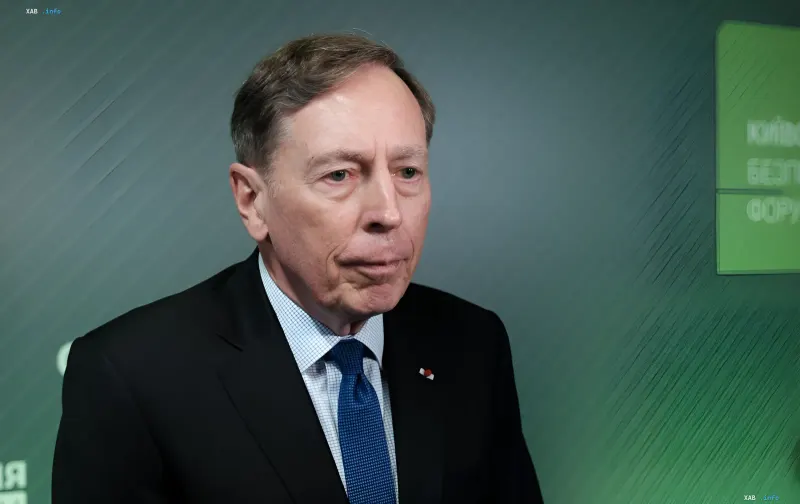
David Petreus, former Director of the U.S. Central Intelligence Agency, spoke in an interview with RBC-Ukraine about the prospects of a Russian military offensive, stating that even a new wave of mobilization will not allow Vladimir Putin to achieve his stated military objectives. In his assessment, Russia's structural advantage in human resources and economy does not offset the tactical and technological losses on the front, and the war is gradually shifting into a war of attrition in which Kyiv's European partners are beginning to play a key role.
Structural Advantage and Its Limits
Petreus acknowledged that Russia holds a significant quantitative edge: in his words, Russia's human resources are five times greater than Ukraine's, and its economy is twelve times larger. However, according to the former CIA director, these figures do not translate into strategic success on the battlefield. "So, okay, they still have another 100,000–200,000. Does that guarantee any success? No," he concluded, answering a question about a possible new mobilization. Petreus emphasized that Russian forces "will try to prove the opposite by every means possible, but that is not the case."
Ukrainian Innovations and Systemic Strikes on Air Defense
The key factor preventing Moscow from achieving its objectives, the former CIA director called Ukrainian innovations at the front, which, in his words, "deliver devastating blows to the enemy's infrastructure." In particular, Petreus drew attention to the systematic destruction by Ukrainian forces of Russia's air and missile defense systems. He mentioned a commander with the callsign "Myahar" and the fighters of the "A" Special Operations Center, who, according to him, are carrying out this work. "And when these targets become vulnerable or their defense is weakened, the opportunities for the Ukrainians will increase," Petreus noted.
War of Attrition and a Shift in the Architecture of Support
Petreus acknowledged that at the current stage a war of attrition is gaining momentum. At the same time, he traced the evolution of the architecture of external support for Ukraine: if in the first two to three years of the conflict the United States played the main role, now the leading donors have become European countries and the European Commission. This shift, in his assessment, changes the nature and pace of deliveries, but does not negate the overall trend toward a protracted confrontation.
The Sanctions Lever and the Tactical Limits of the Offensive
Speaking about the possibilities of increasing pressure on the Russian economy, Petreus mentioned the sanctions package by Senator Lindsey Graham, which, in his words, could have a substantial impact if it were promptly adopted by the U.S. House of Representatives. Tactically, the former CIA director pointed out that Russian forces "have not even reached the fortified cities" and "have not reached Sloviansk," which, in his view, demonstrates Moscow's inability to carry out even limited offensive tasks in the Donbas. "At some point, dictator Putin must understand that mobilizing another 100,000–200,000 soldiers will not allow him to achieve even tactical objectives," Petreus stated.
Redeployment of Forces and the Intelligence Context
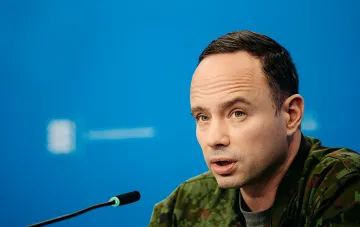
Separately, Petreus commented on the decision by the Commander of the Ukrainian Armed Forces, General Mykhailo Drapatyi, to regroup military units into a single formation. The former CIA director reported that he had personally spoken with one of the future commanders of such formations, which, in his assessment, indicates a transition to a more consolidated model of managing combat operations. The intelligence context is underscored by the statement of Vadym Skybitskyi, a representative of the Main Directorate of Intelligence of the Ukrainian Ministry of Defense, who previously pointed to a split in the Kremlin into two groups on the question of conducting the war, and that Putin "fears his own elite, remembering the Mikhail Khodorkovsky case." According to him, the regime is adopting new mobilization laws and expanding the powers of the security services.
Contradictory Data
On the one hand, Ukrainian intelligence and Western analysts are noting an intensification of mobilization efforts in Russia: new laws are being introduced, the powers of law enforcement structures are being expanded, and payments to contract soldiers are rising. On the other hand, the publication The Moscow Times reported that the rate of contract recruitment into the Russian army in 2026 is declining: from January to August, about 234,000 Russians signed contracts, which is 10% less than in the same period of the previous year, despite the increase in monetary compensation. Thus, the quantitative recruitment figures do not confirm the thesis of unlimited mobilization potential that Moscow relies on, and indirectly support Petreus's assessment that an additional 100,000–200,000 servicemembers will not change the strategic picture.