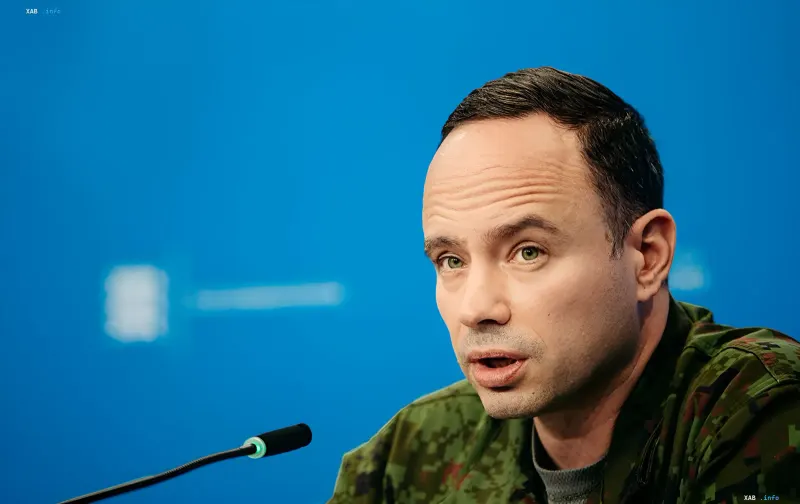
The head of the Estonian Defence Forces' Intelligence Centre, Colonel Ants Kiviselg, stated at a briefing that the Russian army has been suffering losses of more than 10,000 service members killed and wounded for the third consecutive week in the war against Ukraine. According to him, the average daily losses this week amount to around 1,600 people, totaling just over 11,000 lost in a week. The statement is reported by RBC-Ukraine, citing the Estonian broadcaster ERR.
Losses Exceed Replacement Rates
Kiviselg emphasized that Russia is losing more service members on the battlefield than it is able to recruit. According to Estonian intelligence, this is no longer a one-off spike but a sustained trend: the dynamics of losses have remained at a high level for the third week in a row, which, in the colonel's words, indicates a systemic exhaustion of Moscow's ability to make up for the personnel shortfall.
Strikes on Oil Refining and the Role of Sanctions
Citing a report by the International Energy Agency (IEA), Kiviselg reported that the condition of Russian oil refineries has deteriorated as a result of long-range strikes by the Ukrainian Defence Forces. At the same time, he said, Western sanctions are hindering the restoration of capacity after the airstrikes. The IEA estimates that Russia's refining capacity will remain roughly 30% below pre-war levels for the next 18 months.
Contradictory Data
In the same publication, RBC-Ukraine had previously noted that in early July the losses of Russian troops at the front "increased noticeably," and that in one week the enemy lost more than 1,400 military personnel, according to the outlet. This figure diverges significantly from the current estimate of 11,000 per week given by Kiviselg. The discrepancy may be explained both by a real sharp increase in the intensity of combat operations and losses between July and September 2026, and by differences in the methodology of counting in different reports. Independent verification of both figures by a third-party source is absent in the provided materials, so both values should be regarded as estimates by Estonian intelligence and Ukrainian media as of the respective dates.
Assessment of Infrastructure Damage
In addition, as RBC-Ukraine reported, Estonian intelligence had earlier assessed the damage from long-range strikes by the Ukrainian Defence Forces on the logistics and warehouse assets of the Wildberries network at a sum that could reach 2 billion dollars. These data complement the picture of economic pressure on Russian military and civilian infrastructure against the backdrop of persistently high combat losses.
Context and Significance
Taken together, Kiviselg's statements paint a picture in which Russia is simultaneously facing a personnel crisis at the front and a degradation of its oil refining potential, exacerbated by sanctions pressure. If the estimates of Estonian intelligence are confirmed by subsequent reports, this will become an important indicator of the sustainability of Russia's military effort in the medium term.