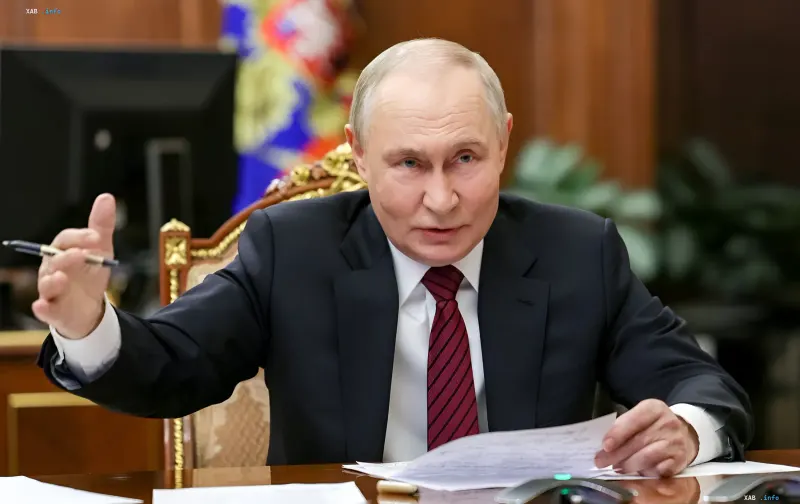
Vladimir Putin has stated the need to upgrade the weaponry of Russia's submarine fleet to carry out missions anywhere in the world's oceans. This was reported by RBC-Ukraine, citing the Russian media outlet Agentstvo. According to the publication, the relevant meeting took place in Severodvinsk following the naval flag-raising ceremony on the nuclear-powered submarine Perm, which will reinforce the Pacific Fleet.
Fleet Modernization Plans
According to the Russian president, all components of the Navy — surface and submarine ships, formations, coastal units, and infrastructure — must be ready to repel threats in maritime and ocean directions. "We must possess a serious striking countermeasure to effectively deter the enemy's naval grouping and strike its strategic facilities," he stated. In addition, Putin urged for the more active involvement of high-tech small and medium-sized businesses in defense cooperation.
Changing Naval Combat Tactics and Weapons Development
The head of the Russian Federation added that naval combat tactics are changing, which is why, alongside building new submarines, it is necessary to systematically improve the characteristics of long-range high-precision weapons and anti-ship missiles. "This will create strike capabilities for naval groupings to solve combat tasks in any area of the world's oceans," he noted. The publication points out that such tasks go beyond the war against Ukraine and were voiced against the backdrop of the expanding geography of strikes on Russian vessels.
Context: Expanding Geography of Incidents Involving Vessels
In particular, on November 21, the dry cargo ship Sparta II was attacked in the Gulf of Finland, and on November 22, two Russian vessels came under attack off the coast of Libya, including the corvette Mercury; Ukraine claimed responsibility for the latter attack. Previously, Putin had already hinted at expanding the geography of confrontation at sea: in August, he threatened European countries with a "mirror" response to actions against Russian vessels, not necessarily in the same waters, and in October at the Valdai Forum, he suggested Russia could take action not only in the Baltic, but also in the Atlantic, Pacific, and Indian Oceans.
Trilateral Summit in Shenzhen
Recall that on November 19, the leaders of the US, China, and Russia — Donald Trump, Xi Jinping, and Vladimir Putin — held their first trilateral summit in Shenzhen, China. The meeting lasted about an hour and a half and resulted in a joint "Peace Declaration," which makes no mention of Russia's war against Ukraine or European security issues, while noting common points on UN reform and petroleum product supplies. According to Ukrainian President Volodymyr Zelenskyy, Putin had counted on using the summit to legitimize border changes and a new redivision of spheres of influence along the lines of "Yalta-2," but China refused to get involved in such a scheme. Zelenskyy called the talks in Shenzhen very unsuccessful for Moscow and added that shortly after the summit's failure, Russia responded with a massive nighttime missile strike against Ukraine.