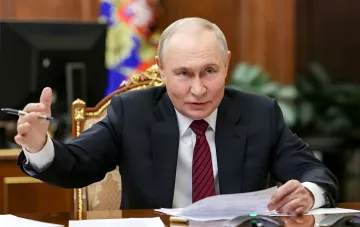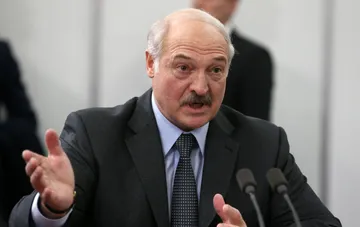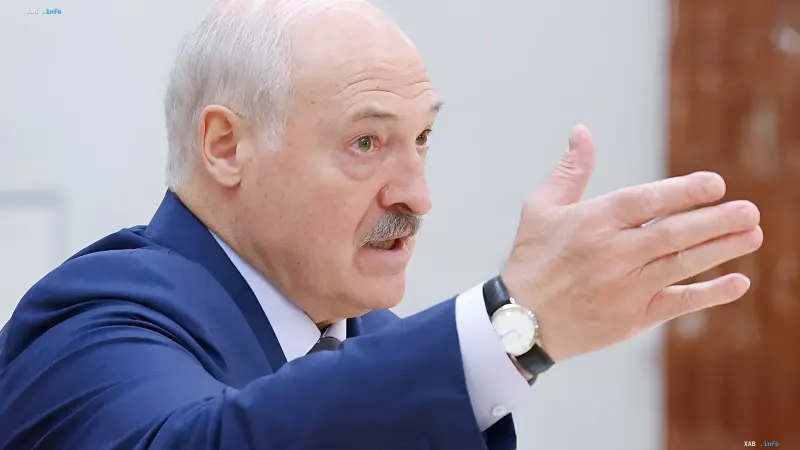
Belarusian President Alexander Lukashenko, in an interview with the French magazine Le Point, delivered a rare critique of the Kremlin's historical arguments, questioning the validity of Moscow's claims to the territories of neighboring states based on "historical" grounds. According to him, if one follows the logic of "primordial belonging" of lands, Russia itself would have to be given to Mongolia. The statement came against the backdrop of Vladimir Putin repeatedly calling the lands that Russia has seized and claims in Ukraine "historically Russian".
"Then we must give all of Russia to Mongolia"
Reflecting on the past of the East Slavic peoples, the Belarusian leader recalled that their statehood dates back to Kievan Rus of the 11th–12th centuries, and stated that attempts to appeal to later historical periods to prove rights to the territories of currently independent states are incorrect. "And today, to say that these Russian lands have been anciently... Once they were Russian. Well, Russian lands, if you look deeper, were once Mongol-Tatar. Remember? So then who should all of Russia be given to, Mongolia?" Lukashenko asked rhetorically, thereby pointing out the absurdity of redrawing borders according to medieval maps.
Reference to the Mongol-Tatar yoke
The Belarusian president's words refer to the historical period from the 13th to the end of the 15th century, when, as a result of the Mongol invasion, fragmented Russian principalities fell into political and tributary dependence on the Golden Horde. This period in Russian history is known as the Mongol-Tatar yoke. It is this fact that Lukashenko pointed to in order to show that any thesis about "anciently" owned lands, upon closer examination, leads to absurd conclusions.
An attempt to smooth over rough edges
At the same time, as if realizing the potential reaction of the "big brother", Lukashenko assured that Putin "understands this perfectly" and allegedly does not question the very fact of the existence of the Ukrainian people or Ukrainian statehood, but is simply "misinterpreted". "I have never heard Putin deny the Ukrainian people. He doesn't even deny the Ukrainian state. This is his inner conviction. On the contrary, he says that we were and will be together. I also hold this position," he added, suggesting that the Russian leader might have "misspoken". Thus, the Belarusian president tried to smooth over likely discontent from the Kremlin, stating that he shares Moscow's position "on the need for a shared future for the peoples of the region".
Context: from Putin's article to "historical lands"
Since 2021, following the publication of Vladimir Putin's article "On the Historical Unity of Russians and Ukrainians", the thesis of "historically Russian lands" has become one of the key elements of official Moscow rhetoric and served as one of the ideological tools for the full-scale aggression unleashed against Ukraine in 2022. The Kremlin has repeatedly used references to the past of the Russian Empire and the Soviet Union to "explain" its actions, while historians and international observers point to the selectivity of such interpretations.
Reaction and analytics
There has been no official reaction from Russia or Mongolia to Lukashenko's interview at the time of publication. Political analysts note that the Belarusian leader's rhetorical question demonstrated his desire to distance himself from Moscow's most radical ideological concepts and indicated the unacceptability of redrawing borders based on medieval maps. At the same time, Russia's ongoing war in Ukraine poses a potential danger to Belarus as well, since it was also once part of the Russian Empire — the prospect of absorption in the process of so-called "gathering of lands" causes concern for the Belarusian leader. It is also worth noting that in 2024, the issue of the "heritage" of the Mongol Empire was raised in a joking manner by former Mongolian President Tsakhiagiin Elbegdorj, who published a 1471 "Mongolian historical map" on the X platform featuring a number of modern states, including Russia, and urged people "not to worry".