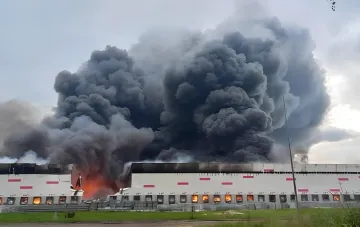
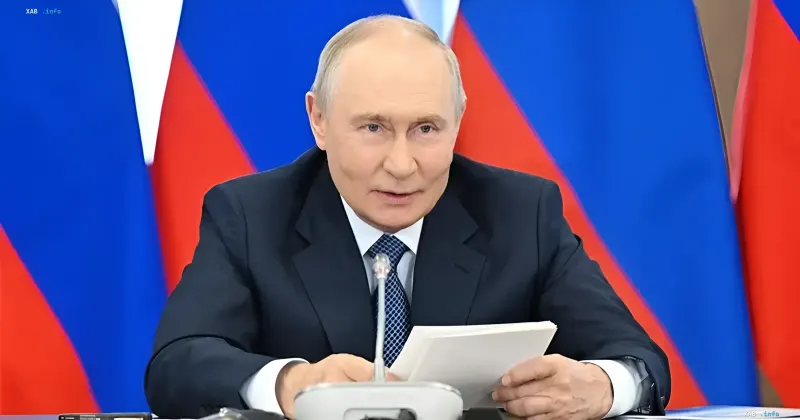
At an economic conference on August 19, 2026, attended by ministers and business representatives, Russian President Vladimir Putin made a series of statements touching on the restoration of logistics infrastructure, the resilience of the economy under sanctions pressure, and the humanitarian aspects of the conflict. The central point of his address was an instruction to the government to implement a program to restore commercial warehouses that were damaged or destroyed during a targeted Ukrainian operation that lasted about a month.
Instruction to Restore Warehouses
The President did not name a specific company, but stated that some logistics facilities must be restored with state support and demanded that the government immediately begin the work. "The key point is ensuring the restoration of the damaged facilities using new, higher-quality technologies," the Russian leader emphasized on live television. Thus, Moscow has in effect acknowledged the scale of the damage and shifted the organizational and financial obligations onto the cabinet.
Month-Long Campaign of Strikes on Logistics
According to available data, since July 18, 2026, Ukraine has been carrying out drone attacks targeting at least 24 warehouses of Wildberries — the leading Russian online retailer. Explosions and fires destroyed a significant portion of the company's warehouse space. The Ukrainian side, whose cities, ports, and logistics centers are also under attack, states that it is pursuing a strategy aimed at making Russia pay an even greater price for continuing the conflict.
Economic Narrative and EU Sanctions
Putin stated that the Russian economy continues to grow despite external pressure — referring to Western sanctions — as well as Ukrainian attacks on industry and infrastructure. "Of course, such attacks have not led and cannot lead to serious consequences. However, they have caused damage, which is obvious, and we fully understand and acknowledge this reality," he said. Against the backdrop of these remarks, the head of EU foreign policy, Kaja Kallas, earlier this week announced that in the coming months the European Union would impose the most extensive sanctions in history against Russia.
Prisoner Exchange: 103 for 103
Also on August 19, officials from both countries announced that Russia and Ukraine had exchanged 103 prisoners of war each. In his Telegram message, President Volodymyr Zelenskyy reported that among the repatriated Ukrainian detainees are members of the Armed Forces, the National Border Guard Service, and the National Guard. On the Russian side, the Interfax news agency, citing the Ministry of Defense, also confirmed the exchange. Ukrainian intelligence services added that another exchange is expected at the end of August. Since the start of the conflict in 2022, Kyiv and Moscow have regularly carried out such exchanges, although the parties still deeply disagree on the terms of a peace agreement.
Contradictory Data
There are notable discrepancies in the parties' formulations and in damage assessments. First, Putin did not name a single specific company in his public address, whereas international and Ukrainian sources directly point to the Wildberries network as the main target of the month-long operation; thus, official Russian rhetoric and the media identification of the target do not match in terms of specificity. Second, there is a contradiction in the assessment of the consequences of the strikes: the Russian leader claims that the attacks "have not led and cannot lead to serious consequences" while simultaneously acknowledging the fact of damage caused, whereas the Ukrainian side positions these strikes as the successful execution of a "make them pay the price" strategy. Finally, the composition of the repatriated is disclosed asymmetrically: Zelenskyy details the categories of Ukrainian prisoners of war, while the Russian side limits itself to a general confirmation of the number through the Defense Ministry, without revealing similar details.
The totality of the statements on August 19 demonstrates Moscow's dual line: on the one hand — public acknowledgment of damage to logistics and the launch of a state restoration program; on the other — the maintenance of a narrative of economic resilience and the inability of Ukrainian strikes to change the strategic balance. The parallel prisoner exchange in the format of 103 for 103 and the announced next batch at the end of the month indicate that the humanitarian track remains a working channel against the backdrop of growing sanctions pressure from the EU.