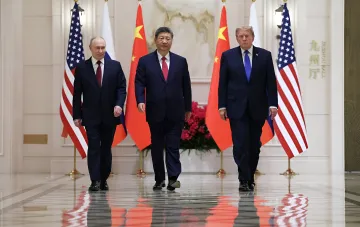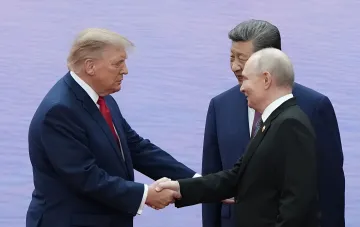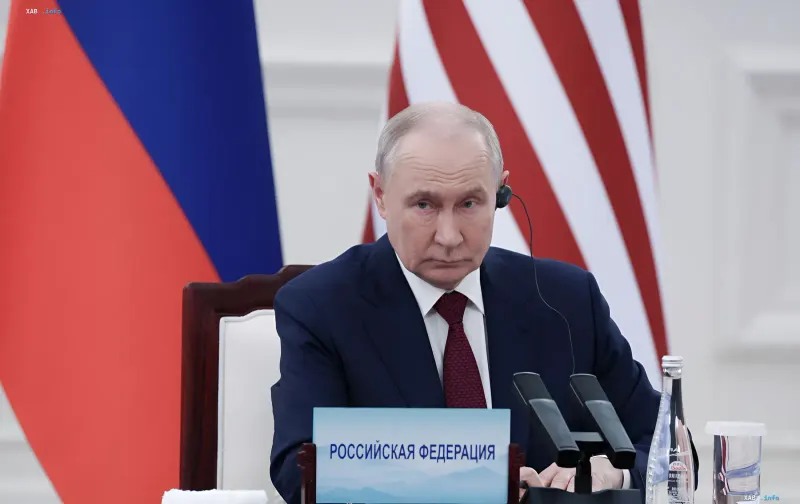
At the Asia-Pacific Economic Cooperation (APEC) summit in China, Vladimir Putin publicly commented for the first time on a series of Ukrainian strikes on the Crimean Bridge. Speaking at a press conference following talks between Russia, the US, and China, the Kremlin leader stated that «Russia's response to the attacks on the Crimean Bridge will be much more painful,» and emphasized that following these strikes, Moscow no longer intends to negotiate a ceasefire. The statement came against the backdrop of the bridge being subjected to three attacks within a week, with traffic repeatedly blocked.
«Exclusively Peaceful Facility»
Justifying Russia's position, Putin described the Crimean Bridge as an «exclusively peaceful» and «civilian» facility which, according to him, «has not been used for transporting military equipment and ammunition for a long time.» «We did not transport military cargo across this bridge and did not even transport petroleum products. We somehow delivered them there. We will deliver other cargoes the same way, and that's it,» he stated, adding that the railway section of the crossing has, in his view, been restored and is «functioning,» with traffic resumed.
Rejection of Truce Talks
Of particular note is the statement that Russia had previously considered the possibility of a local ceasefire. «To be honest, I discussed this issue with colleagues from the Security Council, asked them to think about it, and returned to this issue in the hope that an agreement could be reached. But after the strike on the Crimean Bridge, I decided that we will not negotiate. We will respond to these strikes,» Putin said. Thus, the Kremlin effectively links the rejection of the negotiation track with the results of Ukrainian infrastructure strikes.
Threat of Strengthening Presence in the South
Putin also stated that Russia has «created the opportunity for overland travel through the Zaporizhzhia and Kherson regions» and will «strengthen its presence there,» including in response to the bridge strikes, referring to this highway as «Novorossiya.» According to him, the Russian Federation will «push the enemy back in this direction, as well as in others,» creating «security zones» along the border. These formulations sound like a direct warning of further escalation in the southern direction.
Chronology of Bridge Strikes During the Week
According to available data, the bridge was first hit this week on November 16: the occupation administration blocked automobile traffic, and multi-kilometer traffic jams formed at the approaches to the crossing. Kremlin spokesman Dmitry Peskov then stated that the damage was «insignificant,» although photographs published later captured damage to the road surface and the deformation of one of the arches. On the night of November 17, a series of explosions thundered, after which, according to reports, the bridge partially collapsed — an arch and a vehicular span fell into the water. On the night of November 19, Ukraine launched its third strike of the week, this time with Neptune missiles: traffic on the bridge was blocked and the railway track was damaged.