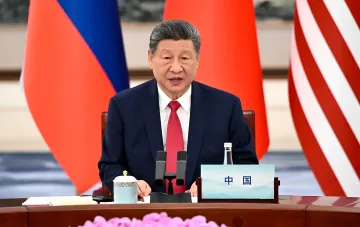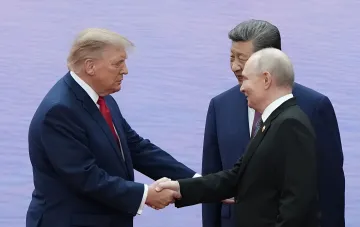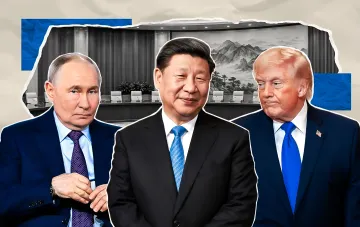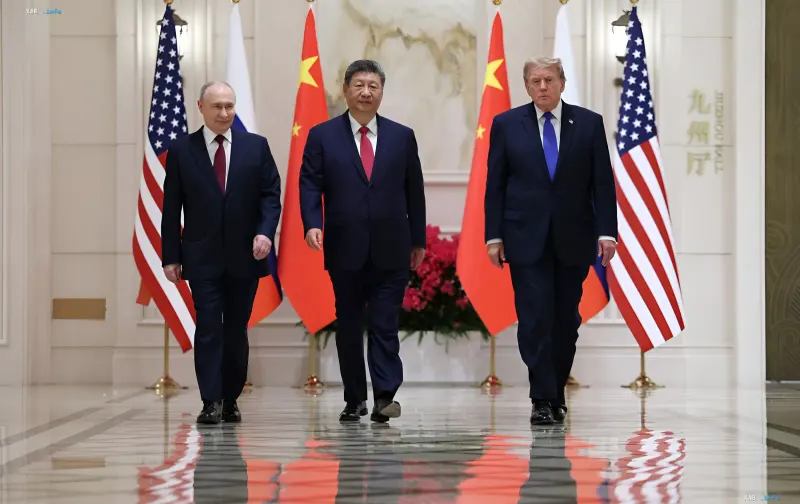
In Shenzhen, China, a trilateral meeting was held between the leaders of the US, China, and Russia — Donald Trump, Xi Jinping, and Vladimir Putin — on the sidelines of the APEC summit. According to RBC-Ukraine, citing CNN, the participants have already made their first statements, some of which directly concern the war in Ukraine. The meeting took place against the backdrop of statements from the American side that no specific agreements are planned to be signed at the summit, and the only real agreement might be a ban on the use of artificial intelligence in controlling nuclear weapons.
First Statements: Dialogue and 'Certain Changes'
US President Donald Trump emphasized the importance of negotiations in his speech: 'We believe dialogue is important; peace has never been achieved by refusing to negotiate.' Speaking about Ukraine, he stated: 'I think Putin, and I hope the other side as well, would like to see an end to the war in Ukraine. I think certain changes are taking place.' When invited to discuss the Ukrainian topic at the trilateral summit, Trump replied: 'Of course, we will discuss Ukraine.' Also, according to 24tv, the American leader called the International Criminal Court an institution that exceeds its powers and stated that Washington will not allow Iran to acquire a nuclear arsenal.
Moscow's Position: Common Interests in Conflict Resolution
Vladimir Putin, in his opening remarks at the meeting with Trump and Xi Jinping, also mentioned the Ukrainian topic: 'Our countries have many common interests in resolving regional conflicts, including, obviously, the "conflict" in Ukraine.' Russian Presidential Aide Yury Ushakov, commenting on the format of the contacts, noted that the trilateral meeting would be substantive given the global situation, and Putin and Trump would be able to communicate several times during the summit. Ushakov also pointed out that the three leaders might recall their countries' participation in World War II and the formation of the UN system.
Negotiation Format: Bilateral Meetings Before the Summit
Before the trilateral part of the summit, Trump held separate bilateral talks: about 40 minutes with Vladimir Putin and about an hour with Xi Jinping. According to the US president, he thanked the Chinese leader for organizing the meeting and the warm welcome in Shenzhen, called the APEC summit an outstanding event, and recalled the productivity of his May visit to China. The Russian side, in turn, had already recorded Putin's first meeting with Xi Jinping and the corresponding statements on November 18, prior to contacts with Trump.
Expectations and Framework: No Specific Agreements
The White House warned in advance that major agreements are not expected from the summit, and the signing of specific treaties is not planned. The only real agreement, according to reports, will be a ban on artificial intelligence in nuclear weapons control. The analytical context of the meeting is linked to Trump's attempt to regain diplomatic initiative: following the Republicans' defeat in the November 3 elections, Democrats are set to take control of both chambers of Congress in January, leaving the US president with limited time for foreign policy results.
Why Shenzhen
China chose Shenzhen for the summit — a city that was once a semi-rural backwater and has now become the country's technological hub. The headquarters of major companies such as BYD, Huawei, and Tencent are located here, making the venue symbolic for discussing technological and economic topics alongside political ones.