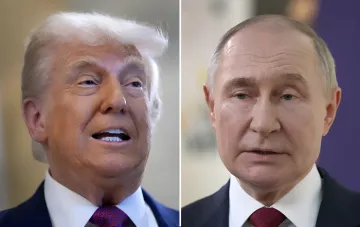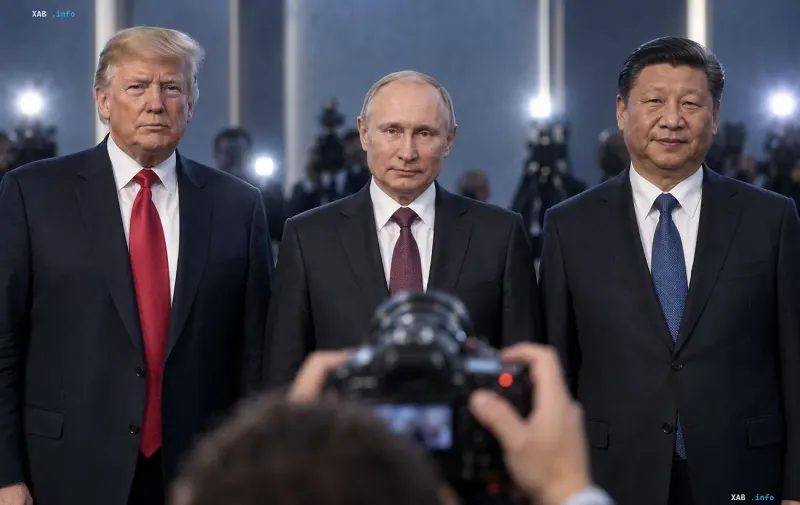
The potential trilateral meeting between Donald Trump, Xi Jinping, and Vladimir Putin in November is viewed by experts not as a platform for a real redivision of spheres of influence, but as an exclusively symbolic step for the Kremlin. This initiative, voiced by the Russian leadership in early October on the eve of the APEC summit in Shenzhen, aims to create the necessary propaganda picture, yet the real prospects for comprehensive agreements remain minimal.
The Fixed Idea of a New Yalta
The desire to hold a summit in the format of the world's three leading states has long been a goal of the Russian side. Political analyst Volodymyr Fesenko, in an interview with the RBC-Ukraine podcast «TSE BAZA», noted that the Russian leader seeks to recreate the atmosphere of historical mid-20th-century meetings, wishing to look like an equal among global players. For the Kremlin, the visual component itself is extremely important to demonstrate an exit from international isolation, even in the complete absence of substantive and long-term agreements.
However, the format of large multilateral summits objectively does not lend itself to deep geopolitical deals. «On the sidelines» negotiations are usually limited to a timeframe of one to two hours, which is clearly insufficient to discuss security architecture. Furthermore, the strategic interests of Washington and Beijing lean in favor of separate bilateral contacts, making a full-fledged trilateral meeting unlikely or purely formal.
Ukraine's Position and Kyiv's Reaction
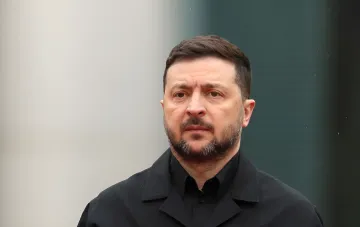
Any potential behind-the-scenes agreements reached without taking into account the opinion of the Ukrainian side and European partners will have no real legal force and will repeat the fate of past ineffective diplomatic initiatives. The experience of previous years shows that attempts to resolve European security issues behind Kyiv's back invariably fail. Ukrainian President Volodymyr Zelenskyy previously emphasized the inevitability of Russia's emergence from isolation, but strictly stressed the unacceptability of discussing the Ukrainian issue without Kyiv's participation.
The Ministry of Foreign Affairs of Ukraine also expressed a categorical protest against any secret consultations behind closed doors. Foreign Minister Andrii Sybiha stressed that backstage deals can only encourage further aggression rather than stop it. Official Washington and Beijing have not yet formed a single agenda for the November event, and Moscow acknowledges the lack of final consent from its partners.
Significance of the Summit and Prospects for Global Diplomacy
The main outcome of the possible November summit in Shenzhen will most likely be just a protocol group photo of the superpowers' leaders, used for the internal information purposes of Russian propaganda. A real division of the world or global peace agreements in such a format are impossible due to deep contradictions between the US, China, and Russia. The diplomatic process surrounding the end of the war in Ukraine requires comprehensive and inclusive mechanisms, rather than symbolic gestures in a narrow circle.