On August 13, 2026, Vladimir Putin made an unprecedented visit to the island of Iturup — the largest of the so-called 'Northern Territories,' whose status remains a subject of sharp dispute between Russia and Japan. This was the first visit to the island by the head of state in recent years, immediately triggering a stormy reaction in Tokyo and the West. The visit, taking place against a backdrop of tense international relations, was perceived by analysts not merely as a demonstration of sovereignty, but as a hard political signal in response to Japan's new defense strategy.
Geopolitical Context: Response to Japan's 'White Paper'
According to a report by the Institute for the Study of War (ISW), published on August 14, Putin's trip is part of a coordinated Kremlin response to Japan's 'Defense White Paper,' presented in early August 2026. In the document, prepared under Prime Minister Sanae Takaichi, Russia was officially classified for the first time in a long time as one of the critical threats to national security. The visit to Iturup became a direct demonstration that Moscow has no intention of yielding on territorial issues and is ready to strengthen its presence in the region.
During the trip, Putin held a series of meetings with key figures in the military and administrative management of the region. Among the interlocutors were the Governor of the Sakhalin Region Valery Limarenko, the Commander-in-Chief of the Pacific Fleet Admiral Viktor Liiina, and the Head of the FSB Border Service Sergey Makhorin. Special attention was paid to the command of the 68th Guards Army Corps of the Eastern Military District, whose units are reportedly currently conducting active combat operations in the Alexandrovsk direction. This underscores the direct link between the defense of the Far East and the current military campaign.
Diplomatic Crisis and Tokyo's Reaction
Japan's reaction to the visit was immediate and harsh. Prime Minister Sanae Takaichi publicly condemned the trip, stating that it was 'incompatible with Japan's consistent position' and was a provocation. Tokyo immediately summoned Russian Ambassador Nikolay Nozdrev to deliver an official note of protest. The Japanese Ministry of Foreign Affairs stated that Moscow's actions were aimed at legitimizing the occupation of territories that Japan considers its own. In response to the visit, Tokyo is already considering the possibility of introducing new, tougher sanctions against Russian companies and individuals.
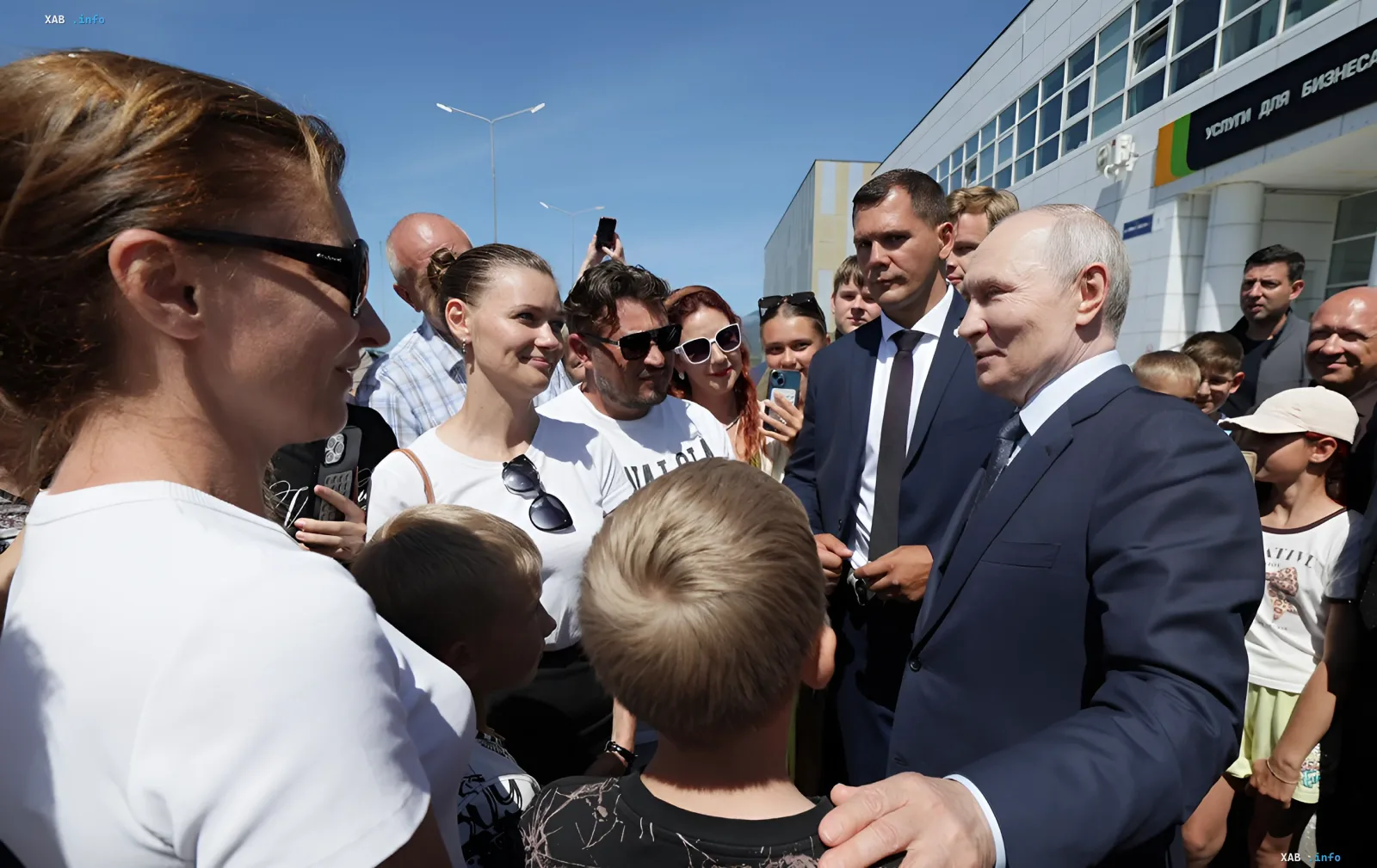
Vladimir Putin, for his part, criticized the 'White Paper' for labeling Russia as a threat. In his comments, he spoke of the need to 'ensure security on all our borders, on all our territories,' directly pointing out that the Kuril Islands are an integral part of Russia. He also visited the 'Yasny' fish processing plant and met with residents of Yuzhno-Sakhalinsk, emphasizing the economic and social development of the region.
Contradictory Data
There are discrepancies in the assessment of the visit's goals. On the one hand, Russian officials and propaganda channels present the trip as a routine inspection of the state of infrastructure and support for local residents. On the other hand, Western and Japanese analysts, including ISW, insist that this is a purely political step aimed at destabilizing Prime Minister Takaichi's efforts to strengthen the country's defense capabilities. Furthermore, some sources mention that the visit was planned in advance, while others claim it was a reaction to the publication of the 'White Paper'.
International Reaction and Prospects
The Ministry of Foreign Affairs of Ukraine also harshly condemned the visit, calling it an attempt by the Kremlin to intimidate Japan and legitimize the occupation of foreign territories. Kyiv expressed full solidarity with Tokyo, emphasizing that Russia's territorial claims have no legal grounds. Putin's visit to Iturup could become a turning point in relations between Russia and Japan, which are already in deep crisis due to the lack of a peace treaty after World War II.