The war in Ukraine, initiated by Vladimir Putin, is beginning to erode the unwritten "social contract" within Russia. Citizens, who expected protection from economic and social consequences, are facing a reality that is increasingly distancing them from the Kremlin's course. Under these conditions, political scientist Leon Aron, author of The Hill, puts forward an alarming hypothesis: Russia's next step could be an attack on a NATO country. The goal is not a total war, but the creation of facts on the ground that will allow Moscow to dictate the terms of a "durable peace".
Why the Kremlin Might Escalate
According to the expert, Putin has several compelling reasons for a radical change in tactics. First, this is the critical state of the Russian economy: high losses on the front, lack of technological breakthroughs, and falling revenues from oil and gas exports. Strikes on oil refineries and the fuel crisis are exacerbating the situation, while the president's popularity rating is steadily declining.
Secondly, there is a certain ambiguity in the West. Aron points to the uncertainty in the US position regarding NATO and the "immorality" of Donald Trump, who, in the author's opinion, is unable to clearly distinguish between a just and an aggressive war. This creates a window of opportunity for provocations.
Who is at Risk: Estonia and Latvia
Two NATO countries bordering Russia demonstrate particular vulnerability — Estonia and Latvia. Their combined population barely exceeds 3 million people, and a significant portion of them are ethnic Russians (about 20%). It is precisely this factor that could be the key to the provocation scenario.
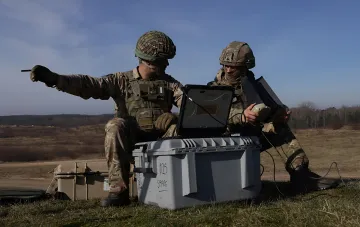
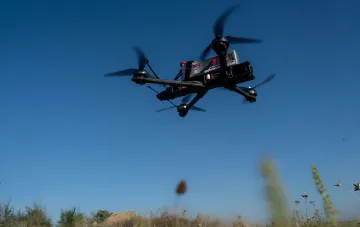
Russian intelligence services are already developing legends for future incidents. Examples cited include claims that Ukrainian drone operators are operating on the territory of the Baltic states. More direct threats have been voiced by the Russian Ambassador to the UN, Vasily Nebenzya. Experts note that such narratives could serve as a pretext for an invasion.
Attack Scenario and Logistical Deadlock
According to forecasts, the invasion could begin with massive strikes on infrastructure. Russia could use drones and missiles to destroy runways to prevent the airlift of reinforcements. In addition, the Warsaw-Kaunas railway could come under fire — the only rail corridor connecting the Baltic states with the rest of NATO.
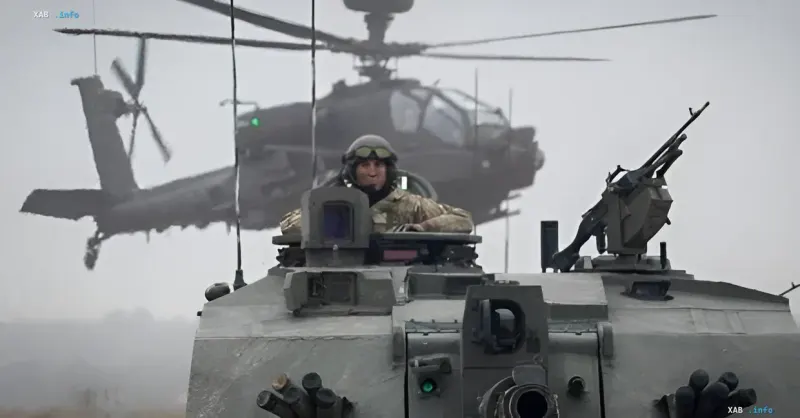
This would create a critical delay. NATO's Rapid Reaction Force, numbering 40,000 people, would need several days or even weeks to transfer main forces to the region. During this time interval, according to NATO protocols, the heads of allied states must gather in Brussels, unanimously recognize the fact of aggression, and invoke Article 5 of the charter. Only then is full assistance to the affected countries possible.
Goal: Occupation and Ultimatum to Europe
It is important to understand that Putin probably does not seek direct confrontation with NATO, which exceeds Russia in military power by an order of magnitude. The goal could be the targeted occupation of small territories:
- In Estonia — the Ida-Viru County, covering more than 1100 sq. km, where three-quarters of the population are ethnic Russians.
- In Latvia — the Latgale region, covering more than 5600 sq. km, where a third of the population are Russians.
Once control over these regions is established, the Kremlin could hold "referendums" and begin threatening the use of nuclear weapons to protect "Russian lands." At this moment, Putin could offer Europe to "make a deal".
The Price of "Peace"
According to Aron, such agreements would be embedded with conditions for settling the conflict in Ukraine. Russia could again demand the withdrawal of Ukrainian forces from the territory of the Donetsk region and international recognition of the occupied territories. Furthermore, Moscow could attempt to redistribute spheres of influence on the continent, forcing NATO to abandon the expansion carried out in the 1990s.
Although Poland believes that Russia currently lacks sufficient resources for a large-scale attack, the possibility of provocations is not ruled out. Experts remind us that Russian Iskander ballistic missiles, based in the Kaliningrad region, are technically capable of striking Poland and the Baltic states. Against the backdrop of growing Kremlin military activity outside Ukraine, including Tu-95 reconnaissance aircraft flights near NATO groups in the Norwegian Sea, the threat remains real.