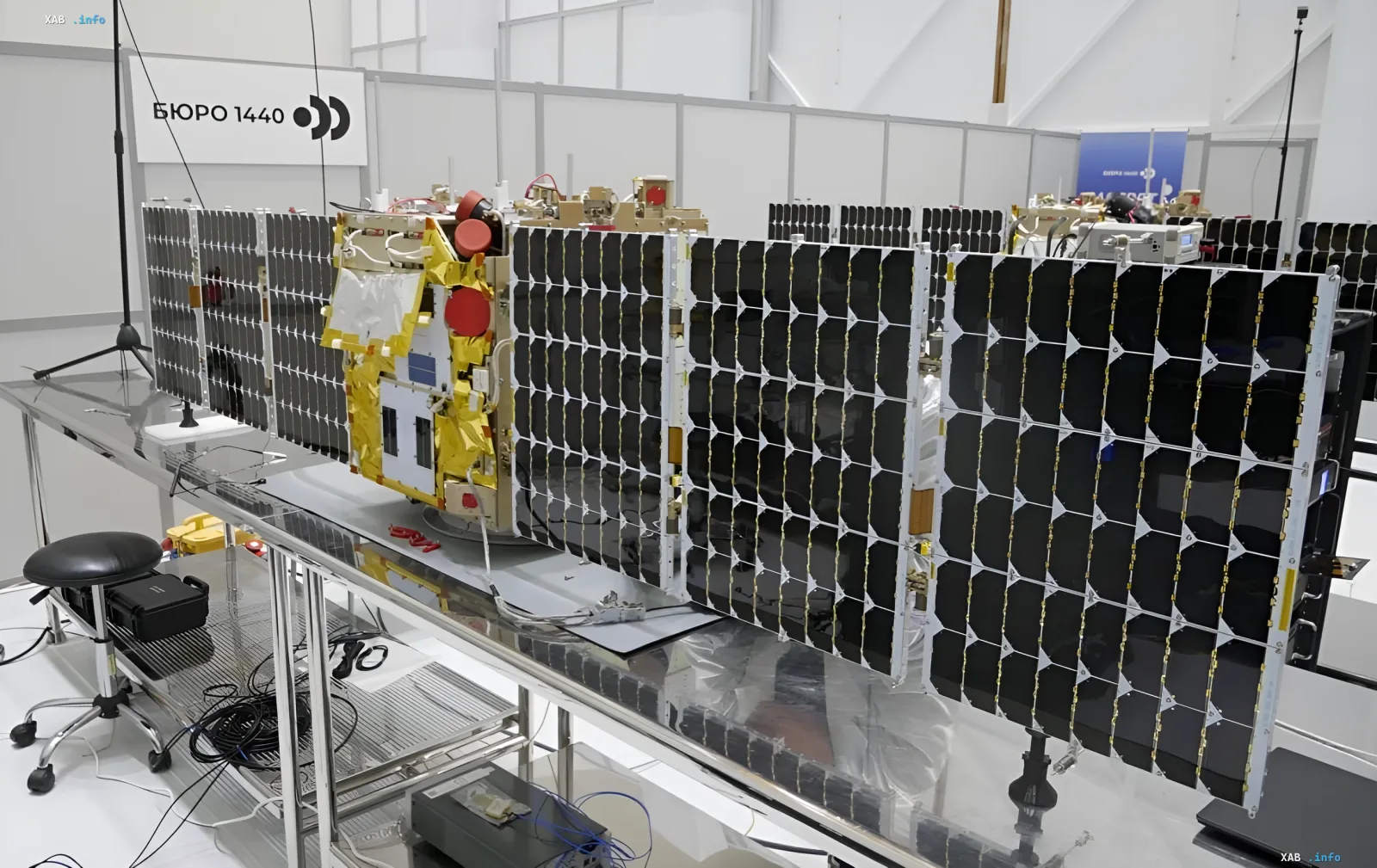
Amid a protracted conflict and growing reliance on space technologies, Moscow is demonstrating unexpected momentum in implementing one of the decade's most ambitious projects. According to the Main Directorate of Intelligence (HUR) of the Ministry of Defense of Ukraine, Russia is accelerating the deployment of the 'Rassvet' satellite constellation — its own analog of the Starlink system — surpassing its own planned indicators.
Accelerated Schedule: From 16 to 924 Units
Deputy Head of the HUR of the Ministry of Defense, Major General Vadym Skibitsky, confirmed in an interview with RBC-Ukraine that the implementation of the system is proceeding faster than Russian plans anticipated. A key milestone was the event in March 2026, when the first 16 satellites of the constellation were deployed into low Earth orbit. This launch marked the start of a large-scale program which, according to current estimates, should lead to the formation of a full constellation of 292 satellites by 2027. The long-term plan envisages launching up to 924 units into orbit by 2035, which will allow for the creation of a global communications network.
Technical Limitations and Current Status
Despite ambitious plans, as of August 2026, the functionality of 'Rassvet' remains limited. The system operates only fragmentarily: communication is possible only at moments when a specific satellite passes over a certain territory. This significantly differs from the continuous coverage provided by the Starlink system. However, experts warn that upon reaching a critical mass of satellites (292 units), the system will operate on a principle similar to its American counterpart, providing continuous internet and command communication for military and civilian objects.
Contradictory Data
There are discrepancies in expert assessments and official statements regarding the timelines and characteristics of the system. On one hand, representatives of the HUR report that the schedule is being exceeded and full deployment is ready by 2027. On the other hand, Adaptis CEO Nikolay Kalinichenko offers more conservative forecasts, estimating the start of full commercial operation of the system around 2027. Furthermore, Kalinichenko notes an important technical detail: the declared orbit of the 'Rassvet' constellation passes higher than the main working altitudes at which the Starlink network functions. This could affect signal latency and connection quality, as well as the complexity of countering the system using electronic warfare (EW) means.
Strategic Consequences and Discussions on Countermeasures
The successful completion of the 'Rassvet' deployment will be a serious challenge for Ukraine and its allies, who actively use electronic warfare (EW) means to neutralize Russian communications. Currently, active discussions are underway in intelligence and military circles regarding how to counter this system. If Russia can ensure independent satellite communications, it will neutralize some of the successes achieved in blocking Russian control channels for drones and artillery. It was previously reported that Russia was likely preparing to launch 'Rassvet' satellites from the Plesetsk Cosmodrome between July 11 and 16, confirming the intensity of preparations for the next stages of deployment.