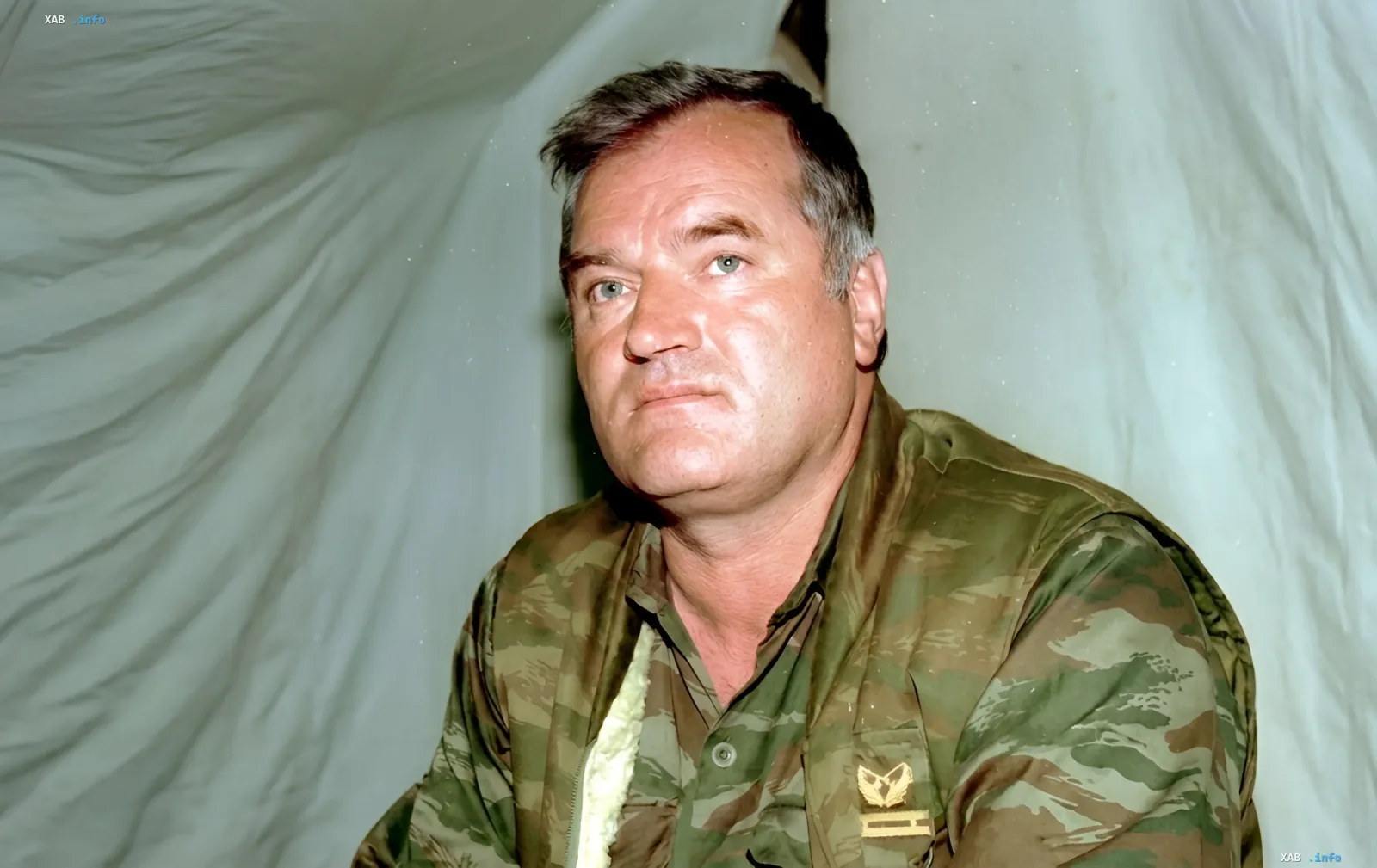
Ratko Mladic, the former commander of the Army of Republika Srpska, known worldwide as the "Butcher of Bosnia," has died in the prison of the International Tribunal in The Hague. This is reported by RBC-Ukraine, citing The New York Times and BBC. According to the publications, death occurred against a backdrop of the convicted man's deteriorating health, as he was serving a life sentence for war crimes and crimes against humanity committed during the Bosnian war of 1992–1995.
Circumstances of death and the tribunal's position
Mladic's lawyers repeatedly filed motions for his early release or transfer to a medical facility in Serbia, claiming that the convict had no more than a month to live. The International Tribunal rejected these requests, emphasizing that the medical center of the Hague prison is fully equipped and provides top-level care, ensuring the detainee maximum comfort. At the same time, according to reports from several publications, following his death the tribunal ordered a new investigation into the circumstances of the death.
Sentence and list of crimes
In July 2021, Ratko Mladic was sentenced to life imprisonment. The court found him guilty of war crimes and crimes against humanity, including the years-long siege of Sarajevo and the organization of the genocide in Srebrenica. Mladic held the rank of general and commanded the Army of Republika Srpska during the period when the political leader of the Serb side was Radovan Karadzic, who had earlier also received a life sentence for genocide. After the end of the war, Mladic evaded justice for 16 years; he was detained in Serbia only in 2011 and immediately extradited to The Hague. Despite the rulings of international courts, some Serb nationalists still consider him a "hero."
The Srebrenica massacre as a key episode
The Srebrenica massacre, carried out in July 1995, is recognized as one of the largest war crimes in modern European history. After the area of the town was seized by the forces of Republika Srpska under Mladic's command, a mass killing of approximately 8,000 Bosniak Muslim men, aged between 12 and 77, was planned and methodically carried out. The armed formation "Scorpions," linked to the Serbian Ministry of Internal Affairs, participated in the crime, as established by the courts. The Hague tribunal for the former Yugoslavia recognized the massacre as genocide in a number of verdicts, and in February 2007 the International Court of the United Nations also classified it as genocide.
Contradictory data
Publications from different outlets record a discrepancy in the age of the deceased. A number of sources (including RBC-Ukraine) state that Mladic died at the age of 85, while the publication aroundprague.cz reports his death at the age of 84. Moreover, if the initial reports presented the death as a completed fact, then according to reports from tut-news.ru the tribunal in The Hague ordered a new investigation, which may indicate the need for additional verification of the circumstances. These discrepancies in figures and in the procedural status of the event require cautious interpretation until final official confirmation.
Context: international accountability mechanisms
Mladic's death once again draws attention to the work of the international judicial institutions for the former Yugoslavia and to the mechanisms for prosecuting genocide. A reminder of the current context is the recent approval, at a meeting of the Committee of Ministers of the Council of Europe, of a key decision on the procedure for launching the Special Tribunal on the Crime of Aggression by Russia against Ukraine, which underscores the relevance of the precedents laid down by the Hague trials of the 1990s.