
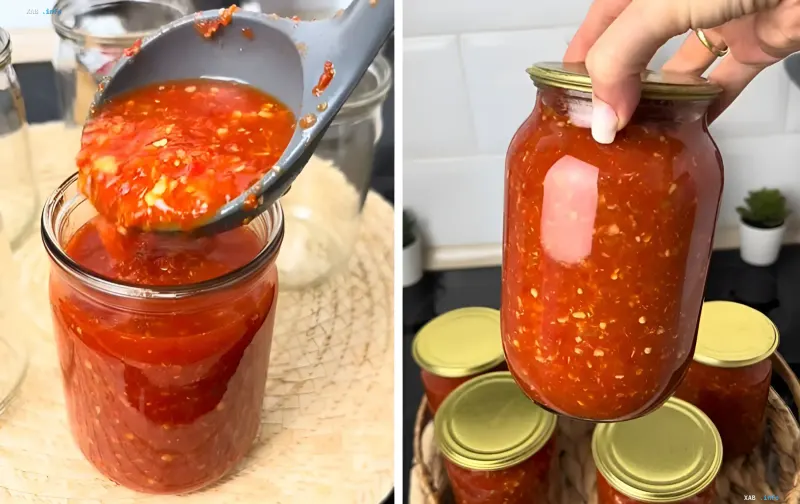
In August 2026, when the tomato and pepper season is in full swing, homemade preserves once again become the main trend in culinary life. Among the multitude of recipes requiring hours of boiling and sterilization, one stands out, gaining popularity due to its simplicity and health benefits — raw adjika without heat treatment. This method allows you to preserve the maximum amount of vitamins and the natural taste of vegetables, turning the preserve into a true gastronomic delicacy.
The Secret of Perfect Taste: Choosing Ingredients
The key to the success of raw adjika lies not in complex technology, but in the correct selection of components. Experts and experienced housewives agree: for this recipe, you must choose exclusively ripe, fleshy tomatoes. They will provide the sauce with the necessary thickness and rich juice, without making it watery. Special attention should be paid to horseradish — it is the root of this plant, along with garlic, that forms that very "fiery" character and rich aroma that distinguishes real homemade adjika from store-bought analogues.
Preparation Technology: From Meat Grinder to Jar
The process of creating "live" adjika is surprisingly simple and takes only about 30 minutes. All vegetables — tomatoes, sweet and hot peppers, garlic, and horseradish — are thoroughly washed, cleaned of seeds, and ground through a meat grinder. Although using a blender is possible, it is the meat grinder that allows you to preserve a more interesting, non-uniform texture, which is appreciated by gourmets. The resulting mass is mixed with salt, sugar, and vinegar, after which it is allowed to infuse at room temperature. This stage, lasting about half an hour, is critical: spices dissolve, and flavors harmoniously combine.
Storage Rules and Precautions
Since raw adjika does not undergo heat treatment, the requirements for its storage are stricter than for boiled sauces. Jars with the finished product must be stored exclusively in the refrigerator or a cold cellar. It is categorically not recommended to leave such a preserve at room temperature. In addition, experts strongly advise against experimenting with reducing the amount of salt or vinegar, as it is these ingredients that act as preservatives and guarantee the safety of the product throughout the winter.
Useful Tips from Pros
One of the most unpleasant moments when making adjika is the sharp smell of horseradish, which causes tearing. Professionals recommend a simple life hack: stretch a plastic bag over the outlet of the meat grinder and grind the horseradish directly into it. This completely neutralizes the smell in the room. The finished adjika can be served immediately after cooling. It perfectly complements meat dishes, lard, dumplings, and even simple boiled potatoes, adding piquancy and brightness to them.