On August 12, 2026, Razer officially unveiled the long-awaited update to one of the most iconic lines of peripherals — the Razer Naga V3 Pro mouse. This new release is a response to the demands of professional esports athletes and fans of Massively Multiplayer Online (MMO) games, for whom having a large number of programmable buttons is critical. Razer engineers did not just update the internals but also reworked the ergonomics, introducing an innovative system for quickly swapping side panels without tools.
Modular Ergonomics: Versatility in One Body
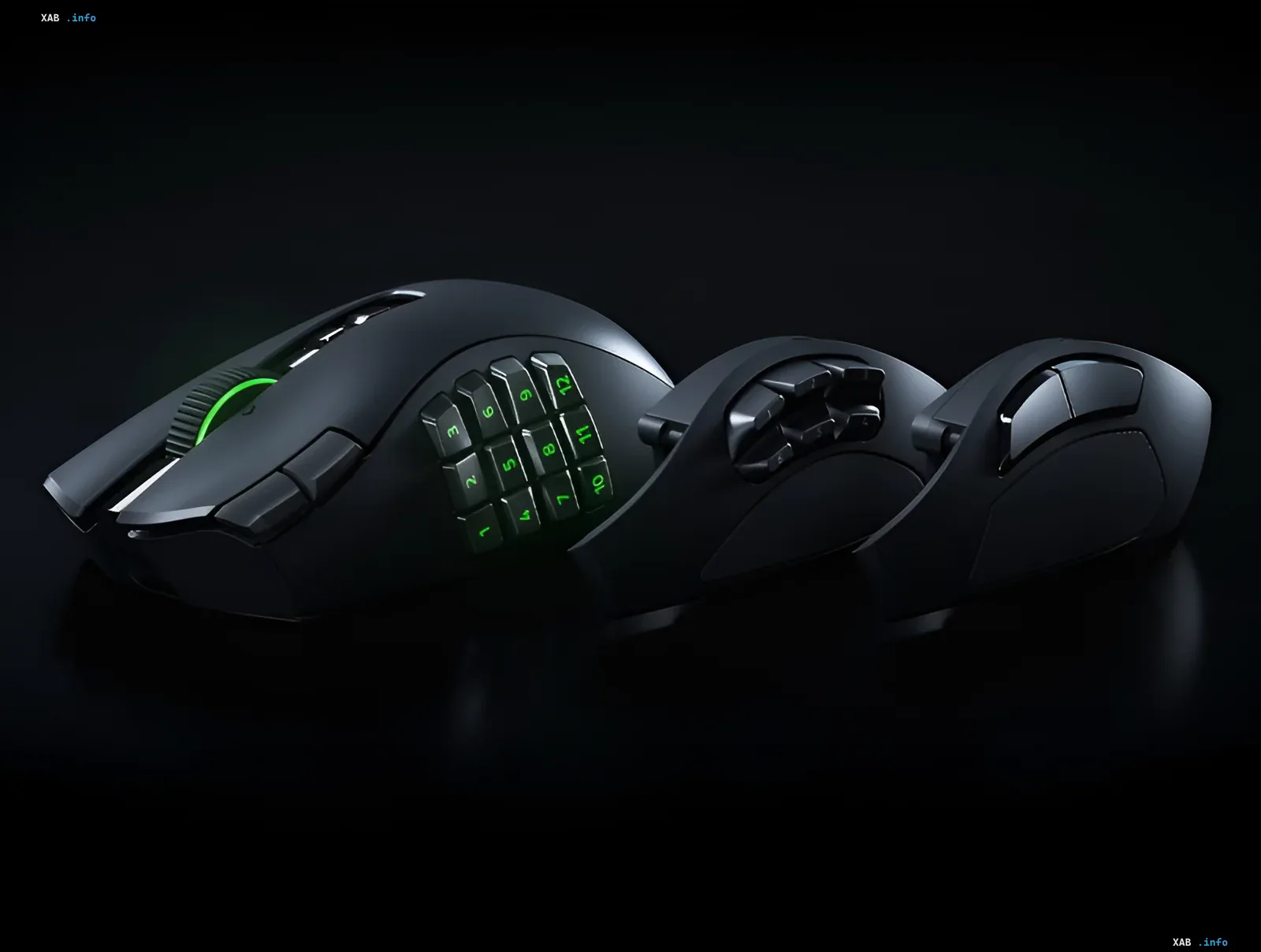
The main feature of the Razer Naga V3 Pro is the ability to instantly change configurations. The package (or as an option) includes three types of side panels, each adapted for a specific game genre. The 12-button panel is a classic solution for MMO projects like World of Warcraft or Final Fantasy XIV, allowing all abilities to be mapped to the left hand. The 6-button panel is oriented towards MOBA games, where quick access to items and skills is required. The third panel, equipped with only two buttons, turns the mouse into an ergonomic tool for First-Person Shooters (FPS), where extra elements can hinder precise aiming.
The panels are attached using magnetic holders, allowing them to be changed in seconds. This solution eliminates the need to buy multiple mice for different tasks, making the Naga V3 Pro a universal solution for gamers with a wide range of interests.
Technological Breakthrough: Focus Pro 50K Sensor and HyperScroll
Inside the mouse body lies the latest third-generation Razer Focus Pro 50K optical sensor. The claimed specifications are impressive: resolution up to 50,000 DPI, tracking speed of 930 IPS, and acceleration of 90 G. To ensure maximum stability during sudden movements, Frame Sync technology is used, which synchronizes sensor data with the monitor's refresh rate. The polling rate is 1000 Hz, guaranteeing no latency even in the most dynamic scenes.
Special attention deserves the updated Razer HyperScroll Tilt Wheel Gen-2. It supports four operating modes: standard tactile (24 steps), precise tactile (48 steps for detailed inventory management), free-spin for quickly scrolling long lists, and Smart-Reel mode, which automatically switches between tactile and free-spin depending on the speed of finger movement.
Battery Life and Connectivity: Freedom from Wires
The Razer Naga V3 Pro operates in a fully wireless mode thanks to Razer HyperSpeed Wireless technology (2.4 GHz), which provides low latency comparable to wired counterparts. In this mode, the mouse can work for up to 155 hours without recharging. To save energy, there is a Bluetooth mode with extended battery life up to 280 hours. The option to use it in wired mode via a USB Type-C port is also preserved, which simultaneously charges the battery. For convenience, Razer offers compatibility with Razer HyperFlux V2 Charging System and Razer Mouse Dock Pro accessories.
Durability and Control
To ensure reliability, Razer equipped the mouse with 4th generation optical-mechanical switches. Their lifespan exceeds 100 million clicks, and the actuation force is reduced by 12% compared to previous versions, making clicks more crisp and responsive. The mouse weighs 117 g (without cable), which is a compromise between structural durability and comfort for long-term use. Built-in memory allows storing up to five configuration profiles, which is convenient for use on different PCs without the need to install drivers.
Contradictory Data
Although the official presentation took place on August 12, 2026, disagreements arose within the user community regarding the actual availability of the product. According to reports from some retailers and sources from the insider segment (e.g., ixbt.com), the Razer Naga V3 Pro mouse began appearing on sale a few days before the official announcement. This sparked rumors of a possible marketing strategy failure or a leak of the product batch. At the same time, the official Razer store confirmed that sales started on the date of the presentation, indicating that early appearances of the product might have been the result of local test batches or logistics errors. Currently, the price in the official store is $179.99, although on the secondary market, due to shortages in the first days, the price could have been higher.