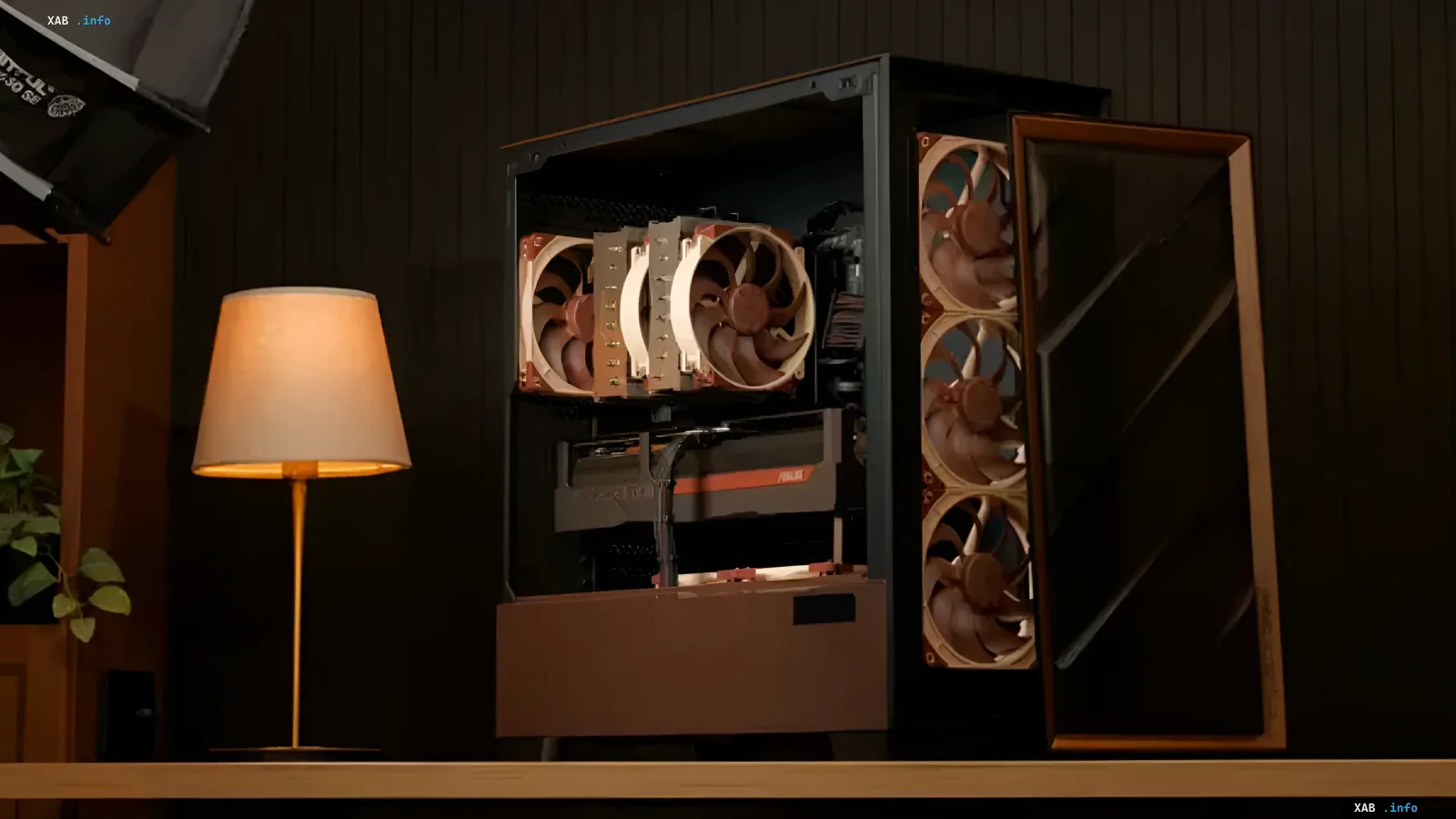
Austrian cooling system manufacturer Noctua, traditionally a benchmark for quality and precision in the computer hardware industry, has published the results of a large-scale internal investigation. The company's engineers, specializing in compatibility issues, conducted manual measurements of more than 100 popular computer cases available on the market. The results were shocking for the enthusiast and PC builder community: in 56 of the tested models (more than 50%), the official data on the maximum CPU cooler height significantly diverges from the actual physical dimensions.
Scale of Discrepancies: From Millimeters to Centimeters
The analysis showed that deviations in specifications are not insignificant. The data spread ranges from -3.5 mm to +10 mm. This means that the manufacturer's stated cooler height for the case can differ from the actual one both in a smaller and a larger direction. In the context of compact builds or the use of massive tower coolers, such as the Noctua NH-D15, even a difference of a few millimeters becomes critical. It is precisely these "extra" millimeters that often cause the side panel of the case simply not to close, or the cooler to hit the cooling system radiators.
Economics of Errors: Why Manufacturers Inflate Figures
It is important to note that the consequences of these discrepancies for the end user are ambiguous. If the case manufacturer understates the specifications (for example, states 160 mm, but actually 163.5 mm), the user gets a bonus in the form of additional space, which can be seen as a hidden advantage. However, the opposite situation, where the actual dimensions are smaller than stated, creates serious problems. A user relying on marketing data may purchase components that are compatible on paper but physically do not fit in the case. This leads to additional costs for returns and purchasing alternative solutions.
Contradictory Data
There are two points of view on the problem of specification accuracy in the PC industry. Supporters of case manufacturers often argue that discrepancies are necessary to account for glass thickness, mounting features, or tolerances in metal stamping, asserting that "up to 10 mm" is an acceptable engineering error. However, the enthusiast community and independent testers, including Noctua data, insist that in 2026, when PC building is becoming increasingly modular and compact, such tolerances are unacceptable. Official specifications should be accurate, not approximate, to avoid compatibility conflicts.
Impact on the Market and Future Compatibility
The publication of Noctua's data casts doubt on the reliability of specifications for many brands whose cases were included in the sample. This may lead to users becoming more skeptical of technical specifications on manufacturers' websites and relying on independent reviews and video tests that demonstrate the actual installation of equipment. For the industry, this is a signal of the need to tighten quality control and standardize methods for measuring internal case dimensions.