Home Canning Trends: A Crunchy Snack for Winter
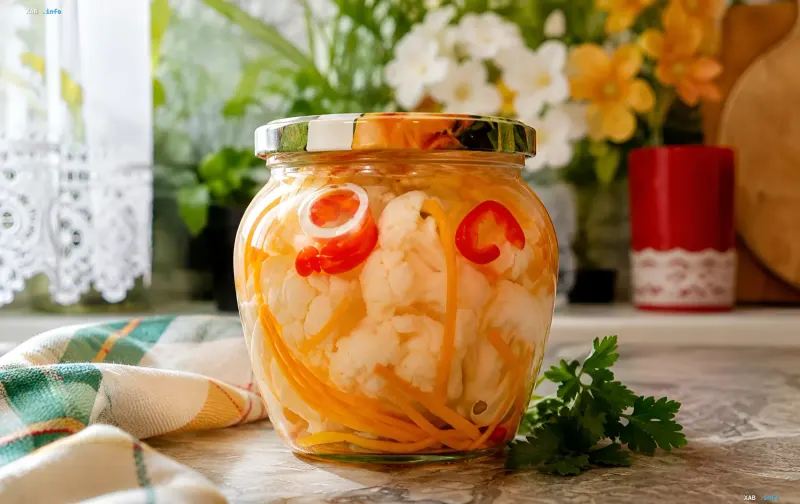
In the run-up to the autumn-winter season, when fresh vegetables become scarce, the issue of home canning becomes relevant. According to Styler, one of the most popular recipes in 2026 remains marinated cauliflower. Thanks to its texture and ability to absorb the aromas of spices, this product turns into a bright snack capable of complementing both a daily dinner and a festive table. The recipe's particular popularity is due to its authority: the preparation method was popularized by the famous food blogger Ptashka Nadia, whose Instagram videos gather thousands of views.
The Secret of Crunch: Blanching Technology
The key moment in preparing quality marinated cauliflower is proper heat treatment. According to the instructions, before placing in jars, the cauliflower must be washed and covered with cold water. The cooking process is strictly regulated: the florets are boiled for only 1 minute after boiling. This time is enough for the vegetable structure to become more pliable, while retaining the desired crunchy texture. Immediately after boiling, the cauliflower is transferred to cold water for shock cooling, which fixes the color and taste of the product.
Jar Assembly and Marinade Composition
To prepare four jars with a volume of 550 ml, careful preparation of ingredients is required. Carrots are cut into strips, sweet peppers into strips, and hot peppers into thin rounds. In sterilized jars, vegetables are laid in layers: part of the carrots, peppers, and garlic are placed at the bottom, then the container is tightly filled with cauliflower, alternating layers. To add piquancy, peppercorns of a pepper mix are added. The marinade is prepared from a classic set: water, salt, sugar, vinegar, and vegetable oil. The liquid is brought to a boil, after which the jars are poured with hot marinade until the vegetables are completely covered.
Final Sterilization and Storage
After screwing on the lids, the jars undergo the final stage of sterilization in boiling water for 10 minutes. This stage is critical for long-term storage of the product without the risk of spoilage. The finished jars are turned upside down, wrapped in a warm blanket, and left until completely cooled. This method ensures natural pasteurization of the contents. It is recommended to store the preparation in a dark, cool place, which allows you to enjoy the taste of fresh vegetables even in the coldest months of the year.