In August 2026, when the harvest season is in full swing, many gardeners face a problem: vegetables in the beds have overripened, become soft, and lost their marketable appearance. However, rushing to throw them into the compost is a mistake. Overripe tomatoes, zucchini, eggplants, and peppers are a treasure trove of flavor and vitamins that can be turned into exquisite preserves if simple safety rules are followed.
Safety rule: when vegetables can no longer be saved
Before starting canning, a strict selection must be made. Experts from the Styler project remind us: overripeness is not spoilage. Vegetables that have become soft, have spots, or uneven color, but do not have rot, mold, or an unpleasant odor, are ideal for processing. Any signs of mold or rotting mean that the product contains toxins that are not destroyed even by heat treatment. In such cases, the vegetable should be ruthlessly removed and disposed of.
Tomato sauce and adjika: saving soft tomatoes
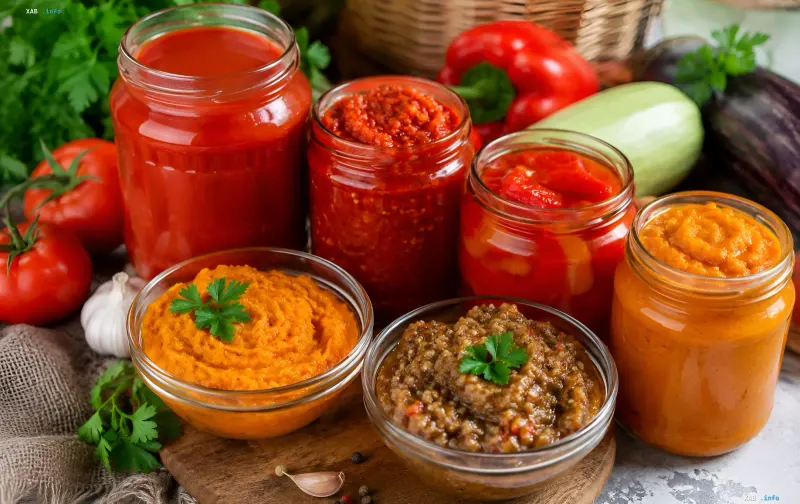
Overripe tomatoes are the ideal ingredient for sauces, where texture does not play a decisive role. To prepare a basic sauce, tomatoes are crushed and cooked over low heat until thickened, adding salt, sugar, garlic, and spices to taste. The hot sauce is poured into sterilized jars. For lovers of spicy food, the adjika recipe is suitable: overripe tomatoes are mixed with ripe peppers, garlic, vinegar, and spices. Such a preparation allows you to preserve the taste of summer throughout the winter.
Lecho and vegetable caviar: recipes for zucchini and eggplants
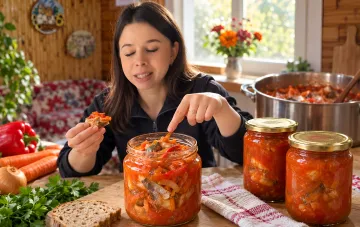
Large and soft zucchini and eggplants, which are no longer suitable for frying fresh, become the basis for famous vegetable caviar. Vegetables are peeled from skin and large seeds, stewed until soft, and crushed with a blender. After reheating with the addition of salt and spices, the mass is rolled up in jars. A similar principle works for lecho: crushed tomatoes, peppers, and onions are stewed until soft, adding oil and vinegar. These dishes complement side dishes and meat dishes perfectly.
Economy and traditions of home canning
Using overripe vegetables is not only a matter of taste but also of reasonable economy. In conditions where food prices are rising, the ability to process "substandard" products into quality preparations becomes a skill of a true host. Time-tested recipes allow you to turn an ordinary harvest into a gastronomic holiday without spending extra money on buying ready-made sauces and pastes in stores.