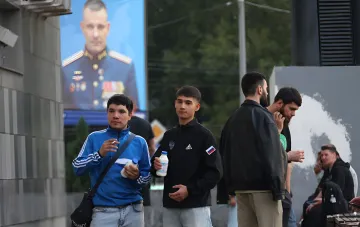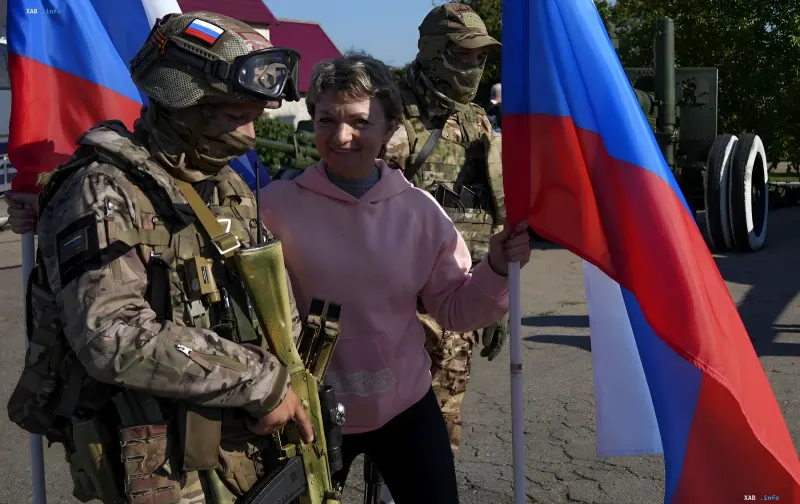
On August 16, 2026, the Center for Countering Disinformation (CCD) published an analysis of a new wave of propaganda campaigns in Russia aimed at recruiting youth from temporarily occupied territories (TOT). The main focus is on attracting students who are offered a 'special contract format' that allegedly allows them to combine military service with university studies. As an example, the story of a guy from Donetsk is actively used, who, according to propagandists, successfully studies and serves at the same time.
Romanticizing service and promises of 'golden mountains'
Russian propaganda resources systematically create an illusion of safe and profitable service. The materials emphasize the possibility of receiving high social guarantees, status, and financial support. The real risks of participating in hostilities, as well as the scale of losses of the Russian army, are intentionally silenced or pushed to the background. The goal is to form a false perception among young people of war as a career elevator or a way to get an education without interrupting 'service to the Motherland'.
Identity as a resource for war
CCD experts note that the Kremlin is trying not only to impose Russian identity on the residents of TOT but also to turn this population into a living resource for continuing aggression. Against the backdrop of significant losses in manpower, Moscow is actively looking for new sources of replenishment. Youth from occupied territories becomes a priority target, as they are most susceptible to ideological processing and administrative pressure.
Erasing boundaries: administrative occupation
Alongside the recruitment campaign, Russia is taking steps to legally consolidate the occupation. As sources report, the FSB plans to cancel border zones on certain sections of the Rostov and Voronezh regions bordering the occupied territories of Ukraine. The Ministry of Foreign Affairs of Ukraine believes that in this way Moscow is trying to erase the administrative border and create the appearance of the final 'inclusion' of captured Ukrainian lands into the RF, which would simplify mobilization and logistics for Russian troops.
Contradictory data
There is a clear contradiction between propaganda promises and reality. On the one hand, Russian media and agitators claim that a unique mechanism for combining studies and service is provided for students, guaranteeing the preservation of status and scholarships. On the other hand, independent sources and CCD data indicate that such 'preferential' contracts are often a fiction, and students who conclude them are actually sent to hotspots without any safety guarantees or the possibility of continuing their studies in a familiar format. The gap between the declared 'care' and the real situation remains a key tool of disinformation.