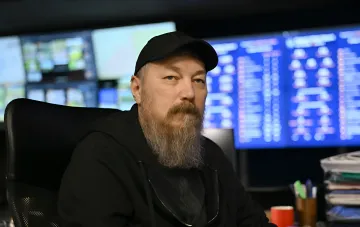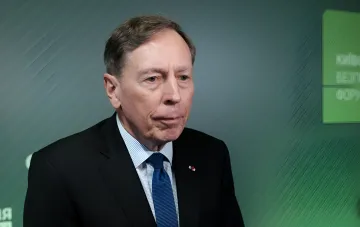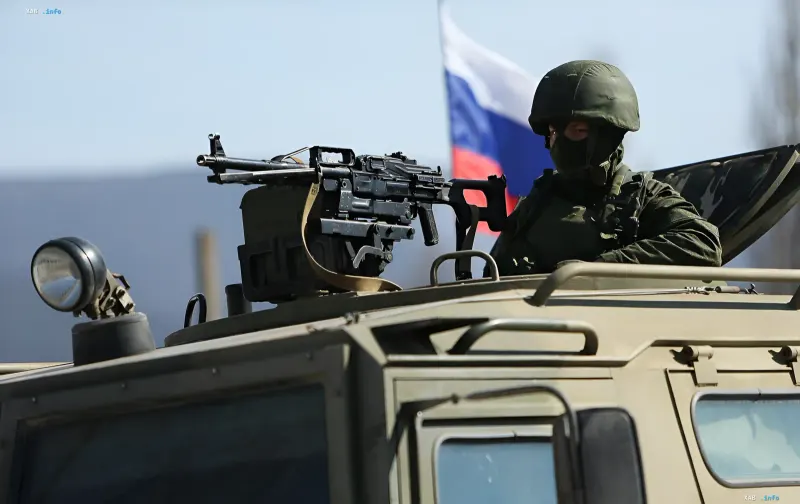
The head of the Main Directorate of Intelligence (GUR) of the Ministry of Defence of Ukraine, Oleksandr Ivashchenko, told the British publication The Times, as cited by RBC-Ukraine, that the generals in the Kremlin leader's entourage have requested an additional approximately 800,000 military personnel to continue the war against Ukraine. According to GUR intelligence reports, such a request was made following the nationwide elections held in Russia this month, and reflects the command's attempt to compensate for losses and maintain offensive potential.
A request exceeding the army's real capabilities
Ivashchenko emphasises that the figure of 800,000 named by the generals significantly exceeds what the Russian army can actually absorb. 'In reality, the army can simultaneously absorb — mobilise, arm, feed, train and integrate — no more than 300,000 to 500,000 new recruits,' the GUR chief noted. Thus, the gap between the stated request and the actual throughput capacity of the mobilisation and training system amounts, in his assessment, to hundreds of thousands of people.
Contradictory data
The sources presented record a significant discrepancy in the figures: on the one hand, the command, according to Ivashchenko, demands 800,000 additional military personnel, while on the other — he himself estimates the maximum permissible volume of simultaneous integration at 300,000 to 500,000. This contradiction between the stated demand and the real capabilities is not resolved in any of the sources and remains open: neither the Russian side nor independent observers confirm either the fact of the 800,000 request or its exact size. Moreover, all the data rest on a single public statement by the GUR chief in an interview with The Times, which limits the possibility of independent verification.
Travel restrictions and mobilisation orders
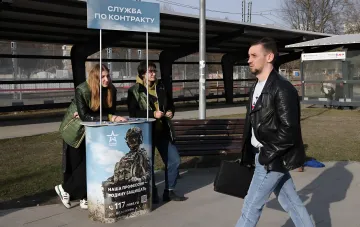
The context for Ivashchenko's statements is the tightening in Russia of restrictions on the departure of reservists liable for military service from the country. According to available information, the first case has been recorded in which a reservist was not allowed to leave the country due to a mobilisation order entered into his documents. This indicates that Moscow is in fact expanding the legal basis for the compulsory conscription of reservists, which is consistent with the intelligence assessment of preparations to increase personnel numbers.
How long will Russia's resources last
According to Ivashchenko's preliminary statements, Russia currently retains the military and economic resources to continue the war for at least the coming year. At the same time, in his assessment, these reserves may be completely exhausted by 2028. Thus, Ukrainian intelligence paints a scenario in which the current request for 800,000 military personnel is an attempt to get ahead of the predicted depletion of the resource base by the end of the decade.