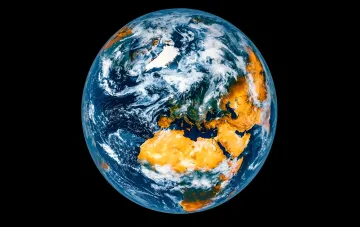
The history of our planet, as we are accustomed to understanding it, may require serious correction. For a long time, the scientific community held the view that about two billion years ago, Earth experienced the largest chemical shift in its history. It was believed that at that time, the atmosphere underwent a sharp saturation with oxygen, creating the foundation for the emergence of complex forms of life — plants and animals. However, a new study conducted by scientists from the California Institute of Technology (Caltech) casts doubt on the scale of this event.
From Global Cataclysm to Local Phenomenon
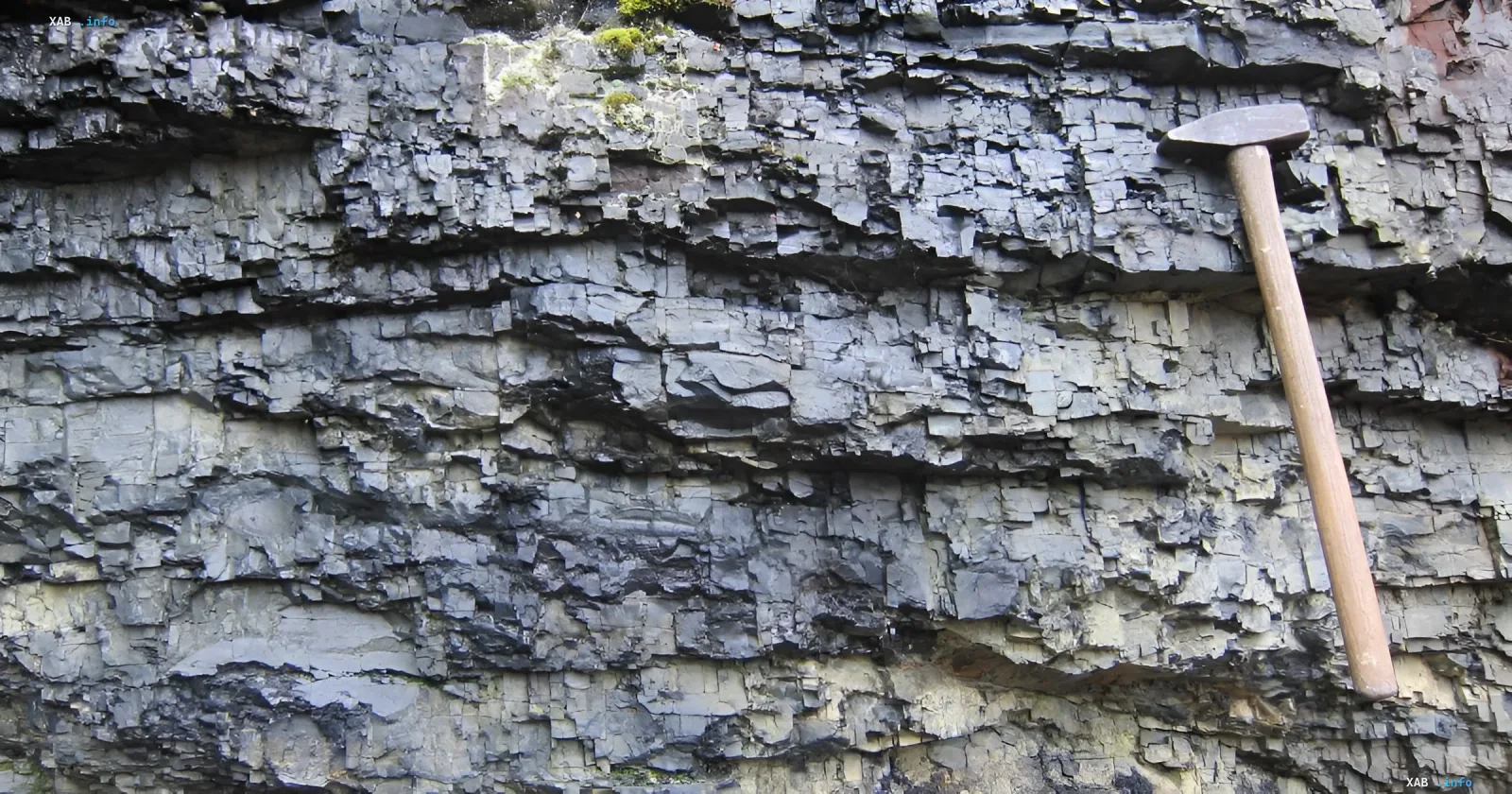
The traditional theory was based on the analysis of huge volumes of microbial biomass buried under the seabed in ancient times. Carbon associated with the rocks and soil of that period possessed extremely unusual isotopic characteristics. For decades, these signals were interpreted as evidence of serious disruptions to the global carbon cycle on a planetary scale. Chemical evidence confirming this hypothesis was found in core samples from two key locations: the Francevillian Basin in Gabon and the Zazhony Formation in Karelia (Russia).
However, a group of researchers led by Nivedita Thiagarajan proposed an alternative explanation. By analyzing microscopic air bubbles trapped in ancient rocks in Karelia, scientists concluded that the anomalous carbon isotopic signals have a local nature. They are the result of geological processes that occurred within a few hundred square kilometers, rather than a global event that engulfed the entire planet.
The Role of Magma and Methane-Eating Bacteria
The key to the mystery was found in the study of fluid inclusions in rocks rich in pyrobitumen — insoluble organic carbon formed by heating organic matter to high temperatures. Researchers discovered that in the past, a layer of magma penetrated through ancient marine sedimentary rocks. This led to the heating of organic-rich deposits and the formation of hydrocarbon molecules such as methane and propane.
These hydrocarbon flows rose upwards, becoming an abundant food source for methane-consuming microorganisms inhabiting the ancient seabed. In the process of consuming methane, bacteria formed new biomass, which left characteristic signals of light carbon isotopes in the rocks. Measurements showed a clear temperature gradient zone: from 350 degrees Celsius at the point of contact with magma to 72 degrees at a distance of about 300 meters. This series of local geological and biological processes fully explains the anomalies in the Zazhony region without invoking the hypothesis of a global upheaval.
Contradictory Data and New Horizons
There is a fundamental discrepancy between the established paradigm and the new data. Proponents of the classical theory point out that the Zazhony Formation in Karelia was considered the most reliable starting point for confirming a global shift in the carbon cycle. If the signals here have a local origin, then the very concept of a planetary crisis 2 billion years ago loses its main support.
The new point of view presented by Caltech asserts that the interpretation of isotopic data was erroneous due to the neglect of local thermal anomalies. However, the final verdict has not yet been delivered. An international research group from 18 countries is currently preparing an analysis of rock samples from Gabon obtained as part of the GOE-DEEP project. A comparison of results from Gabon and Karelia should provide the final answer: was this event local or indeed global.
Significance of the Discovery for Understanding Evolution
If the hypothesis of US scientists is confirmed, it will require a revision of ideas about how the Earth's atmosphere and conditions for life were formed. Understanding the mechanisms of natural gas formation and the interaction of magma with the biosphere in ancient times opens new avenues for geological research. Core samples stored at the headquarters of the Norwegian Geological Survey will become a decisive factor in this scientific debate, which could turn our understanding of the evolution of our planet upside down.