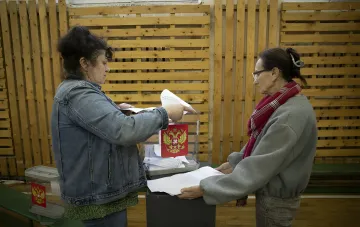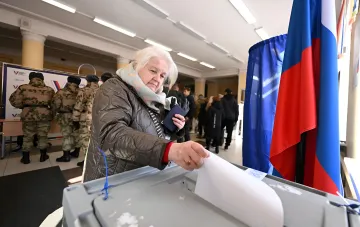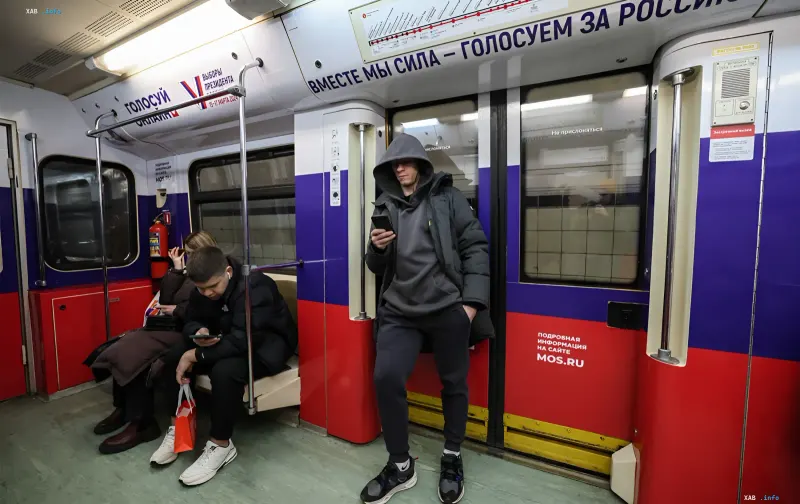
Russia is preparing to hold so-called elections to the State Duma in the temporarily occupied territories of Ukraine. This was announced by the Board of the Sociological Association of Ukraine (SAU), according to a report by RBC-Ukraine. According to the association, voting is scheduled for 18–20 September 2026 and will cover certain districts of the Donetsk, Luhansk, Kherson and Zaporizhzhia regions, as well as the Autonomous Republic of Crimea. The statement came against the backdrop of an active electoral campaign in Russia itself, where campaigning has already begun in public spaces and on public transport.
'Elections' as a Tool for Legitimizing Occupation
The Sociological Association of Ukraine emphasized that holding such 'elections' is one of the main tools for legitimizing the occupation authorities on the seized territories. According to Ukrainian sociologists, the formalized voting in these areas is intended to create an appearance of legality and 'popular will,' which can then be used for propagandistic and political purposes. Importantly, the procedure covers only certain districts rather than the full scope of the regions, which in itself points to its fragmentary and controlled nature.
International Non-Recognition and the Position of the UN and OSCE
Ukraine, along with most countries in the world and international organizations, does not recognize the legality of the so-called RF elections in the occupied territories. Among the bodies condemning these Russian actions, the statement names the UN and the OSCE. Thus, even if the voting technically takes place, its results will carry no legitimate weight in international law and will be unable to change the status of the territories from the perspective of the diplomatic community.
Call for a Boycott from the Sociological Community
The SAU Board addressed Ukrainian and international sociological centers, groups and companies, asking them to refrain from participating in events within the framework of the RF electoral campaign in the occupied territories. The same appeal called for a refusal to cover the progress and results of these 'elections.' The initiative is aimed at depriving the procedure of additional 'expert' and media legitimization that independent research and analysis might lend it.
The Shadow of Mobilization: Rumors, Range Inspections and Denials
The context of the election preparations is complicated by reports of a possible new wave of mobilization. In the second half of August, it became known that inspections of military training grounds for their readiness to accommodate large numbers of people had begun in several Russian regions. According to the partisan movement 'ATESH,' such inspections were recorded at ranges in the Rostov and Moscow regions, and a new wave of mobilization in the Kremlin, per their information, is planned to be launched immediately after the State Duma elections. Earlier, Ukrainian President Volodymyr Zelensky also stated such intentions, saying that Russia plans to recruit 300,000 people for 2026 and 2027.
Contradictory Data
Here the versions of the sides diverge significantly. On the one hand, the partisan movement 'ATESH' and Ukrainian President Volodymyr Zelensky claim that after the State Duma elections Russia will launch a new wave of mobilization and intends to recruit about 300,000 people for 2026–2027; in their favor, data on inspections of ranges in the Rostov and Moscow regions are cited. On the other hand, in early September, the head of the RF, Vladimir Putin, publicly denied that mobilization would begin after the elections, calling the corresponding rumors an information attack. Thus, the fact of preparations for mobilization remains a matter of dispute: one side relies on field observations and statements from Kyiv's leadership, the other on a direct denial from the Kremlin. Until actual confirmation or refutation, this information should be regarded as contradictory.
The outcome of the SAU statement is a twofold picture: on the one hand, Russia seeks through 'elections' in the occupied territories to entrench its administrative and symbolic power, while on the other, the international community and the Ukrainian sociological space are building a line of non-recognition and boycott. In parallel, inconsistencies persist in assessments of a possible mobilization, making September 2026 a period of heightened political and information tension around the State Duma electoral campaign.