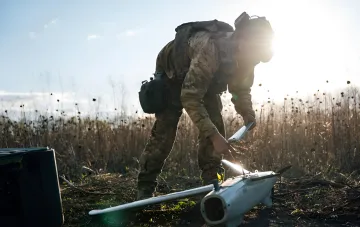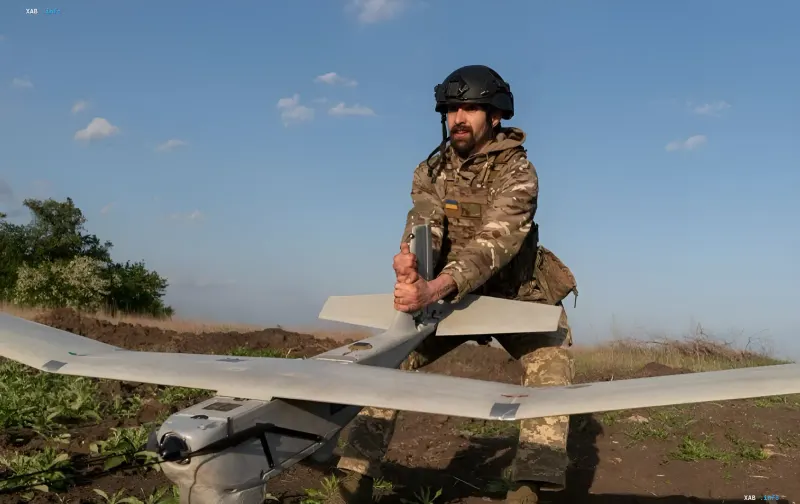
Ukrainian company Rise Technologies has completed the modernization of the American RQ-20A Puma AE reconnaissance drone by integrating the Palych system. According to the report, the aircraft were handed over for upgrades by SSES military units, with the objective of adapting standard communications to the modern electronic warfare (EW) environment on the frontline. As the soldiers note, the Puma is a reliable and resilient platform capable of surviving crashes or rough landings and operating in rain, fog, and snow. However, due to the vulnerability of the standard communication channel to modern EW equipment, the drones currently available to the unit were effectively decommissioned, prompting the upgrade.
Why the Puma Fell Out of Use
The RQ-20A Puma AE was developed by the American company AeroVironment. The aircraft is hand-launched and equipped with optical and infrared cameras for reconnaissance. The fuselage is water-resistant, allowing it to land on both land and water, and to carry out missions in adverse weather conditions. The drone can stay airborne for over three hours, with a wingspan of 2.8 meters. While the aircraft features a DDL digital data link, operators note that intense EW deployment on the frontline introduces additional communication demands that the standard architecture can no longer meet.
How the Palych System Solves the Communication Issue
For the Puma upgrade, a standard Palych kit was used, requiring no significant structural modifications. Following integration, engineers tested the communications in a laboratory and conducted field trials. According to the developers, Palych shifts the drone's standard communication channel into a different operating band, which can be selected according to the electronic environment to mitigate interference. Thanks to this update, the Puma will be able to perform flight missions under active EW jamming at distances of up to 50 km.
Scale of Palych Deployment and Supply Context
According to the company, the Palych system is used to upgrade strike drones and specific DJI and Autel models; over its lifetime in various configurations, it has been installed on six thousand airframes. A reminder of the Puma platform's significance for Ukraine comes from earlier reports: in 2023, the US Army announced funding for the delivery of over 500 Puma aircraft to Ukraine, along with ground equipment and services. Thus, the communications upgrade transforms units previously rendered virtually obsolete by EW into functional reconnaissance assets once again in active conditions.
Separately, in the context of drone warfare, it is worth noting that new export control rules came into effect in China on November 18, covering certain components used in the production of Russian strike drones. This reinforces the broader trend of restricting access to UAV components and makes issues of communication resilience and platform autonomy even more critical for all sides of the conflict.