Member of Parliament and member of the Verkhovna Rada Committee on National Security, Defense, and Intelligence Fedir Venislavsky assessed the current state of Ukraine's defense-industrial complex in an interview with RBC-Ukraine. According to him, the domestic defense industry is already capable of independently supplying the Armed Forces with almost all means of destruction, although a number of critical areas remain dependent on foreign supplies. The MP emphasized that the capabilities of the defense-industrial complex are limited primarily by budgetary constraints.
Drones, Long-Range Strikes, and Laser Weapons
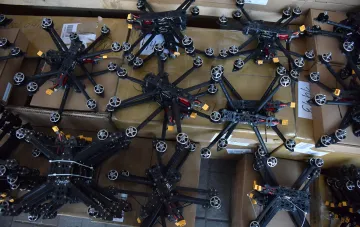
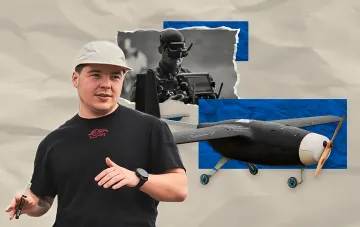
Venislavsky noted that Ukraine can currently produce drones, by his estimate, dozens of times more than the state is able to finance and procure for defense needs. The MP also pointed to significant innovative developments in the field of mid-strikes and deep strikes—missile weapons capable of striking deep into enemy territory. Separately, he mentioned innovative developments in the field of laser weapons, which, according to him, already exist in the country.
Artillery: Changing Nature of War
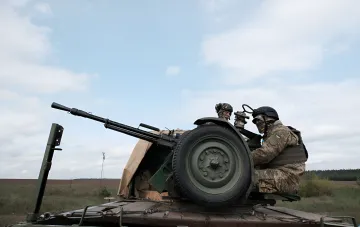
A separate section of the statement is devoted to ammunition production. Venislavsky noted that artillery warfare is no longer as intense as it was in 2022–2024, with drone-based destruction means currently prevailing. Nevertheless, work on 122, 152, and 155 mm rounds continues. According to him, the production of 155 mm ammunition has been mastered, but domestic capacities are still insufficient to fully cover the front line's needs, so a certain dependence on partners remains.
Critical Dependence: Air Defense Against Ballistic Missiles
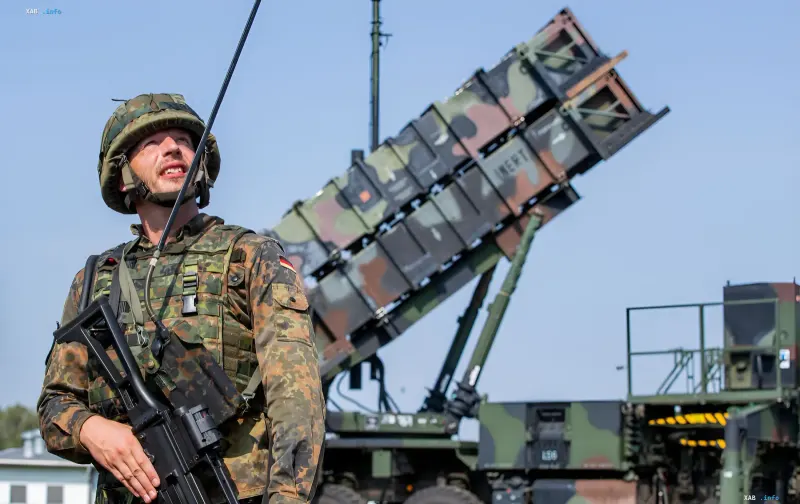
Venislavsky named air defense systems capable of countering ballistic missiles as the main vulnerability. By his estimate, there is currently only one proven system that has demonstrated such a result—the Patriot PAC-3. He called missiles for air defense systems, particularly surface-to-air and air-to-air classes, the second critical dependency. Compensating for this dependence with domestic production capabilities is a task facing the country, but according to the MP, this is not a quick process: it involves high-tech and expensive solutions that take time.
Budget as the Main Limiting Factor
For context: as reported by Prime Minister Serhiy Koretsky, the draft state budget for 2027 allocates 4 trillion 885 billion hryvnias for defense, while the needs of the Defense Forces for 2027, according to him, are significantly higher. Thus, even with technological advancements in place, funding remains the key factor rather than a lack of the solutions themselves.