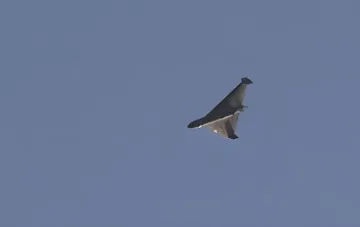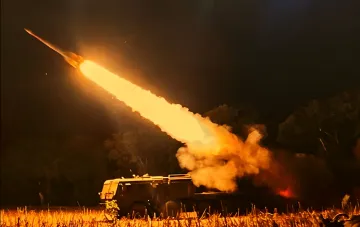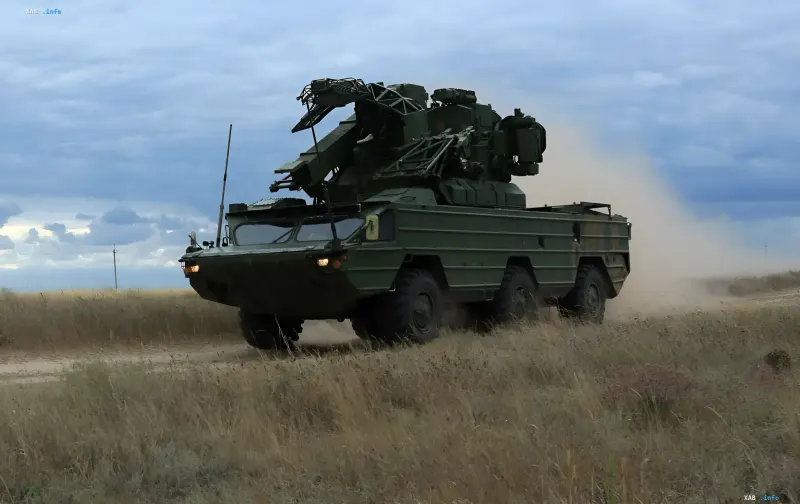
At the MSPO international defense exhibition in Poland, the UkrOboronProm concern presented the RK-19 surface-to-air missile, developed for integration into the Osa-AKM air defense missile system. According to the developers, the new missile is intended to replace the Soviet 9M33-series missiles, whose stocks in the Armed Forces of Ukraine are, by estimates, running out amid a war that has lasted many months. The RK-19 was first shown publicly in a video congratulatory message from Ukrainian President Volodymyr Zelenskyy on the occasion of Armaments Day in April 2026, while at MSPO the system was demonstrated already as part of a launch vehicle.
What the RK-19 Is and Why It Is Needed
The RK-19 is a domestically produced guided surface-to-air missile being developed as the standard ammunition for the all-weather Soviet Osa-AKM SAM system, which remains the backbone of the Ukrainian military's inventory of systems of this type. The Osa-AKM was originally designed to protect troops and critical facilities from aircraft and cruise missiles. A self-propelled launch vehicle in full combat configuration carries six 9M33M3 guided missiles, and it is precisely these that the new RK-19 is planned to phase out. Switching to a homegrown missile allows Ukraine to reduce its dependence on dwindling Soviet-era stockpiles and to ensure the sustainable production of air defense ammunition.
Tactical and Technical Characteristics
According to published data, the RK-19's target-intercept range is up to 10 kilometers, its maximum engagement altitude is up to 5 kilometers, and its maximum flight speed is 600 meters per second. Like its Soviet counterparts, the missile uses a radio command guidance system. The weight of the launch container together with the missile is 163 kilograms; the container dimensions are 3255×320×303 mm, and the warhead weight is 14.3 kg. For comparison: the standard 9M33M3 has a weight of 126.3 kg (of which 15 kg is the warhead), a length of 3158 mm, a body diameter of 206 mm, and a wingspan of 650 mm; its maximum flight speed reaches 500 m/s, target detection range is up to 45 km, the engagement zone by range is from 1,500 to 10,000 m, by altitude from 25 to 5,000 m, and by bearing parameter ±6,000 m. The missile is capable of engaging targets moving at speeds of up to 500 m/s and maneuvering with overloads of up to 8 g.
Context: A Systemic Shortage of Air Defense Ammunition
The development and demonstration of the RK-19 are taking place against the backdrop of a shortage of air defense ammunition that, in 2026, is described by the country's leadership as systemic. In August, the President of Ukraine stated that deliveries of air defense missiles had shrunk by roughly a third compared with 2025, and this concerns not only the summer period but all preceding months as well. It is precisely this factor that makes replacing the Soviet 9M33s with homegrown missiles a priority task for industry and the defense establishment.
Alternative Solutions and the Osa-AKM's Combat Record
Amid the shortage of standard ammunition, Ukrainian developers are simultaneously seeking other ways to counter air threats. In particular, participants of the Brave1 platform recently demonstrated a technology for intercepting Russian "Bandirol" drone-missiles, which is significantly cheaper than the enemy's missile itself. Meanwhile, the Osa-AKM's combat relevance is borne out by practice: according to reports, systems of this type are covering the skies over the Kherson region, where, per sources, more than 20 targets have been shot down in a single month, including strike UAVs. Thus, the RK-19 is being integrated into a system that is already operational and actively in use, not a hypothetical one.
Contradictory Data
No direct discrepancies in the figures between sources on the RK-19's characteristics have been recorded: the range, altitude, and speed values are presented consistently. At the same time, it is important to note that all tactical and technical data on the new missile at this point are based on the developer's statements and official presentations (the President's video message and the MSPO exhibition), rather than on independent tests or confirmed combat use. Therefore, the stated 600 m/s and 10 km range should be regarded as nominal/declared values that may differ under real operating conditions. The speed difference between the RK-19 (600 m/s) and the 9M33M3 (500 m/s) reflects a declared improvement, not a contradiction between versions.