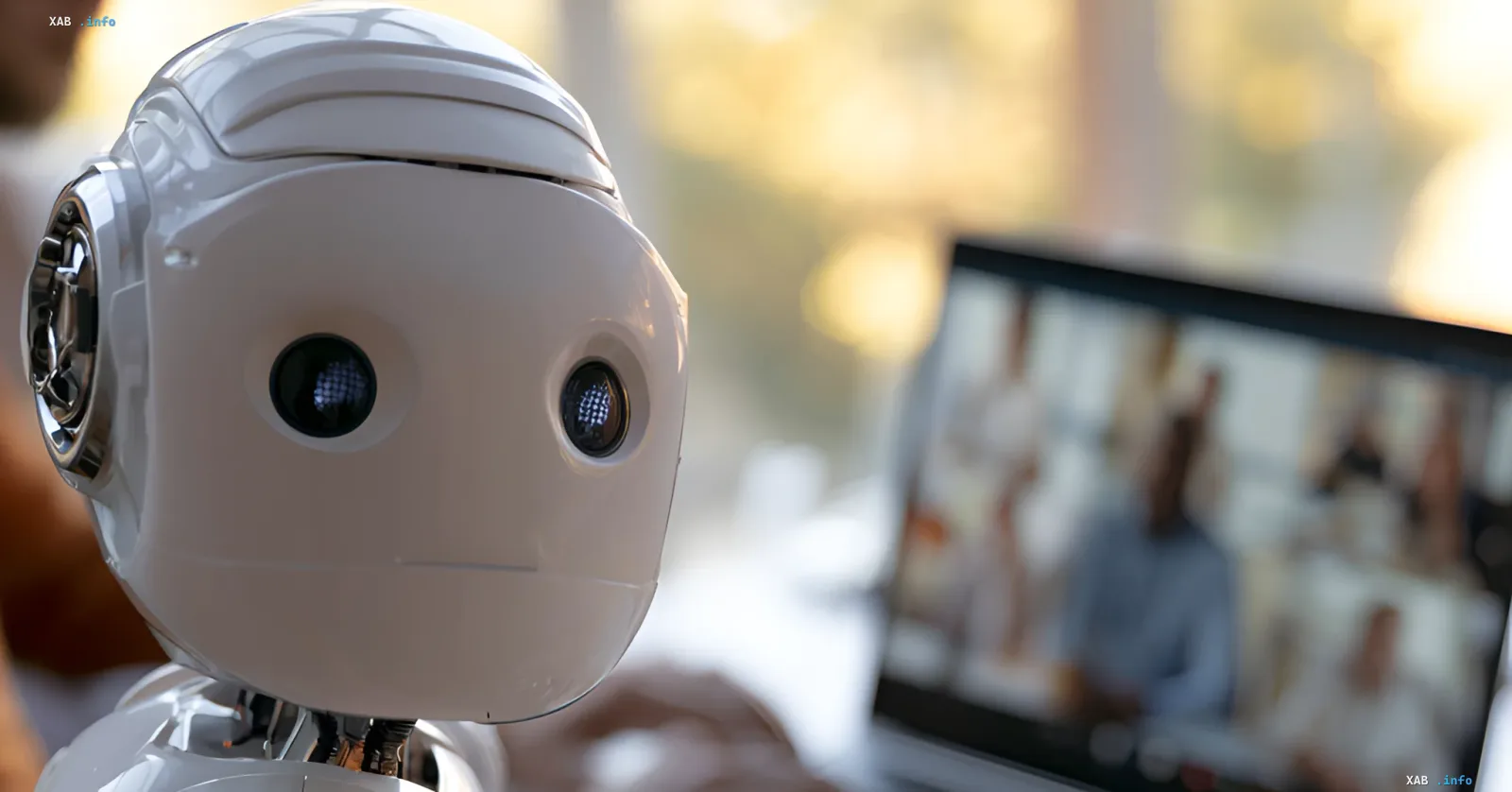
Teaching robots to operate in real-world environments has been a challenge for engineers for decades. The main issue was that robots often interpreted instructions literally, missing context and human intent. If asked to place a coffee cup on a table during a video call, a robot might place it too close to the laptop or approach too closely, disrupting the silence. However, researchers from the Massachusetts Institute of Technology (MIT) have now found a way to teach machines to "read between the lines."
Two Models, One Result
The team from the Computer Science and Artificial Intelligence Laboratory (CSAIL) developed a method called Masked Inverse Reinforcement Learning (Masked IRL). Its essence lies in using two large language models, each performing a specific function.
The first model refines ambiguous instructions. For example, if a user says "stay close," the system interprets this not as "press against the person," but as "get closer to the table surface." The second model analyzes the environment, highlighting important details and filtering out the unnecessary. Thus, the fact that an instructor is leaning on a table during a demonstration will be ignored, as it does not affect task execution.
Efficiency in Numbers
The test results are impressive: the new method reduced the amount of data required for training by almost five times. At the same time, robots became 15% more efficient at identifying unspoken user preferences compared to previous algorithms.
In simulations, robots quickly mastered complex tasks, such as moving a cup around a laptop or wiping a table while maintaining contact with the surface. In real-world conditions, after approximately 50 demonstrations, the robot could already perform actions independently, avoiding collisions with objects that were not explicitly communicated to it.
How It Works in Practice
Training occurs through kinesthetic demonstration—a method where a person literally "leads" the robot by the hand, showing how to perform movements correctly. Sensors record the process, while language models analyze the logic of actions and the surrounding environment.
According to Minyoung Hwang, a PhD student at MIT and the lead author of the study, the team's goal is to minimize human effort in controlling robots. "We wanted robots to understand what users actually want, even if they cannot fully express it verbally," he noted.
Where Is This Applicable?
The Masked IRL technology is particularly relevant for situations where people expect the robot to "figure it out itself." For example, in the kitchen, a robot might look for snacks but must know not to bump into a laptop on the table. In manufacturing, a robot moving goods must navigate around shelves and equipment, even if the operator did not explicitly specify this.
The system has already demonstrated the ability to adapt to new tasks that the robot did not encounter during training. This opens up prospects for the widespread implementation of such solutions in households, medicine, logistics, and industry.