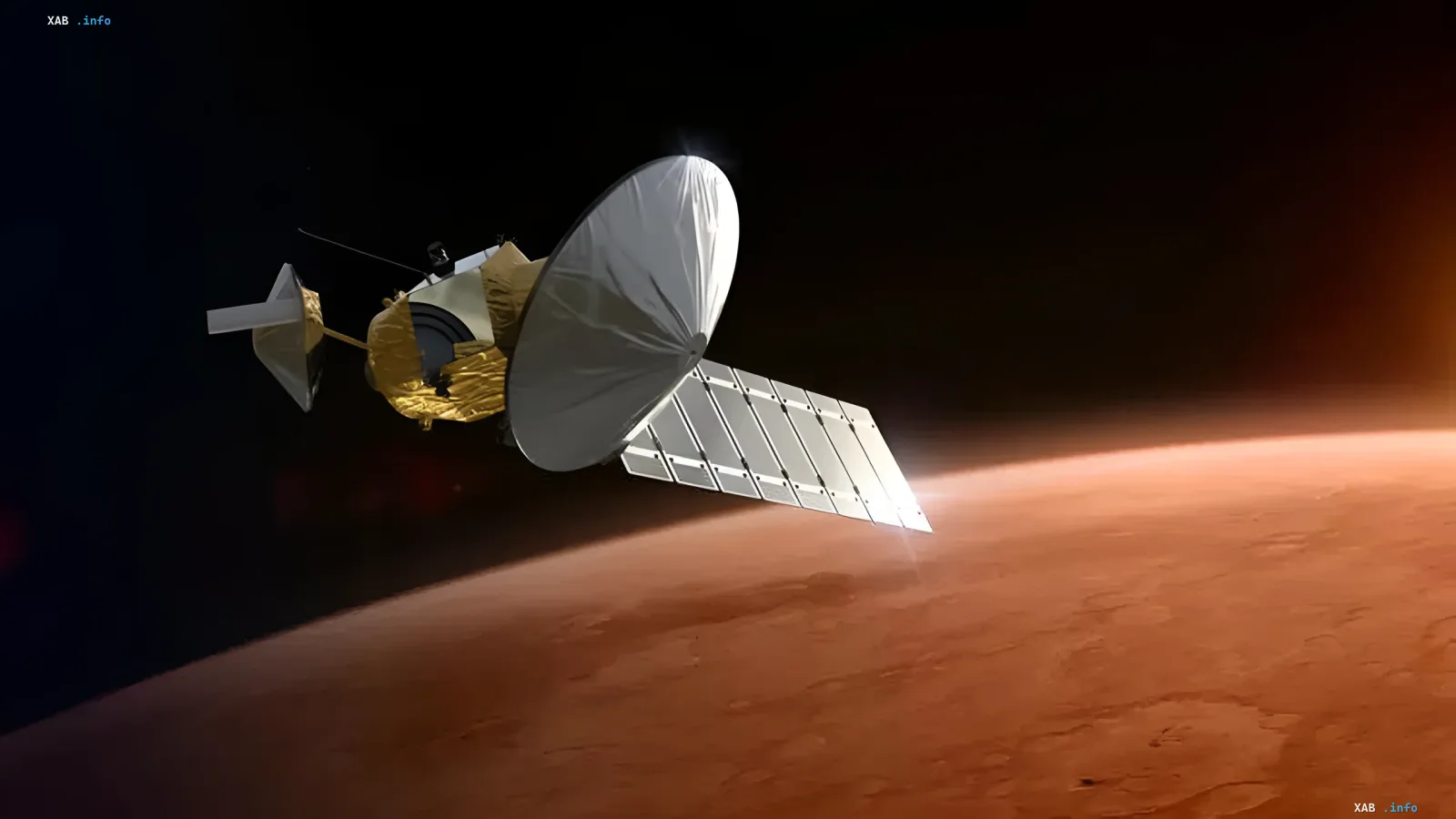
A new legal conflict has erupted in the U.S. aerospace industry, one that could rewrite the rules of the game in interplanetary telecommunications. Rocket Lab has officially filed a protest with the U.S. Government Accountability Office (GAO) demanding a review of NASA's decision to award a $700 million contract to Blue Origin. The lawsuit concerns the Mars Telecommunications Network (MTN) project — an orbital relay system designed to provide stable communications between Earth and the Red Planet. According to ixbt.com and vc.ru, the filed statement is not merely a formality, but an attempt to challenge the very basis of the competitive selection conducted in early September 2026.
What the MTN Project Is and Why It Is Needed
The existing network of Mars relays, built in the 2000s, no longer meets the requirements of modern and future missions. In July 2025, the U.S. Congress allocated $700 million to create a new-generation orbital relay that is to replace the outdated infrastructure. In the spring of 2026, NASA opened the submission of proposals from private companies, and two entities emerged as the main contenders for the contract: Blue Origin, owned by Jeff Bezos, and Rocket Lab. In early September of this year, the agency announced Blue Origin as the selected contractor. Under the terms of the agreement, the company is obligated to deliver the finished device to NASA no later than December 31, 2028, and the full launch of the MTN network in Mars orbit is expected by 2030. This will ensure stable, high-speed communications for future crewed and uncrewed expeditions to the Red Planet.
Rocket Lab's Arguments: Procedural Violations and Bias
In its protest, Rocket Lab's management asserts that significant violations were committed during the competitive selection process. The company points to three key claims: first, NASA, in its view, deviated from the evaluation criteria established by Congress when the funds were allocated; second, errors were made in the technical evaluation of Rocket Lab's proposal that distorted the final ranking; third, the agency displayed unjustified bias in favor of the Blue Origin project. If the GAO finds Rocket Lab's arguments convincing, the contract award decision may be annulled or reviewed, opening the way to a re-competition or a direct reassessment of the terms.
Timeline and Key Dates
The timeline of events is as follows: in July 2025, Congress approved $700 million in funding; in the spring of 2026, NASA began accepting commercial proposals; in early September 2026, the agency announced Blue Origin as the winner; in mid-September 2026, Rocket Lab filed its protest with the GAO. At present, the contract formally remains with Blue Origin, however, its final fate will depend on the official decision of the Government Accountability Office. Under GAO practice, reviewing such protests takes from several weeks to several months, during which the contract, as a rule, cannot be fully implemented.
Strategic Significance for the Space Industry
The outcome of this dispute goes far beyond a single contract. It will set a precedent for how NASA and other federal agencies conduct competitive procedures in the field of deep space. For Rocket Lab, which in recent years has been actively building up its competencies in small and medium-sized spacecraft, a victory at the GAO would be not only a financial but also a reputational achievement. For Blue Origin, by contrast, a loss could mean an indefinite delay of the project and a loss of position in the race for dominance in Mars telecommunications infrastructure. Independent analysts note that even if the contract remains with Blue Origin, the very fact of the legal challenge creates additional pressure on the project's implementation timeline, which is critical given the December 2028 deadline.
Contradictory Data
No significant discrepancies in figures and dates were found in the provided sources: the contract amount ($700 million), the device delivery deadline (December 31, 2028), and the expected network launch (2030) are consistent across all publications. The only difference lies in the wording: ixbt.com emphasizes the competitive aspect and calls the situation a "battle for Mars," while vc.ru focuses on the legal procedure and the status of the protest at the GAO. Neither source reports any reaction from NASA or Blue Origin to the filed lawsuit, leaving room for further clarification as events unfold.