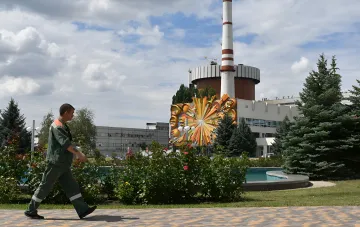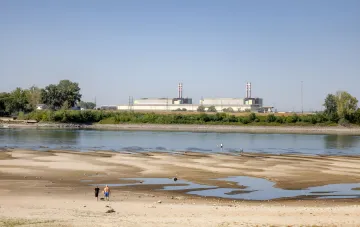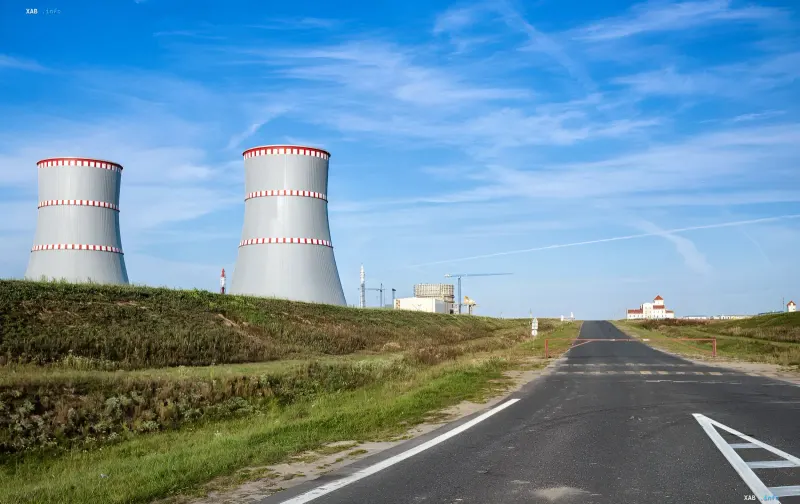
Amidst unprecedented drought and abnormal heat sweeping across Europe in August 2026, Romania was forced to resort to radical measures to ensure the operation of its only active nuclear reactor. The critical drop in water levels in the Danube, the continent's second-longest river, threatened the country's key energy infrastructure. Romanian authorities, together with the nuclear plant operator, carried out large-scale engineering works aimed at artificially redirecting the river's flow towards the cooling systems.
"Explosions and Barges": Emergency Measures to Save the Reactor
To raise the water level at the nuclear power plant's intake structures, Romanian authorities carried out a series of technical operations that can be described as "heroic" in the context of the climate crisis. According to reports, specialists detonated a stone obstacle in the riverbed to clear a passage for water and dredged the riverbed. The most radical step was the sinking of four barges loaded with stones. These barges were intentionally sunk to create a temporary dam that would redirect the main flow of water towards the plant.
These measures allowed the water level at the reactor to rise by approximately 4 centimeters. Although this figure may seem insignificant at first glance, even a minimal change in water level is critical for the operation of nuclear cooling systems. Experts estimate that the created artificial water reserve will ensure the plant's operation for about nine days, which is a temporary solution allowing time to be gained until weather conditions improve.
Energy Crisis: From Romania to Hungary
The situation with the Danube's water level has a transboundary nature. The critical drop in the river's level has already forced Romania to shut down one of its reactors, leading to a sharp reduction in electricity production. Two Romanian nuclear reactors usually provide about 20% of the country's total energy consumption, so their shutdown creates a colossal load on the power grid.
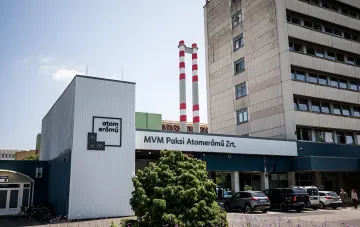
The situation is further exacerbated by the fact that neighboring Hungary has also faced similar problems. Due to the record-low water level, the Paks Nuclear Power Plant in Hungary was completely shut down for the first time in its 44-year history. This has led to both countries being forced to rely increasingly on expensive electricity imports to cover the deficit. In August, the Romanian company Nuclearelectrica began purchasing electricity from Ukraine with the support of the Moldovan supplier Energocom to compensate for the loss of power from its own nuclear unit.
State of Emergency and Calls for Conservation
In response to the growing deficit and increased demand for electricity during the heatwave, the Romanian government declared a state of emergency in the energy sector in August. Authorities urged households and businesses to voluntarily reduce electricity consumption during evening peak hours. This decision was a forced measure aimed at preventing a total collapse of the power system and avoiding large-scale blackouts.
Romania produces electricity by combining gas, coal, hydro, nuclear, and renewable energy. However, the country needs significant investment to modernize outdated infrastructure, develop energy storage, and expand grids to be more resilient to climate challenges. For now, the country is forced to balance on the edge, using temporary solutions and importing energy.
Forecast: Hope for Rain After August 15
According to the Romanian State Water Resources Agency, the Danube's level remained at record lows throughout the summer. However, according to weather forecasts, the situation may improve after August 15. It is expected that rains in the upper reaches of the river will gradually increase the volume of water, allowing the Danube's level to return to normal and removing the threat to the operation of nuclear power plants.
Nevertheless, experts warn that climate change is becoming increasingly unpredictable, and such situations may recur with greater frequency. This poses a challenge for energy companies and European governments to find long-term solutions to ensure the resilience of power systems in a changing climate.