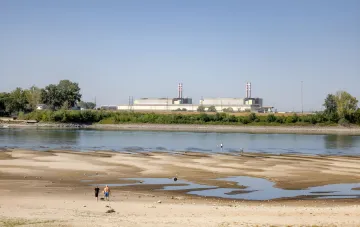
Nuclear energy has traditionally been presented as a reliable, cheap, and low-carbon source of electricity. However, the summer of 2026 revealed another side of this technology and raised the question of how resilient nuclear generation is in a changing climate and whether it is wise to increase dependence on it without diversifying the energy system. This was explained in a column for RBC-Ukraine by Anastasia Yahniuk, project coordinator at the EcoClub NGO. According to her, this year nuclear power plants in France, Switzerland, Hungary, Romania, and Bulgaria were forced to cut output: some units were moved to reduced power, while individual reactors were shut down entirely. The cause was extreme drought and record-low water levels, primarily in the Danube — one of Europe's largest rivers, along which the Paks (Hungary), Cernavodă (Romania), and Kozloduy (Bulgaria) nuclear plants are located.
Why Water Is a Critical Resource for a Nuclear Plant
The vulnerability of nuclear energy to such conditions is explained by the physics of the process itself. A reactor produces not only electricity but also a huge amount of heat, about two-thirds of which must be continuously removed into the environment. This is precisely why water becomes one of the key resources for the operation of a nuclear plant. According to data from the Institute of Nuclear Power, a single reactor may require between 1,514 and 2,725 liters of water per MWh of generation — that is hundreds of billions of liters over the course of a year. Under climate change, prolonged droughts, declining river levels, and rising water temperatures can limit the capacity of cooling systems and create a direct risk to electricity production.
Paks, Cernavodă, Kozloduy, and Beznau: How Operators Responded
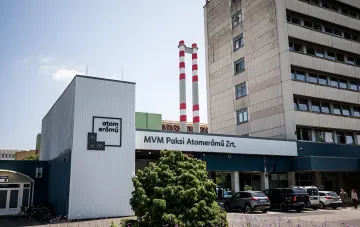
A striking example was Hungary's only nuclear plant — Paks. In August, due to unfavorable cooling conditions, it was preparing to reduce the output of its units; according to Reuters, in 44 years of operation the plant had never faced such critical conditions for its cooling system. After a brief rise in water levels, a full shutdown of the units was averted. To prevent a recurrence, Hungarian authorities decided to build a dam on the Danube — a particularly sensitive issue for the country, since nuclear generation supplies 42% of its electricity. However, intervening in the Danube's water regime may have consequences for downstream countries: at Romania's Cernavodă plant, two units had already been shut down due to low water levels, and to increase the inflow of water to the plant, Romanian authorities even resorted to controlled explosions in a Danube channel. Due to the river's shallowing, Bulgaria's Kozloduy plant was also forced to cut output for the first time in 52 years.
Water Temperature: The Second, Hidden Limit
For the operation of a nuclear plant, not only the volume of available water matters, but also its temperature. Technical regulations limit the discharge of return water by plants if it leads to a significant rise in the water body's temperature. When river water becomes too warm, it loses its ability to efficiently remove heat from a unit, and even with sufficient water levels an operator may be forced to reduce power or temporarily stop operations. This risk has already manifested in Europe: in early June, due to the high water temperature in the Aare River in Switzerland, the Beznau nuclear plant was shut down.
Ukraine: More Than Half of Generation and New Climate Risks
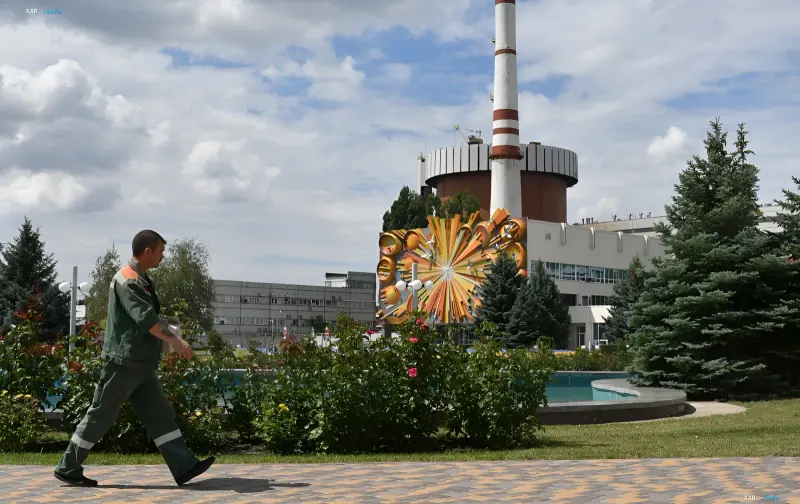
For Ukraine, this topic is of particular significance. Before the full-scale invasion, nuclear generation supplied more than half of the country's electricity production, and after the start of hostilities its role became even more important, since part of the thermal and hydro generation was damaged or ended up in occupied territories. In certain periods, nuclear plants supplied more than 60% of generation, while the state declares its intention to increase the share of nuclear generation, including through the construction of new units. All four operating Ukrainian nuclear plants belong to a single operator — JSC NAEK "Energoatom" — but they operate in different river basins and have different dependencies on water resources. The South Ukrainian Nuclear Plant in the Southern Bug basin is especially sensitive to climate change: climate forecasts for it already anticipate growing risks of low water and longer summer low-water periods.
Conclusion: Diversification or Deepening Dependence
The combination of these factors shows that the climate resilience of nuclear generation is not unconditional and depends directly on the water regime of specific rivers and water bodies. For an energy system in which nuclear generation holds a dominant share, this means that planning the development of nuclear energy must account for future climate change — from assessing the water resources of each river basin to the need to diversify generation sources in order to avoid concentrating risks in a single technological and natural loop.