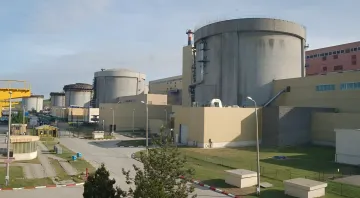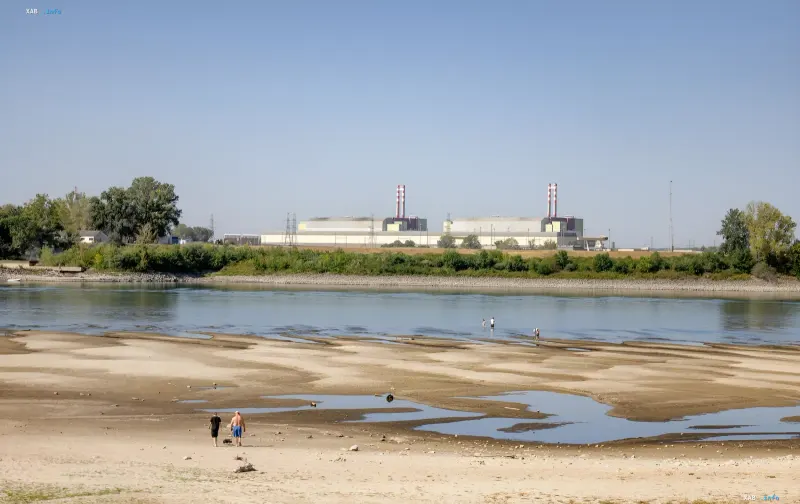
On August 13, 2026, Romania faced a serious challenge in its energy sector. The nuclear power plant in Cernavodă, a key electricity supplier for the country, was forced to shut down its second unit. The cause was a critical shortage of water in the Danube River, which is used to cool the reactors. This event is a continuation of a regional problem that neighboring countries have also faced this season.
Technical details of the shutdown and safety measures
The procedure for the controlled shutdown of Unit 2 began in the morning at 07:00 local time. By 11:00, the plant had completely ceased supplying electricity to the national grid, losing about 680 megawatts of generating capacity. The NPP operator, Nuclearelectrica, confirmed that the decision was made due to a prolonged and significant drop in the Danube's water level, making safe reactor cooling impossible.
The company emphasized that the shutdown was carried out in strict accordance with all international safety standards. "Maintaining both units in a safe shutdown mode does not affect nuclear safety parameters, in particular for personnel, the environment, and the population," the operator's press service stated. This means the situation is under full control and poses no threat to the region's residents.
Energy deficit and power imports
The loss of capacity at the Cernavodă NPP created a significant gap in Romania's energy balance. To compensate for the deficit, the country was forced to activate electricity import mechanisms. Nuclearelectrica began purchasing electricity from Ukraine with the assistance of the Moldovan supplier Energocom. This transit route became critical for stabilizing the grid amid extreme heat and reduced generation.
The exact timeline for resuming NPP operations is currently unknown. Hydrologists' forecasts indicate a further drop in the river's water level in the coming days, making any prediction about a restart premature. Even after water levels allow operations to resume, it will take another one to two days for the safe startup procedure and integration of the unit into the power system.
Government stance: residential consumers protected
Despite the seriousness of the situation, Romanian authorities are trying to reassure the population. State Secretary of the Ministry of Energy Cristian Buşoi stated that ordinary citizens and social institutions will not experience supply problems. "In the worst-case scenario, restrictions will be introduced only for large industrial enterprises. Residential consumers, hospitals, schools, pharmacies, and government institutions will operate as usual — there is no danger," the official emphasized.
Thus, the load will be redistributed towards the industrial sector to maintain stability for critical infrastructure and the population.
Regional context: a problem not just for Romania
The issues with low Danube levels are transboundary. In neighboring Hungary, located upstream, the Paks NPP was also previously shut down due to record low water levels in the river. This points to a systemic climate phenomenon affecting hydropower and thermal generation in the Danube basin. The situation demonstrates the vulnerability of the region's energy infrastructure to climate change and drought.