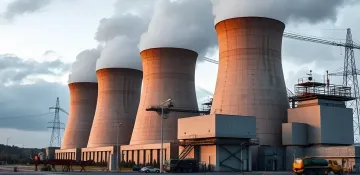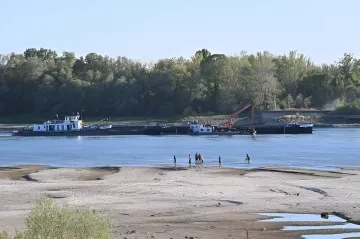
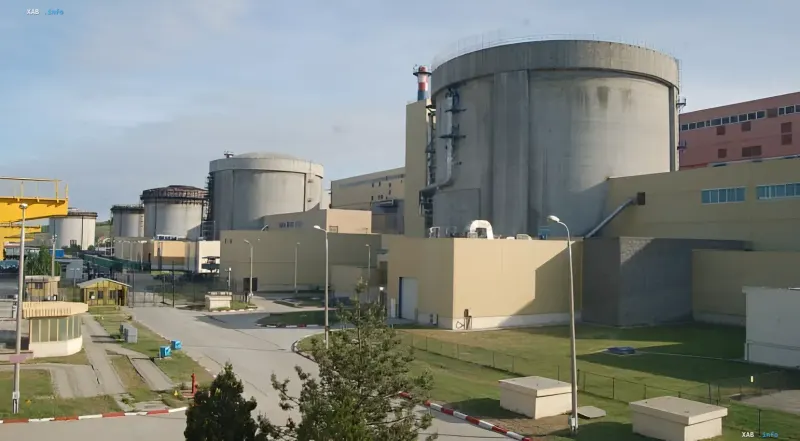
The summer climate catastrophe in Europe has dealt a critical blow to the energy security of the Balkan region. On August 13, 2026, the state-owned company Nuclearelectrica officially announced the complete shutdown of Romania's only nuclear power plant, Cernavodă. In the morning, operators switched the last operating unit, Unit 2, into a controlled shutdown mode (the first reactor had been shut down back on July 28). The cause was a catastrophic drop in the water level of the Danube: in the area of the plant, it fell to a mark of 182 cm, making it impossible to safely draw water for cooling systems. Such a total blackout at a nuclear power plant due to climate factors has been recorded for the first time in the last 23 years.
Rock blasts and barge flooding did not help
Romanian authorities tried until the last moment to prevent the shutdown of the facility, which generates 20% of the country's total electricity. More than 2 million euros were urgently allocated from the budget for radical engineering measures. Military hydro-engineers conducted a series of directed underwater explosions to destroy a rocky ledge on the riverbed and deepen the channel. Then, at the entrance to the critically important Bala channel, four barges loaded with thousands of tons of stones were forcibly flooded — they were supposed to act as an artificial dam and redirect the remaining river flow to the NPP intakes. However, the scale of the drought, which the Copernicus service called the strongest in 34 years of observations, neutralized these efforts. The water level fell below the critical minimum.
State of emergency and halt of the automotive industry
A state of emergency in the energy sector has been declared in Romania for the entire month of August. The situation is so acute that the country's largest automotive giants — Dacia and Ford — have officially announced a complete stoppage of their assembly lines until August 19 to reduce the load on the national power grid. The Ministry of Energy introduced a phased restriction plan: for heavy industry during peak evening hours (from 19:00 to 23:00), electricity will be forcibly cut off. City residents have been called upon to practice strict voluntary conservation.
Contradictory data
There is a discrepancy in estimates regarding the timeline for restoring generation. The operator Nuclearelectrica claims an optimistic scenario: the first unit is planned to be launched on August 23, and the second on August 30. However, the hydrological service admits that the water level at Cernavodă has dropped to 182 cm (3 cm below the critical minimum), and the trend is currently downward. This casts doubt on the possibility of a quick restart of the plants without significant rainfall upstream.
Ukrainian lifeline
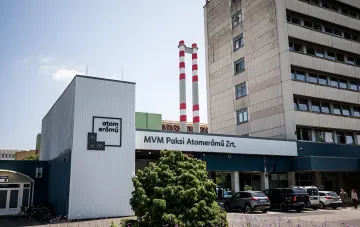
To prevent rolling blackouts in the residential sector, Bucharest launched large-scale purchases from abroad. The main and unexpected savior of the Romanian power system in August 2026 was Ukraine. Through the Moldovan operator Energocom, the Romanian side began an emergency import of Ukrainian electricity. The crisis has already triggered a domino effect along the entire Danube: neighboring Hungary is in a similar position and is currently building underwater walls, trying to save its only NPP, Paks, from shutdown. Against this backdrop, spot prices for electricity in Southeast Europe have breached the psychological mark of 700 euros per MWh.