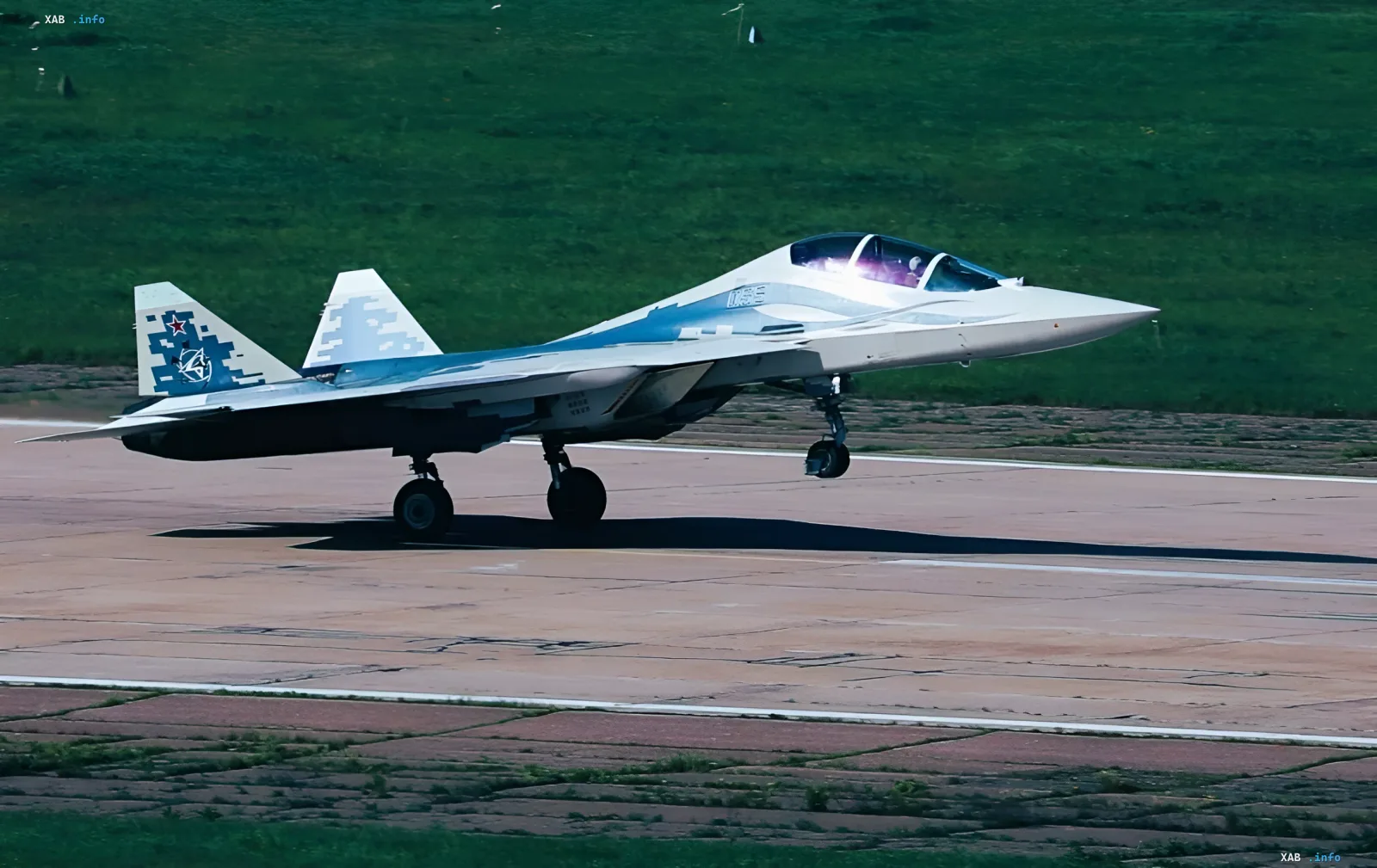
The Rostec corporation has confirmed the development in Russia of a twin-seat variant of the fifth-generation multirole fighter, the Su-57D, which features a dedicated seat for an unmanned systems operator. According to the outlet, citing a statement from the state corporation, the aircraft prototype is already undergoing flight testing, with its first flight taking place in May 2026. The emergence of the twin-seat version, developers say, opens the way to solving two tasks at once: practicing special flight modes for training purposes and testing technologies that Moscow classifies as sixth-generation aviation.
Twin-seat cockpit as an airborne command center for a swarm
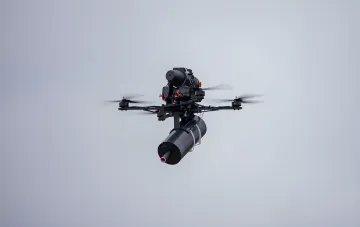
The key innovation of the Su-57D, according to industry representatives, is the second cockpit, which allows the fighter to be used as an airborne command post for unmanned aerial vehicles. Developers emphasize that this is important for coordinating swarm and group UAV systems, i.e., for controlling not a single drone but an entire formation. The chief test pilot of Sukhoi Design Bureau, in recent comments, predicted high demand for such a variant, linking it to the growing role of the "human in the loop" in controlling autonomous vehicles from the air.
Sixth-generation technology and combat artificial intelligence
In addition to the UAV control function, the twin-seat variant will, according to developers' statements, be used to test combat artificial intelligence. Thus, the Su-57D is positioned not simply as a trainer or reconnaissance-strike aircraft, but as a flying test platform for working out elements of the next — sixth — generation of aviation, including pilot interaction with AI systems and with unmanned "loyal wingmen." It is precisely this dual role — training and research — that, by Rostec's logic, explains why a twin-seat configuration was chosen.
Context of the Su-57 program and Western skepticism
It is worth recalling that the Su-57 is a Russian fifth-generation multirole fighter developed by Sukhoi. Its first flight took place in 2010, while serial production only began several years later, after delays in the program. The aircraft is intended to gain air superiority and strike ground and naval targets; Moscow claims the aircraft features stealth technology, modern avionics, and is capable of employing a wide spectrum of precision-guided weapons. At the same time, Western experts have repeatedly questioned the actual level of the Su-57's stealth characteristics and the real pace of its serial production, which makes any claims of a "sixth generation" based on it a subject of cautious analysis.
Contradictory data
Open sources record a discrepancy in assessing the current status of the prototype. On the one hand, Rostec and a number of media outlets report that the twin-seat Su-57D is successfully undergoing flight testing after its first flight in May 2026. On the other hand, Ukrainian publications carry information about the crash of a new-generation fighter near Moscow, which analysts identified as the Su-57D. The exact date and circumstances of this incident are not disclosed in the provided materials, so both versions — of successful ongoing testing and of a prototype accident — are presented in parallel and require additional verification.
Military context: strikes on airfields
The announcement of the twin-seat fighter comes against the backdrop of ongoing strikes on Russian aviation infrastructure. Recently, Ukrainian forces destroyed a MiG-29 fighter right on an airfield in Kursk Oblast, and a Pantsir-S1 air defense and anti-aircraft gun system was also hit. Earlier, special forces of the National Guard's "Omega" Special Purpose Center destroyed a Russian Su-24M bomber at the "Saki" military airfield in temporarily occupied Crimea. Under these conditions, Moscow's bet on airborne UAV command centers and AI systems looks like an attempt to offset losses and restructure the tactics of aviation employment.