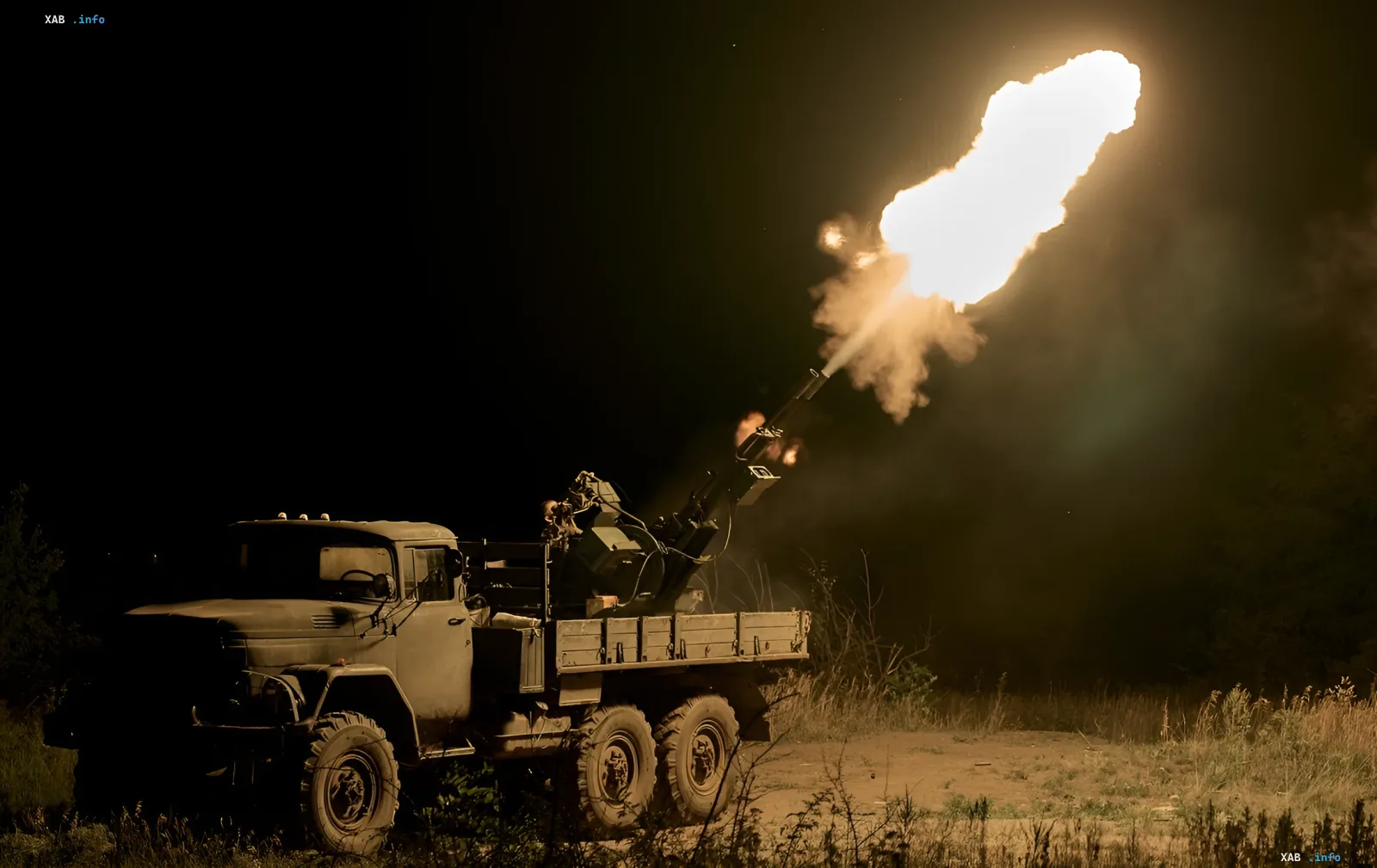
On the night of October 13, 2026, the Armed Forces of the Russian Federation launched another massive air attack on Ukrainian territory, deploying a wide range of missile weapons and strike drones. According to official data from the Air Force of the Armed Forces of Ukraine, the enemy used a combined attack tactic, utilizing ballistic missiles and various modifications of drones to overcome Ukrainian air defense systems.
Details of the Massive Night Strike
The aggressor fired five ballistic missiles of the Iskander-M and S-400 types at Ukrainian regions, launched from Russia's Bryansk Oblast. Additionally, the raid included nine loitering munitions of unspecified or specialized types, alongside a massive swarm of attack drones. The total number of drones involved exceeded one hundred units, including jet-powered Shahed-type drones, Gerbera vehicles, and Parody decoy drones, aimed at depleting and disorienting Ukrainian anti-aircraft teams.
Launch Geography and Air Defense Operation
Launch vectors for the air attack assets originated from several strategic directions, including the Russian cities of Oryol, Kursk, and Primorsko-Akhtarsk, as well as from temporarily occupied areas of Donetsk Oblast and the Crimean settlement of Hvardiiske. As of 08:00 AM, Ukraine's air defense forces managed to intercept, shoot down, or successfully suppress via electronic warfare 88 enemy drones. Among them, a significant share consisted of modern jet drones and other modifications.
Contradictory Data
It is worth noting that reports occasionally surface in the information space regarding significantly larger scales of nighttime raids (over 200–280 targets in similar summaries from previous periods of the current year, according to monitoring resources). However, the official operational report of the Air Force for October 13 explicitly records over a hundred strike drones and five ballistic missiles. Experts attribute this discrepancy to the possibility that independent observers' general counts include false targets, decoys, and drones lost without kinetic impact, whereas military agencies operate with verified objective control data.
Consequences of the Attacks in the Regions
Despite the effective work of Ukraine's air defense, avoiding ground impacts was not possible. Direct hits and falling debris from intercepted air targets were recorded at 17 locations across various regions of the country. Notably, on the morning of October 13, the enemy attempted to attack Lviv Oblast with drones and struck Dnipro with guided aerial bombs. As a result of the strike in Dnipro, a transport infrastructure facility, residential apartment buildings, and cars were damaged, and a 64-year-old man was injured.