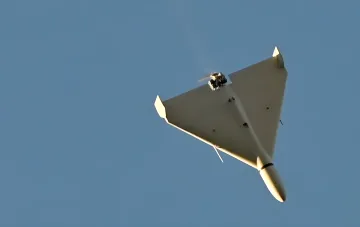
The Russian military has shifted to a new tactic for operating jet-powered Shahed drones (designated as "Geran" in Russian nomenclature): before completing an attack, operators shut down the main engine, allowing the drone to glide to its target by inertia while making almost no sound. This was reported by Serhiy "Flash" Beskrestnov, an advisor to the President of Ukraine on the development of defense technologies, as noted by RBC-Ukraine.
The "Silent Approach" Tactic
According to Beskrestnov, the jet engine provides the apparatus with sufficient acceleration and momentum to cover the final leg of the flight in silence. It is this, rather than any new components, that makes the final approach of the drone harder to detect. "Information is circulating about an additional electric motor on the Shahed for silent flight. Such an engine does not exist, but what does exist is the tactic of shutting down the jet engine before the strike," the advisor stated.
Myth of the "Electric" Silent Motor
Thus, Beskrestnov debunked the version circulating in open sources that Russian drones were equipped with a separate silent electric motor. By his assessment, the real mechanism for reducing acoustic visibility is not new equipment, but a change in the flight profile: after the turbine is shut down, the craft uses its accumulated kinetic energy. This is important for planning the operations of detection systems that focus on the characteristic noise of a running engine.
Low-Altitude Approaches
In addition to the "silent approach," there have been recent reports of attempts to approach targets at very low altitudes—where there are no obstacles in the Shahed's trajectory. Beskrestnov emphasizes that both factors must be taken into account by mobile firing groups and other air defense elements: "A Shahed can appear out of nowhere." The combination of a low profile and a silent final segment significantly reduces the time available for detection and interception.
Context: How Jet Drones Reach the West
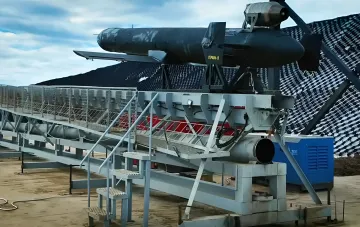
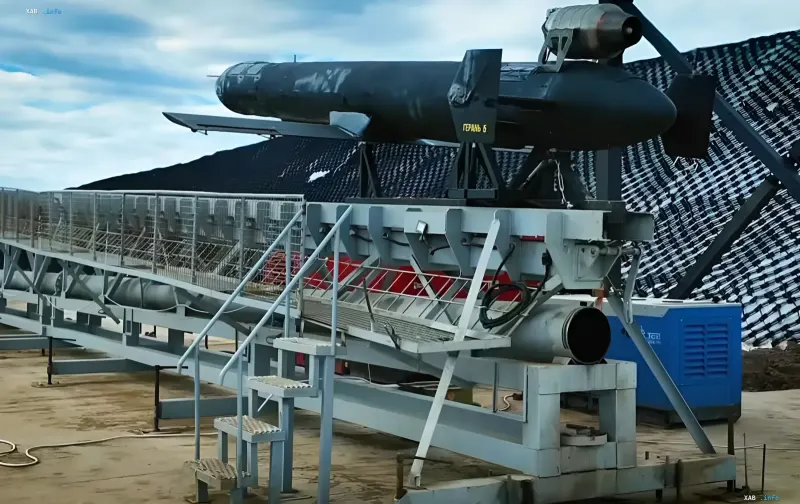
The new tactic fits into a broader trend. As Yuriy Ihnat, Chief of the Communications Department of the Air Force Command, previously explained, jet-powered UAVs are already closer to cruise missiles in their tactical and technical characteristics and are increasingly appearing over western regions—Rivne, Volyn, Khmelnytskyi, and Lviv. According to him, the range depends on what the device is "loaded" with: if part of the payload, such as the warhead, is sacrificed, the freed-up space is used for fuel, which allows it to fly further and also conduct reconnaissance. Visually, the "Geran-5" is already more reminiscent of a missile, which is why it is often called a "drone-missile."
Air Defense Response and the Role of Electronic Warfare
Ukrainian defense forces are adapting their interception methods to the new threat. Specifically, the 156th Anti-Aircraft Missile Regiment named after Maksym Kryvonis demonstrated the combined use of the Kub air defense system launcher and the Buk firing unit: the Buk detects the target and provides illumination, while the 3M9 missile from the Kub flies autonomously to the target and acquires it with its seeker head at close range. In parallel, electronic warfare assets remain one of the key tools of air defense: according to The Wall Street Journal, the "Lima" system diverted two ballistic missiles heading for a government facility in Kyiv into the Dnipro River this year. Previously, Beskrestnov also noted that due to distributed communication channels, the entire country would not be left without internet, and the strike on the Inkom business center in Kyiv was filmed by Russians without the use of any "secret technologies."