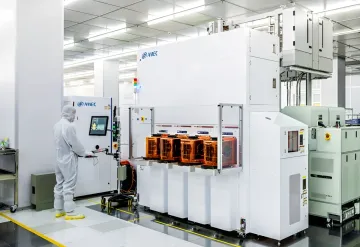
The Zelenograd Nanotechnology Center (ZNTC) has developed an electron-beam lithography (EBL) system for manufacturing photomasks and patterning substrates without masks at 150 nm nodes. This became known from documents indicating that ZNTC is seeking a carrier to deliver a "prototype of an electron-beam lithography system with 150 nm design rules" as part of the R&D project "Progress EBL 150".
Prototype Sent for Testing
The EBL system prototype is planned to be transported "2,000 km from Zelenograd," ZNTC told CNews. They also reported that two prototype EBL systems are currently undergoing comprehensive testing, which will last about four months. Afterward, tests for image formation accuracy and other technological parameters will begin. The development is being carried out under the state program "Scientific and Technological Development of the Russian Federation".
How Electron-Beam Lithography Works
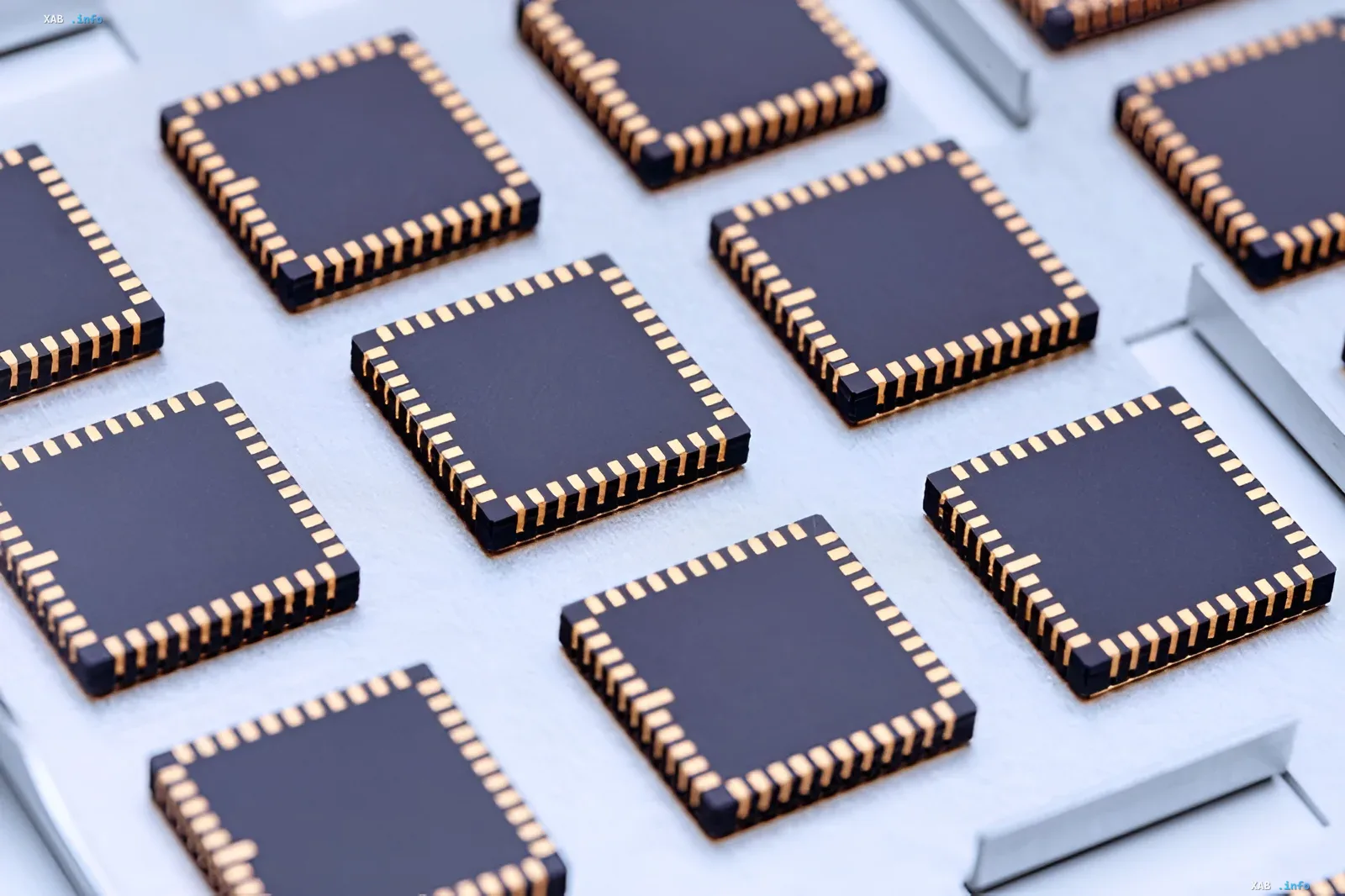
One of the main applications of electron-beam lithography is the manufacture of photomasks. A photomask is a glass substrate with an opaque pattern of the future microchip and is used in photolithographic equipment to repeatedly transfer this pattern onto silicon wafers, enabling mass chip production. Additionally, electron-beam lithography allows for patterning directly on the substrate without using photomasks—literally printing chips onto wafers.
Advantages and Limitations of the Technology
In chip production, EBL has both advantages and disadvantages. One advantage is flexibility: for scientific research and prototyping, patterns can be changed quickly without the need to create expensive photomasks. However, such a system is not suitable for mass production because it works too slowly. In a conversation with CNews, the head of one of the microelectronics enterprises noted that using such equipment is logical for small-batch production of specialized chips (for the space or defense industries), where manufacturing expensive masks for each order is economically unviable.
Problems in the Russian Semiconductor Industry
The expert noted that the development of the Russian semiconductor industry is currently hindered by several problems. Among the most acute, he highlighted the lack of a national engineering school capable of mastering chip production with technological norms below 65 nm, as well as a shortage of photoresists for technologies finer than 90 nm. No less critical is the lack of a component base, including precision laser interferometers and temperature control systems necessary to minimize the proximity effect.
The specialist also emphasized the absence of a national equipment redesign program, similar to the one China successfully implemented between 2005 and 2010. In his view, the presence of such a program would help reduce the technological gap, enable the production of highly reliable electronics for key information systems, and accelerate the development of domestic innovations.
Technical Challenges and Prospects
According to another interviewed expert, such a lithographer is suitable for creating masks for photolithographic processes of standard (mature) technologies. However, he pointed out the difficulties in achieving uniformity of the applied pattern across the entire wafer surface. Implementing this task requires careful metrology and precise control of the electron beam. Successfully overcoming these difficulties depends on the availability of electron-sensitive resists, which are also subject to strict quality requirements.
History of Lithographer Development in Russia
In 2025, the Zelenograd Nanotechnology Center presented a lithographer with a resolution of 350 nm. The system was handed over to the company "Industry Solutions" (part of the "Element" Holding). In September of that same year, ZNTC General Director Anatoly Kovalev noted that a serious foundation had been created, allowing for the transition to developing fully localized systems with technological norms of 90 nm. Currently, work is underway on a system with 130 nm norms. It is worth noting that 130 nm chips from Intel and AMD were released back in the early 2000s—for example, Pentium 4 and Athlon XP.