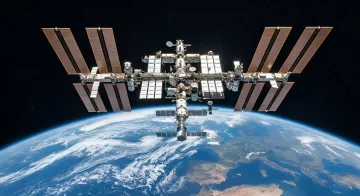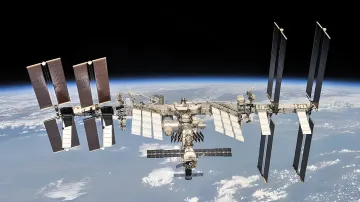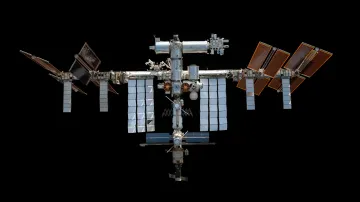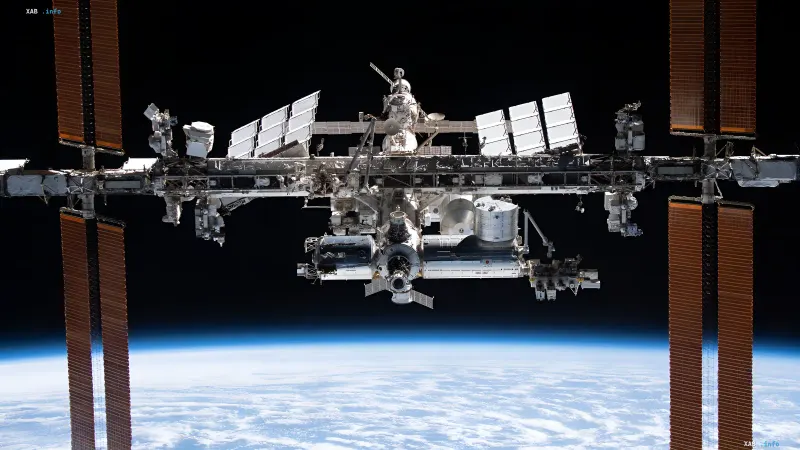
First Deputy Prime Minister of the Russian Federation Denis Manturov, speaking in the Federation Council, stated that Russia, together with international partners, is discussing the possibility of extending the operation of the International Space Station until 2032. According to him, Moscow continues its participation in the ISS program, including manned missions and cross-flights with American astronauts. The statement came against the background of repeated revisions of the station's mission completion dates, which have been postponed toward extension several times in recent years.
Russia's Participation and Cross-Manned Flights
As Manturov emphasized, Russia is not only maintaining its presence on the station but is also continuing active participation in manned missions, including the format of cross-flights with American astronauts. This means that even while discussing the final stage of ISS operation, the complex's operational work and crew exchanges between the parties do not stop, remaining part of the ongoing program.
Own Orbital Station Will Not Be Affected
An important clarification was the statement that the possible extension of the ISS operation will not affect the plans for creating Russia's own Orbital Station (ROS). The deployment of ROS, according to the First Deputy Prime Minister, is scheduled to begin in 2028. Thus, the extension of the international complex's operation is viewed as a separate scenario not tied to delays in national projects.
Chronology: From 2028 to 2032
Head of Roscosmos Dmitry Bakanov clarified that the deorbiting and sinking of the ISS could take place in 2031 or 2032. According to him, the American side previously proposed moving the completion of the station's operation from 2028 to 2030, and carrying out the final deorbiting another one to two years later. Back in July, Roscosmos and NASA agreed to continue ISS operations until 2030 and jointly prepare for the completion of its mission; now, as statements imply, the parties are considering further timeline revisions, pushing the horizon of operation to 2032.
Expert Perspective: Resources and Geopolitics
Independent experts point out that the station's resource still allows it to continue operating, and the decision to end the project is dictated not so much by technical wear and tear as by the geopolitical situation. Thus, Candidate of Physical and Mathematical Sciences, Senior Researcher at the Sternberg Astronomical Institute of Lomonosov Moscow State University Marat Abubekerov noted in a conversation with the publication that deorbiting the ISS will require complex engineering calculations to ensure debris falls into uninhabited areas of the ocean, and the complex's operation dates are regularly revised upward due to the lack of a ready replacement.
Cooperation After the ISS
After the end of the ISS program, Russia and the US intend to maintain cooperation in the space sector, including exchanging technical information about future orbital stations. This means that even at the stage of completing the international complex, the parties are laying the groundwork for further contacts, including coordination on the safe deorbiting of structures and the experience of operating national stations.