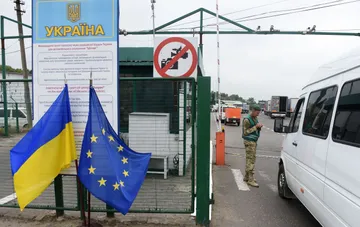
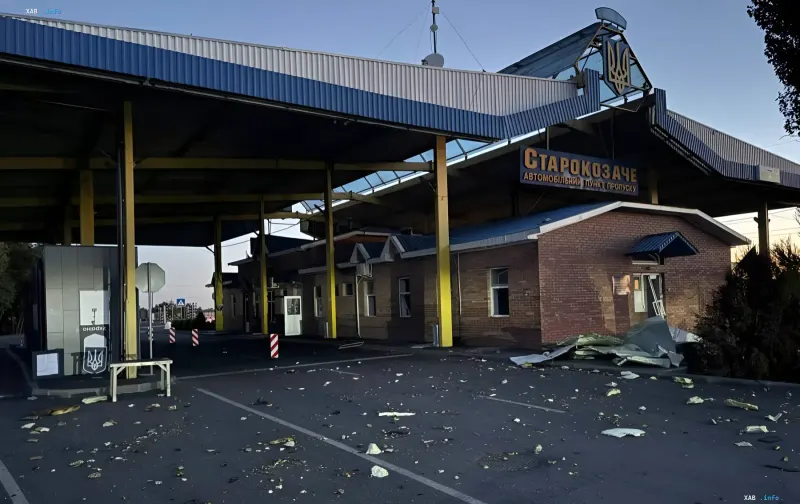
On the night of September 9, 2026, the Russian armed forces struck the "Starokozache" international road border crossing, located on the state border between Ukraine and Moldova, with attack drones. According to reports, the State Border Service of Ukraine announced this on its Telegram channel, as cited by RBC-Ukraine. According to available data, the drones hit the crossing's infrastructure and the surrounding area, causing fires.
Course of the attack and aftermath
The strikes on "Starokozache" damaged the crossing's infrastructure and the surrounding area, and fires were recorded at the scene of the attack. According to reports, there are dead and injured among the civilian population in the vicinity; the exact figures of losses and the extent of the damage were not specified at the time of writing. Photos from the scene show debris and rubble scattered across the crossing's grounds, as well as damaged structural elements, visually confirming the fact of the strike on the facility.
Suspension of the crossing's operations
Processing of citizens and vehicles in this border direction has been temporarily suspended. As noted in the reports, the Moldovan side has already been informed of the situation. The restrictions were introduced against the backdrop of infrastructure damage and the need to assess safety for border control passage.
Context: a series of strikes on border infrastructure in Odesa region
The strike on "Starokozache" is not an isolated incident: this is not the first Russian attack on border infrastructure in Odesa region. Previously, according to available data, the enemy had already struck the "Orlivka" checkpoint on the border with Romania, as a result of which that crossing temporarily ceased operations. Thus, strikes on border control facilities in the southwestern directions continue and affect several border sections.
What is known about crossing the border amid the attacks
Against the backdrop of ongoing attacks on border infrastructure, the State Border Service of Ukraine had previously clarified a number of nuances regarding border crossing, in particular concerning the need for a border-crossing stamp, as well as the rules for traveling to EU countries for various categories of citizens. These clarifications are relevant for those planning to cross the border under the introduced restrictions and temporary suspensions of individual crossings.