Amid a protracted military conflict and unprecedented sanctions imposed on the Russian economy, the Russian Federation's defense industry continues to operate with high intensity. However, it has emerged that the resilience of this system relies not so much on domestic resources as on a complex network of imports of strategic minerals. A new report by the Ukraine Economic Security Council (ESCU), published in August 2026, reveals shocking details: despite all Western efforts, Russia imports materials critical for weapons production totaling more than $1.1 billion annually.
Strategic Dependence: From Alumina to Tantalum
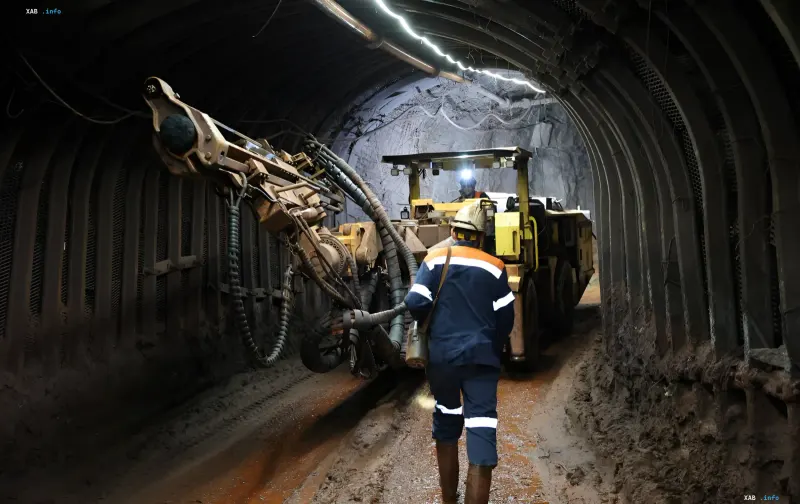
Analytical research indicates that Russian industry lacks a full production cycle for several key elements. The report lists materials such as alumina, tantalum, molybdenum, beryllium, tungsten, manganese, niobium, rhenium, and titanium. These elements are the foundation for creating missile systems, aviation equipment, armored vehicles, and high-precision electronics. Without them, the production of modern engines and guidance systems is impossible. Despite attempts at import substitution, Moscow remains deeply dependent on foreign processing capacities, creating a vulnerable link in the defense industry's logistics chain.
Geography of Evasion: China, Central Asia, and the "Global South"
The main flow of strategic raw materials enters Russia not from Europe, but from countries that have not joined the sanctions regime. China, Central Asian countries, and states of the so-called "Global South" have become the main suppliers. Furthermore, the report records cases where goods were transited through Western countries using complex "sanctions laundering" schemes. ESCU experts identified hundreds of companies involved in these supplies, many of which continue to work with Russian military enterprises. At the same time, less than 5% of these market participants are under direct sanctions, indicating a systemic failure to block shadow schemes.
Criticism of EU Policy and Call for Total Control
Ukrainian analysts have severely criticized the current strategy of the European Union, stating that the bloc's efforts lag behind reality. In their opinion, existing restrictions on ores and compounds are limited in scope and do not address key nodes. "Sanctions laundering remains late, incomplete, or focused on the wrong stage of the supply chain," the document notes. The Economic Security Council urges the EU to treat strategic minerals as seriously as semiconductors and to control the entire ecosystem: from mines and traders to shipping companies and logistics hubs. As proof of the effectiveness of such measures, the example of chromium is cited: after restrictions were introduced, exports from several plants to Russia decreased.
Contradictory Data
While the ESCU report contains detailed data on the scale of imports, there are discrepancies in assessing the effectiveness of current sanctions. On the one hand, analysts claim that Russia continues to purchase raw materials worth billions of dollars, while on the other hand, in late July 2026, the EU adopted the 21st package of sanctions, including 218 new targets, strikes against the "shadow fleet," and the oil sector. Russian official sources often claim that domestic resources are sufficient, however, data on billion-dollar mineral purchases refute the thesis of complete autonomy. Moreover, tensions are growing within the EU: individual countries are seeking to relax restrictions for the sake of their own industry, which complicates the adoption of new unified measures necessary to completely cut off supplies.
Economic Argument for Ceasefire
Elena Yurchenko, Director of Analytics at ESCU, emphasizes that stopping the supply of strategic minerals will be fatal for the Russian war machine. "This will inevitably lead to a shortage of weapons and become a strong argument in favor of a ceasefire," she stated. To achieve this result, resolute economic restrictions against the entire supply chain are required. Experts warn that without strict control of intermediaries and logistics channels, any targeted sanctions will be only a temporary measure, allowing Russia to adapt and find new sources of raw materials.