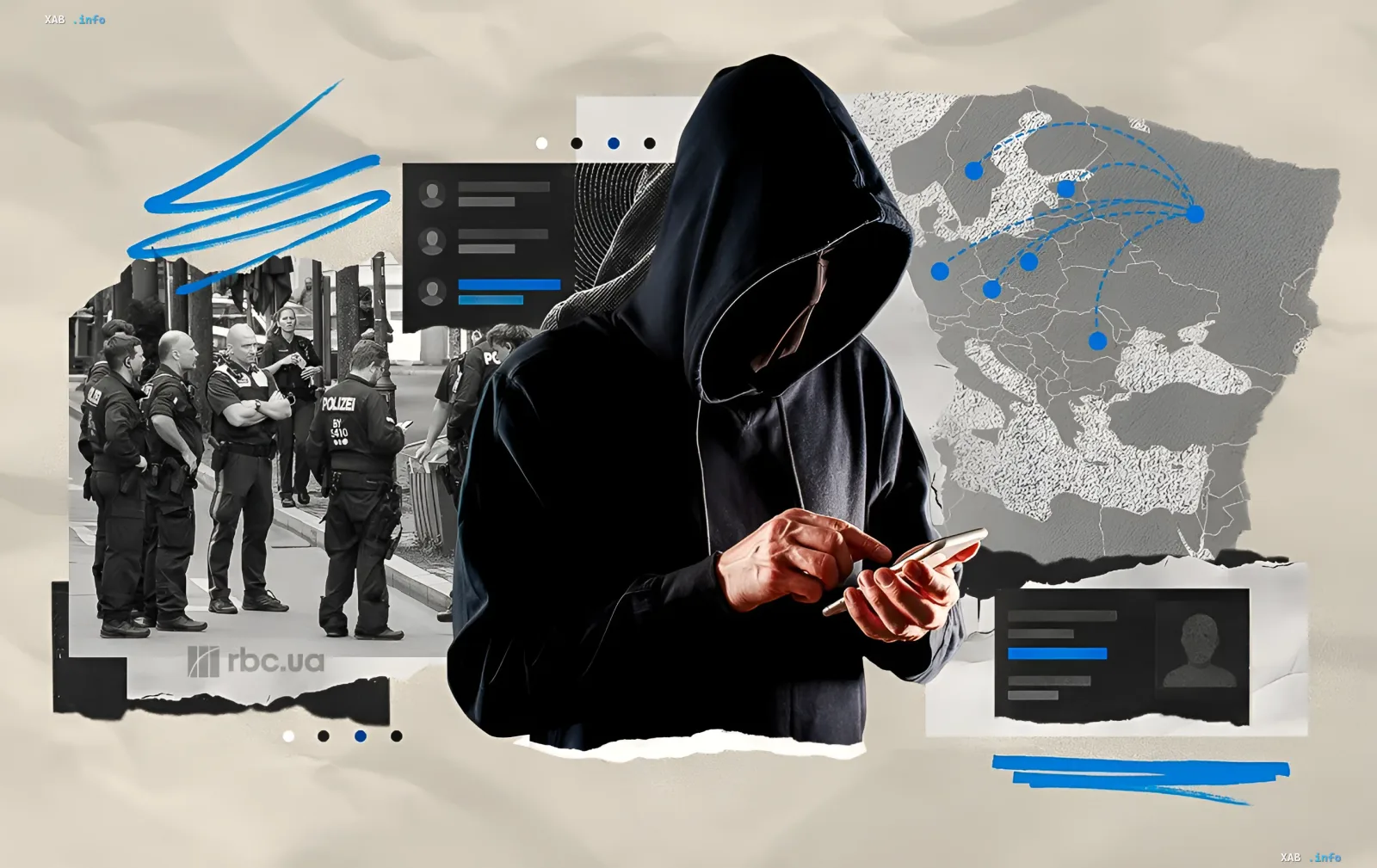
In the summer of 2024, what appeared to be ordinary parcels — massage cushions and cosmetics — crossed the borders of several European countries, concealing incendiary devices prepared by Russia's GRU. The packages nearly simultaneously caught fire in warehouses and airport transit zones in Germany, the United Kingdom, and Poland. According to an investigation by the VSquare center, the operation was coordinated by St. Petersburg businessman Andrey Baburov, who remotely recruited former fellow servicemen from the Soviet Navy who were legally residing in the Baltic states. Only chance prevented detonation in mid-air during cargo transport — the consequences of such a terrorist act would have been catastrophic for European aviation. Some of the perpetrators were detained, and the organizers were placed on an international wanted list, but the precedent clearly demonstrated a new reality: Moscow is acting on an ever-larger and bolder scale.
From "Novichok" to Industrial Sabotage
Operations by Russian intelligence services on European territory are not new — the Kremlin practiced them even during "peaceful" times. The most resonant case to this day remains the poisoning of Sergei and Yulia Skripal with "Novichok" in the United Kingdom in 2018, after which a wave of expulsions of Russian diplomats swept across almost the entire European Union. With the start of the full-scale invasion of Ukraine, Russian activity surged: initially, Moscow focused on intelligence gathering and cyber interference. In April 2024, the Czech government recorded thousands of attempts to hack the national railway's alarm systems, with similar attacks on logistics systems occurring in Germany. By 2025–2026, Russian subversive activity had reached a new level and acquired "industrial" scale, with the main targets becoming supply chains and enterprises of the European defense-industrial complex.
The Chain of Attacks on Defense Factories: From Wales to Estonia
In August 2026, sabotage attempts were recorded at the facilities of Ukrainian drone developer Skyeton in Slovakia and at Estonian company Milrem Robotics, which produces equipment for the Ukrainian Armed Forces. Even earlier, a wave of incidents hit BAE Systems factories in Wales, Diehl Metall in Germany, and WB Electronics in Poland. These are only the most resonant cases: dozens of other incidents with less noticeable consequences are being investigated in the ordinary course of business. The series of arson and sabotage acts, combined with cyberattacks and regular violations of NATO countries' airspace by Russian drones, forms a fundamentally new challenge for Europe, to which the continent is not fully prepared.
Poland: Statistics That Are Not Slowing Down
In response to a request from RBC-Ukraine, the spokesperson for Poland's National Prosecutor's Office, Przemysław Nowak, stated that in 2025 alone, 67 criminal cases were opened under Article 130 of the Polish Penal Code (espionage and activities in favor of a foreign intelligence service) within the country's central prosecutor's system. In 2026, the dynamics are maintained: in eight months, law enforcement opened at least 40 new cases. Simple extrapolation shows that at the current pace, 2026 could yield around 60 new cases. A significant portion of these cases concerns precisely the preparation of sabotage, remote recruitment, and the collection of data on military facilities. Importantly, this statistics covers only the highest-complexity cases handled by the National Prosecutor's Office; taking into account the investigations of district prosecutor's offices, the real scale of Russian actions is even higher.
Europe's Restrained Response and the Ukrainian Experience
Despite the growing scale of attacks, Europe's official response to Russia's sabotage campaign remains restrained. No EU country has taken systematic measures commensurate in scale with the threats identified by national prosecutor's offices and counterintelligence services. In this situation, analysts increasingly point to the Ukrainian experience in countering sabotage-reconnaissance groups: a multi-level system of informants, operational coordination between intelligence services and the prosecutor's office, and the public demonstration of detentions create a deterrent effect that has not yet been established in Europe. Meanwhile, Moscow continues to expand the "industrial" capacity of its sabotage, using remote hiring of perpetrators and a blurred logistics chain, which makes each individual investigation extremely difficult for European law enforcement agencies.