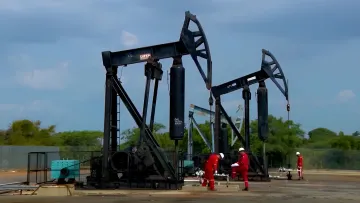
After several years of delays, Russia has begun commercial oil exports from its massive Arctic project, "Vostok Oil." According to The Moscow Times, as cited by RBC-Ukraine, in September 2026 Rosneft began loading ice-class tankers at the Buhta Sever (North Bay) terminal, located on the Taymyr Peninsula. The project's realization has become one of Moscow's most ambitious attempts to boost oil production since the collapse of the Soviet Union.
First Tankers and Actual Volumes at Launch
The first oil from the terminal was loaded onto the ice-class tankers Akademik Gubkin and Valentin Pikul. Two more vessels — Vladimir Monomakh and Vladimir Vinogradov — were waiting in the loading queue. In the first phase, actual production and export volumes remain modest: according to the outlet's sources in the oil industry, shipments in 2026 could reach around 150,000 barrels per day, equivalent to 500,000–700,000 tonnes per month. This is only a small fraction of the project's potential, yet for an industry experiencing structural difficulties, even such a volume represents a significant contribution to the export basket.
Scale of Reserves and Target Indicators
The "Vostok Oil" project brings together more than 13 fields in Taymyr and Eastern Siberia. According to Rosneft's own estimates, the combined reserves of these fields amount to approximately 51 billion barrels of oil. The project's potential capacity was previously assessed at 2 million barrels per day. The company plans a phased ramp-up: to 600,000 barrels per day (roughly 30 million tonnes per year) in the second half of 2027, and to a level of about 1 million barrels per day by 2030. Thus, even under an optimistic scenario, reaching peak indicators will take at least four years from the start of commercial shipments.
Exit of Western Partners and Reliance on Own Resources
The "Vostok Oil" project was presented in 2019 as Rosneft's flagship initiative. Initially, foreign investors were planned to be attracted to its implementation: among the companies previously associated with the project were BP, Trafigura, and Vitol. However, after the start of Russia's full-scale invasion of Ukraine and the imposition of Western sanctions, foreign partners sequentially exited the project. Rosneft had to substantially restructure its financial and technological model, relying on its own resources and internal funding sources. According to analysts, this increased the project's cost and pushed back its commissioning deadlines.
The Northern Sea Route as a Key Export Channel
A key feature of "Vostok Oil" is the possibility of exporting oil to Asian markets via the Northern Sea Route. The Buhta Sever terminal is located in the Russian Arctic, and for transporting oil along this route, only ice-class vessels capable of navigating the ice of the Arctic Ocean are used. This logistical channel allows bypassing the traditional routes through the Mediterranean Sea and the Suez Canal, reducing delivery times to key Asian consumers. At the same time, Arctic logistics remain expensive and seasonally limited, which constrains the pace of volume growth.
Context: Declining Production and Strikes on Oil Infrastructure
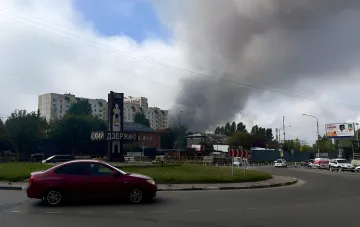
The launch of "Vostok Oil" comes against the backdrop of systemic problems in Russia's oil industry. Oil production in the Russian Federation has declined significantly due to regular Ukrainian drone strikes on oil refining and export facilities. In August 2026, Ukraine attacked vessels and infrastructure in southern Russian ports, including Novorossiysk — one of the key centers for Russian oil exports via the Black Sea. Under these conditions, Moscow views the Arctic project as a strategic tool for maintaining production volumes and diversifying export routes, primarily toward Asian countries.