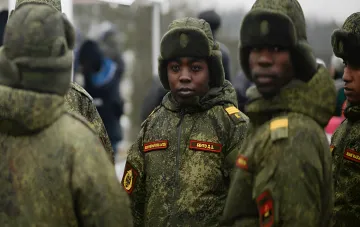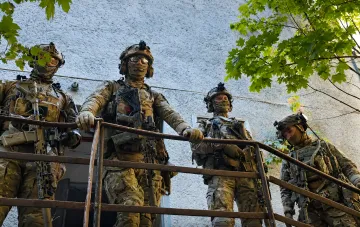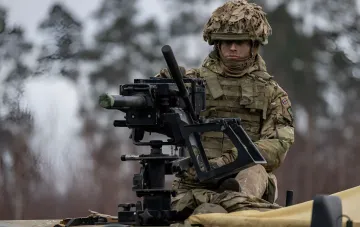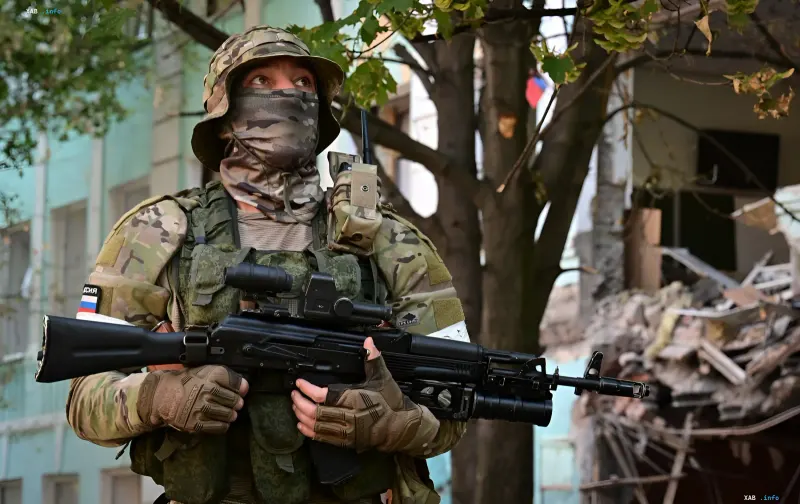
The Main Directorate of Intelligence of the Ministry of Defense of Ukraine (HUR MODU) has revealed a new, detailed methodology used by the Russian side to manage foreign mercenaries. According to intelligence data, the Russian occupation army has implemented a system of serial numbers designed to replace traditional identification dog tags for citizens of other countries.
Marking Technology: From Dog Tags to Tattoos
Instead of familiar metal military dog tags, which can be lost or removed from the body of a deceased person, mercenaries are assigned so-called "inventory numbers." These markings are applied directly to the soldier's skin or to elements of their gear. Durable coloring agents, specifically henna and jagua, are used for application. Intelligence notes that such marks are highly resistant: they do not wash off with soap and water and can remain on a person's body for several weeks. If the number becomes indistinct, it is reapplied.
Police vs. Deserters: New Control Methods
Intelligence has recorded instances where Russian police conducted checks on civilians for the presence of such markings. In particular, law enforcement agencies stopped students and labor migrants to inspect their bodies for numbers. According to HUR, this is done to identify deserters—mercenaries who attempted to flee the front line by discarding their gear but remained with a mark that is invisible to the average person but noticeable to security forces.
Concealing Real Casualties and Statistics
Intelligence analysts believe that the main goal of such a system is to conceal the real scale of casualties among foreign mercenaries. The use of inventory numbers allows Russian command to record deceased soldiers as "missing in action" or leave their bodies on the battlefield with unidentified status. This creates difficulties in accounting for casualties and allows for the distortion of official combat statistics, hiding the true cost of occupation policy.
International Resonance and Future Tribunals
The collected data on the marking system and specific cases of its application are already being transferred to foreign partners and law enforcement agencies. HUR emphasizes that this information will be used in the materials of future international tribunals to document war crimes and mechanisms of coercion of foreign citizens into combat operations. In the context of the current situation on the front, Ukraine has significantly increased the use of its own "Flamingo" cruise missiles against Russian territory during the summer, which also affects the dynamics of casualties and the enemy's need to conceal them.