August 10, 2026. The Russian military-industrial complex (MIC) has moved to implement an aggressive plan to saturate the front with strike unmanned aerial vehicles (UAVs). According to data from the Main Directorate of Intelligence (GUR) of the Ministry of Defense of Ukraine, Russia plans to produce 11,000 drones in August. This was stated by Vadym Skybitsky, head of the GUR, in an interview with RBC-Ukraine.
Scaling production and new models
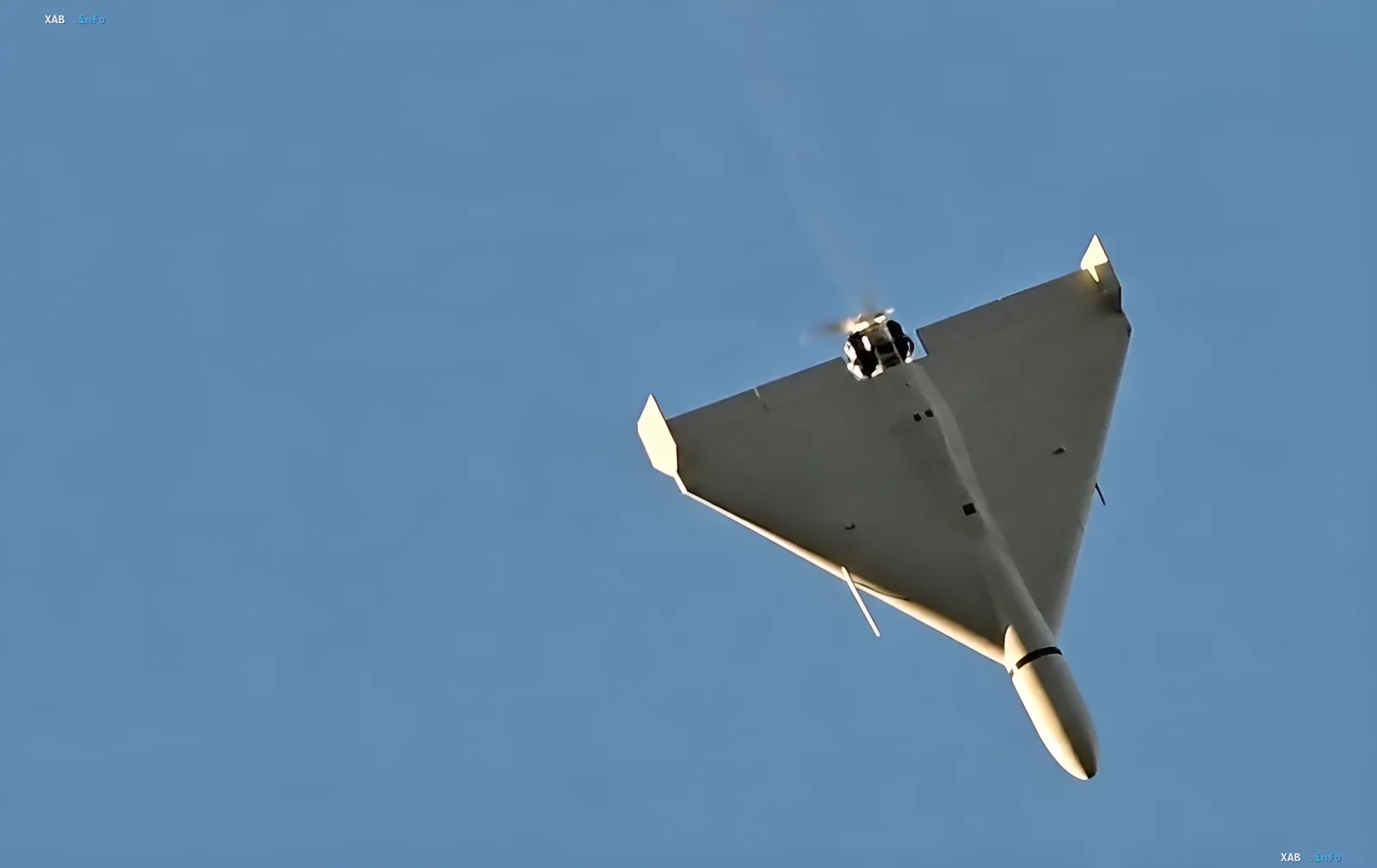
Unlike previous months, when a partial decrease in the intensity of strikes and production volumes was observed, the current month is characterized by a sharp surge in activity. According to Skybitsky, the adversary has reconfigured its production chains, betting on the mass production of turbojet models. The list of priority production targets includes both time-tested models and the latest developments: "Geran-1", "Geran-2", "Geran-3", as well as the more modern "Geran-4" and "Geran-5".
Special attention is paid to specialized modifications such as "Harpia", "Herbero", "Herbero-suicide" and "Herbera Siker". Experts note that such diversification of the drone fleet is aimed at overcoming Ukraine's air defense systems and creating an effect of massive saturation, where the number of targets exceeds interception capabilities.
Technological shift: transition to turbojet engines
A key factor in the change of tactics is the transition to turbojet engines. During one of the recent attacks on Ukraine, 50% of the unmanned aerial vehicles were equipped with such power plants. This radically changes the requirements for the air defense system: for effective interception of such targets, interceptors with the corresponding speed or strengthening of small air defense are necessary.
However, this technological leap has its vulnerabilities. As Skybitsky explained, Russia is facing a serious problem in creating its own turbojet engines for "Geran-4" and "Geran-5". At the moment, Russia is completely dependent on supplies from China. The cost of one such engine is about $35–40 thousand, which makes the production of such drones extremely expensive and vulnerable to sanctions or logistics disruptions.
Contradictory data
While the GUR claims large-scale production and preparation for a strike, open sources contain data suggesting possible problems with the implementation of these plans. In particular, in July 2026, the media reported that the so-called "Attack of the Century" did not take place because a Russian citizen swindled the GUR out of money, resulting in the loss of 13 drones (Source ID 4). This may indicate that intelligence data on the exact quantity and readiness of equipment may be distorted by both the Russian side for disinformation and the Ukrainian side during counter-intelligence operations.
Furthermore, data that Russia has suspended the production of hypersonic "Kinzhal" missiles and completed the annual plan for "Zircon" and "Onyx" missiles several months in advance creates a picture of resource redistribution. It is possible that the focus on 11,000 drones is a result of a shortage of more expensive missile systems, and the MIC is trying to compensate for this with the quantity of cheaper (though expensive in engines) unmanned aerial vehicles.
Strategic consequences for Ukraine
For Ukraine, August 2026 becomes a critical period. The need to intercept turbojet drones requires the modernization of air defense and the purchase of new means. Russia's dependence on Chinese engines could become a factor that will allow production rates to be reduced in the future if pressure can be exerted on Beijing or logistical chains disrupted. However, in the short term, the threat of massive strikes remains real.