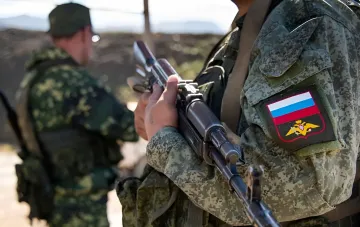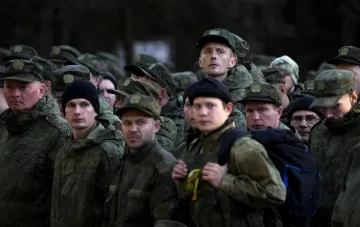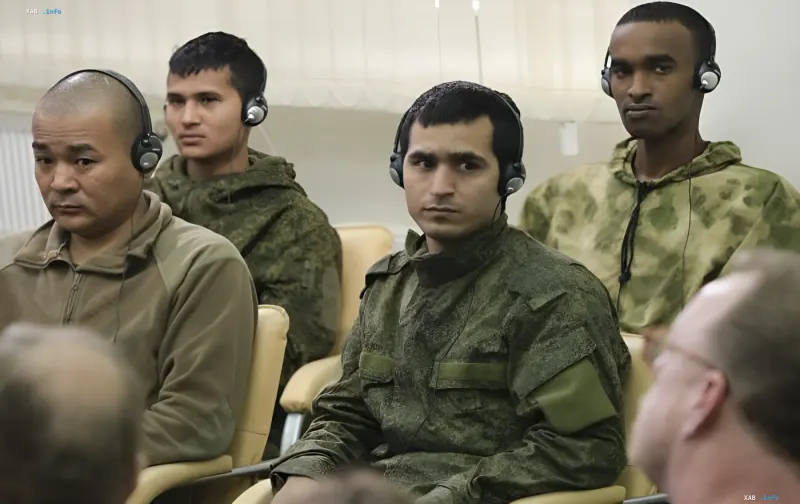
According to a Bloomberg investigation, Russia has stepped up the recruitment of men from Southeast Asia — primarily citizens of Indonesia and the Philippines — using a scheme where potential recruits are lured with promises of high-paying civilian jobs. Intermediaries find candidates through social media and offer positions in logistics, security, construction, hotels, and administration. Upon arrival in Russia, some of them discover they have actually signed a military contract instead of an employment one, after which their documents and phones are confiscated and they are sent into combat operations against Ukraine.
The Deception Mechanism: From "Logistics Vacancy" to Military Contract
The scheme relies on the lack of transparency in contracts: the terms that a candidate signs before departure do not reveal the true nature of their future service. Men counting on civilian jobs find themselves in a situation where escape is difficult — documents and communication devices are seized after crossing the border. Bloomberg columnist Ruth Pollard notes that human trafficking networks and fraud centers, using the same channels to spread job postings, profit from the vulnerability of migrant workers alongside military recruiters.
Financial Incentives and Migrant Vulnerability
Money serves as the key attraction tool: potential recruits are promised up to $35,000 for signing a military contract, with a monthly salary claimed to be up to $3,000. Such terms are purposefully targeted at men facing difficult financial situations who are looking for work abroad. The combination of high starting remuneration and "civilian" job descriptions makes the offer attractive to a vulnerable audience in countries with limited income levels.
Reaction from Jakarta and Manila
Indonesia has already faced the problem of its citizens being recruited: local police are investigating relevant cases as potential human trafficking if there are signs of deception or coercion into military service. The country's government has also sent a request to Moscow to include Indonesia in the list of states whose citizens are officially not recruited into the Russian army; at the time of publication, no response from the Russian Federation has been received. The Philippines is acting through administrative mechanisms: with the assistance of the country's authorities, up to 250,000 posts related to such vacancies have been removed.
Scale of Recruitment: Ukrainian Military Data
According to the Ukrainian military, in the first nine months of 2026 alone, Russia recruited 128 citizens of the Philippines. At the same time, neither the Philippines nor Indonesia is included in the Russian list of countries whose citizens are not enlisted in the army. For comparison, according to the same data, 530 citizens of Zimbabwe were recruited into the Russian army in the first nine months of 2026, whereas the figure for the entire year of 2025 was 30 people, indicating a multiple-fold increase in recruitment in certain regions.
Southeast Asia in Context: Following India, Nepal, and Africa
Southeast Asia is becoming the latest region from which Russia is attempting to draw people for the war against Ukraine amid personnel shortages. Previously, India, Nepal, and several African nations faced similar recruitment schemes. In late October, the 7th Rapid Reaction Corps of the Air Assault Forces reported the participation of foreign mercenaries from Asia and Africa in Russian assaults in the Huliaipole direction. Thus, the recruitment of Southeast Asian citizens fits into a broader trend of expanding the geography of foreign fighter involvement, where migrant workers remain the most vulnerable category.