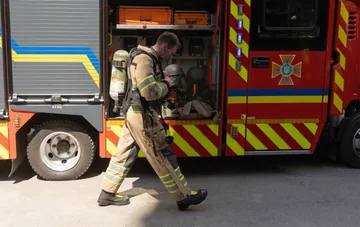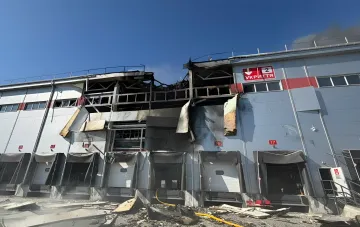
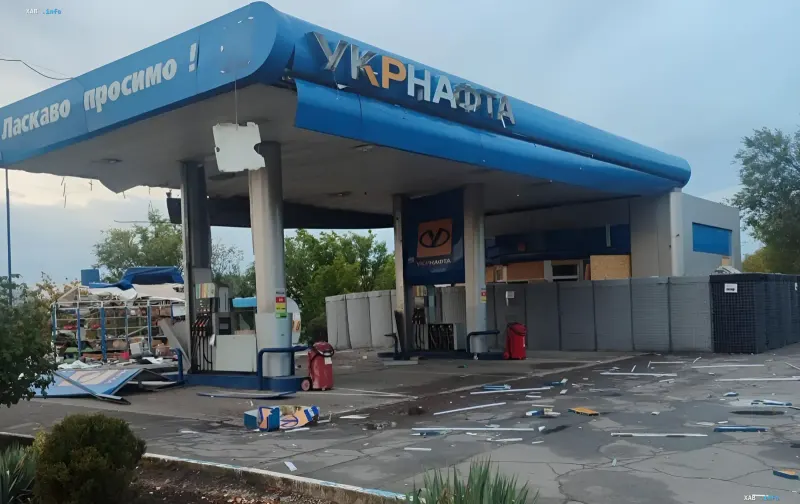
Over the past 24 hours, Russian military forces carried out a series of strikes on the civilian infrastructure of the Ukrnafta fuel network. According to Bohdan Kukura, Chairman of the Board of Ukrnafta JSC, as cited by RBC-Ukraine, the company's facilities in Kyiv, Zaporizhzhia, and Dnipropetrovsk regions came under fire. The attacks hit fuel stations and the associated equipment that supplies fuel to the population, businesses, and critical services. The company emphasizes that this is a deliberate targeting of civilian objects, not military logistics.
Timeline of the strikes over 24 hours
The first recorded attack occurred in the evening in Kyiv region: a Russian drone struck one of the network's facilities, causing a fire upon impact and significant damage to the equipment. The last attack in this series was recorded in the morning in Dnipropetrovsk region, where a fuel station came under fire. Thus, the strikes were carried out over the course of the entire day, from evening until morning, indicating a prolonged pattern of shelling. Visual evidence of the damage — debris from structures, damaged canopy and billboard elements scattered across the site — has been published on B. Kukura's Facebook page.
Targets and nature of the attacks
Ukrnafta notes that Russia continues to deliberately attack civilian objects that supply the population with fuel and essential goods. "There is no military purpose to such strikes. This is terrorism against the civilian population," the company's chairman emphasized. Experts cited by the media assess such strikes primarily as a tool of intimidation against the civilian population, rather than an attempt to hit military logistics: fuel infrastructure serving civilian vehicles and services is not, in the literal sense, a military object.
Contradictory data
There are minor discrepancies between various formulations that should be taken into account. The introductory part of the statement refers to facilities in three regions at once — Kyiv, Zaporizhzhia, and Dnipropetrovsk — whereas the detailed description of the attacks names two episodes directly: an evening strike in Kyiv region and a morning one in Dnipropetrovsk region; for Zaporizhzhia region, the statement's text does not specify a concrete episode. At the same time, the headline of the RBC-Ukraine publication speaks of four strikes on Ukrnafta gas stations over the past 24 hours. Thus, the exact number of attacks (four according to RBC) and their attribution to regions (three in the statement, two in the details) may not match; until the company clarifies the full list of affected facilities, these figures should be considered preliminary.
Company response and operating mode
The Ukrnafta network states that it continues to operate, is restoring damaged facilities, and is supplying fuel to citizens, businesses, and critical services. In response to growing threats, the company is preparing to operate in a mobile fuel station mode — to quickly supply consumers with fuel in case stationary stations are damaged. This approach allows minimizing the consequences of pinpoint strikes and maintaining fuel availability even when individual stations are taken out of service.
Context: escalation of strikes on gas stations
Recently, according to media reports, Russian forces have sharply increased attacks on Ukrainian gas stations. A telling example is the Opiшня community in Poltava region, where, due to Russian shelling, reportedly not a single gas station remains intact, and restoration of the facilities is currently impossible. Against this backdrop, the strikes on the Ukrnafta network in Kyiv, Zaporizhzhia, and Dnipropetrovsk regions appear to be part of a broader campaign to destroy civilian fuel infrastructure, which, according to experts, is aimed at psychological pressure on the population.