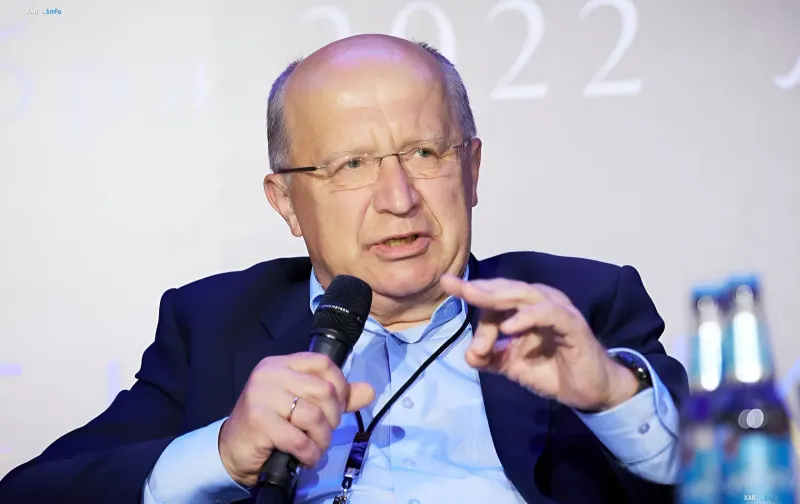
Potential strikes by the Russian Federation on defense enterprises in European countries will trigger a decisive military response from the North Atlantic Alliance and could lead to the activation of Article 5 of the Washington Treaty on collective defense. This was stated by EU Commissioner for Defense Andrius Kubilius during a speech on the sidelines of the European Parliament's Committee on Security and Defense on October 1, 2026. Such warnings come amid a sharp deterioration in the European security situation and an increase in hybrid threats.
Background and Threats from Moscow
This statement was a direct reaction to remarks made by Russian Foreign Ministry spokesperson Maria Zakharova. Previously, she publicly designated European arms factories and enterprises producing weapons and military equipment for Ukraine as "potential military targets" for the Russian armed forces. In response, Andrius Kubilius emphasized that any direct missile or air strikes against facilities located within EU and NATO member states will be treated as an attack on the entire Alliance.
Sabotage Activity and Investigations in Europe
The escalation in rhetoric unfolds against the backdrop of a wave of suspicious incidents and sabotage operations targeting critical European infrastructure. Specifically, Estonian authorities officially accused Russian special services of organizing an arson attack at facilities belonging to the defense company Milrem Robotics. Similar investigations into sabotage-related incidents are currently underway by law enforcement agencies in Bulgaria, Poland, and Slovakia, compelling European leaders to implement additional security measures.
Contradictory Data
Meanwhile, the EU commissioner's statement has sparked serious discussions and discrepancies within NATO diplomatic circles. Experts and officials note that the procedure for activating Article 5 falls under the prerogative of the Alliance's sovereign member states, and the collective defense mechanism is intentionally designed to be flexible. Earlier, NATO Secretary General Mark Rutte emphasized that the article's wording is "deliberately ambiguous" to avoid revealing specific Alliance response algorithms to the adversary. Furthermore, the Kremlin and certain analytical centers express skepticism regarding the commissioner's authority over NATO military planning, pointing to the distinct institutional mandates of the EU and NATO.
Implications for European Security
The situation remains extremely tense. NATO leadership has repeatedly urged allies to prepare for a large-scale wave of hybrid attacks, including systematic sabotage and cyber threats. Experts agree that the mounting tension surrounding the defense industry requires Europe to strengthen its own preventive defense mechanisms and ensure close intelligence coordination to prevent potential strikes.