The summer season on the Russian Black Sea coast in 2026 is marked by a dual pressure: on one hand, regular threats of Ukrainian drone attacks, air raid sirens, explosions, and fires; on the other, the environmental consequences of damaged oil infrastructure, including oil slicks in the water and queues at gas stations. According to available data, the number of tourists on the coast has decreased by 10.8% compared to last year. The most noticeable decline was recorded in the air transport segment: ticket bookings at Sochi airport fell by 40%, and some hotels have noted a decrease in guest flow by up to 20%.
Statistics of Outflow vs. Visual Impressions
The paradox of the season is that despite the formal decrease in the number of guests, most beaches and cafes still appear overcrowded. As local entrepreneurs explain, the main reason is the lack of a real alternative for most Russian citizens within the country: travel abroad is restricted, and domestic destinations are not ready to absorb the redistributed flow. "When I go out to the embankment in the evening, I feel this strange dissonance — music, dancing... But people are so tired of living in this terrible nightmare that they simply don't care. They just want a change of scenery," said the owner of a guest house in Kabardinka.
Environmental and Infrastructural Context of the Resort
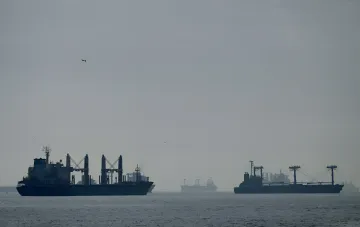
In addition to security risks, the coast is suffering from chronic environmental problems related to damaged oil infrastructure. Oil spills in the waters and on the coast, as well as fuel shortages manifesting in queues at gas stations, have become a familiar part of resort reality. A captain of a tourist boat from Arkhipo-Osipovka notes a sharp dynamic: "Sirens rarely went off, and now they scream several times a day," adding that beachgoers mostly ignore the danger signals.
Record Pause in Putin's Visits
The security situation has also affected the habits of the highest leadership. If in 2021 Vladimir Putin came to Sochi 24 times, in 2024–2025 he appeared there only twice — a record pause in trips to his favorite resort, noted by foreign media (in particular, the Financial Times). In fact, the "home" resort has ceased to be a regular point on his schedule against the backdrop of threats of strikes on objects on the coast.
Contradictory Data
Here it is important to honestly record the discrepancy in the pictures. On one hand, quantitative indicators speak of an outflow: minus 10.8% of tourists, minus 40% of bookings at Sochi airport, up to minus 20% in individual hotels. On the other hand, qualitative observations from the ground record overcrowded beaches and cafes. The gap is explained by methodology: statistics account for cancelled and unbooked places, the redistribution of flows within the coast, and "silent" guests who do not go through formal booking channels, while the visual impression is formed by overcrowded public areas. In addition, exact percentages on tourism in open sources are not always supported by independent verification, so they should be viewed as approximate.
Political Context: Betting on Exhaustion
Resort statistics fit into a broader political context. Earlier, the First Deputy Head of the President's Office, Serhiy Kyslytsia, stated that Vladimir Putin is not inclined to peace negotiations and, according to him, cynically calculates that Ukrainians will not be able to survive the next winter under conditions of constant terror. At the same time, the Kremlin is trying to downplay the scale of destruction from strikes on its own objects: officially, the critical consequences of attacks on Russian infrastructure and industry are "not noticed," although the strikes create a tangible negative effect for the economy of the aggressor country, including the Black Sea resort sector.