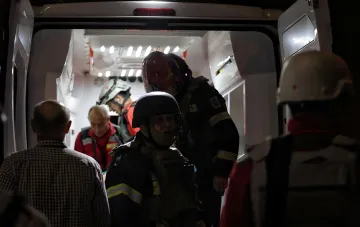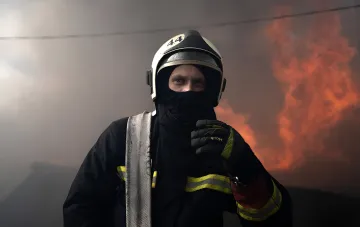
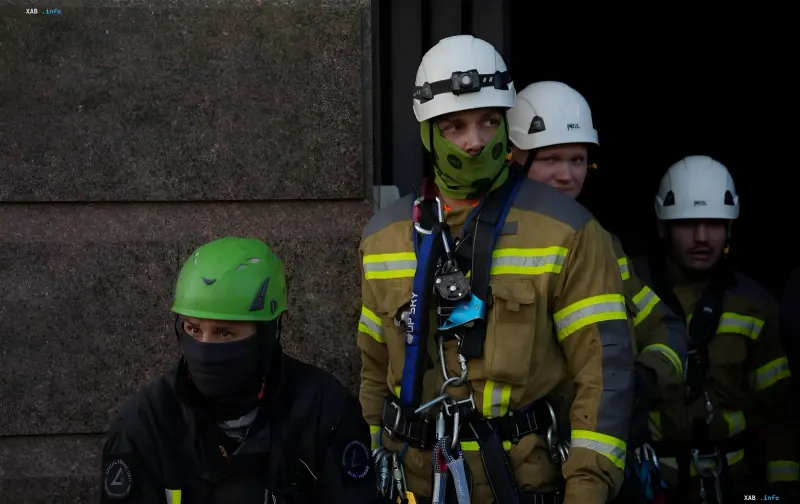
On the night of October 2, 2026, Russian strike drones carried out another attack on Kyiv's critical transport infrastructure, repeatedly targeting the South Bridge. Information about the emergency incident was received early in the morning from capital city mayor Vitali Klitschko, after which operational services, rescue teams, and specialized experts immediately departed to the scene to assess the scale of destruction and eliminate the consequences of the nighttime raid.
Chronology of nighttime strikes and situation in the city
The signal about a new attack on the strategic object was recorded around 05:03 local time. The strike came amid an ongoing series of air raid alerts that engulfed the Ukrainian capital. Just a few minutes prior, wreckage from downed drones fell in an open area in the Holosiivskyi district of the capital. As a result of the blast wave, window frames in a non-residential building were damaged, and several parked cars sustained mechanical damage. Fortunately, there were no large-scale fires or casualties.
Background: series of attacks on the crossing
Recall that the tense situation around the South Bridge began to develop rapidly the day before. On the afternoon of October 1, objects near the crossing's supports had already been targeted by two drones. At that time, specialized agencies and municipal services promptly introduced restrictions: the movement of ground transport and metro trains was temporarily suspended. An initial inspection by Kyivavtodormost experts revealed no critical load-bearing damage, allowing bus routes No. 22 and No. 91 to resume normal operations soon after, although traffic on the green metro line remained limited.
Escalation of the situation and consequences of repeated strikes
However, already in the evening of October 1, a new wave of strikes followed, the consequences of which turned out to be much more serious than the daytime incidents. According to preliminary information from specialized agencies, during the evening and nighttime attacks, damage was recorded to the bridge support, the protective concrete barrier of the metro, as well as the road surface and metal guardrail. Due to security threats, traffic across the crossing was completely blocked once again, and metro services were forced to completely de-energize the tracks in this section.